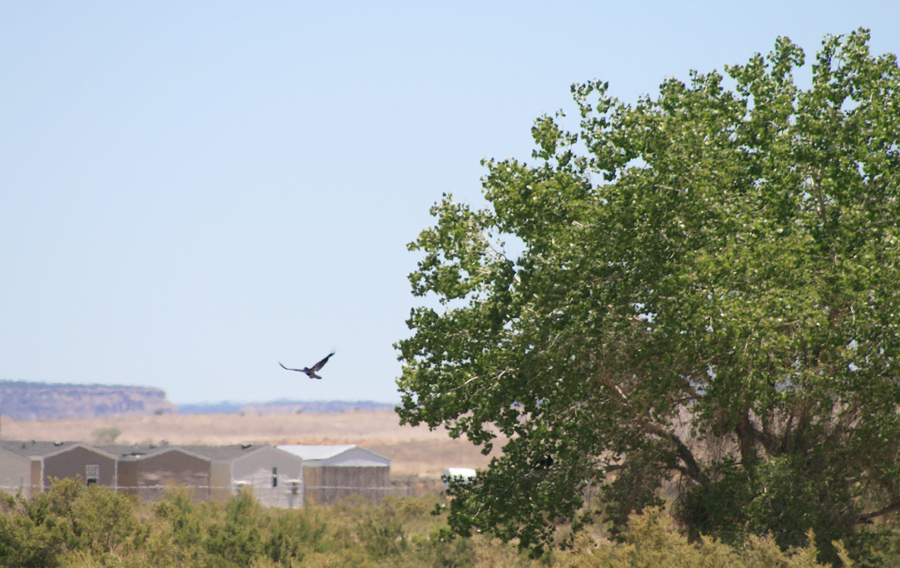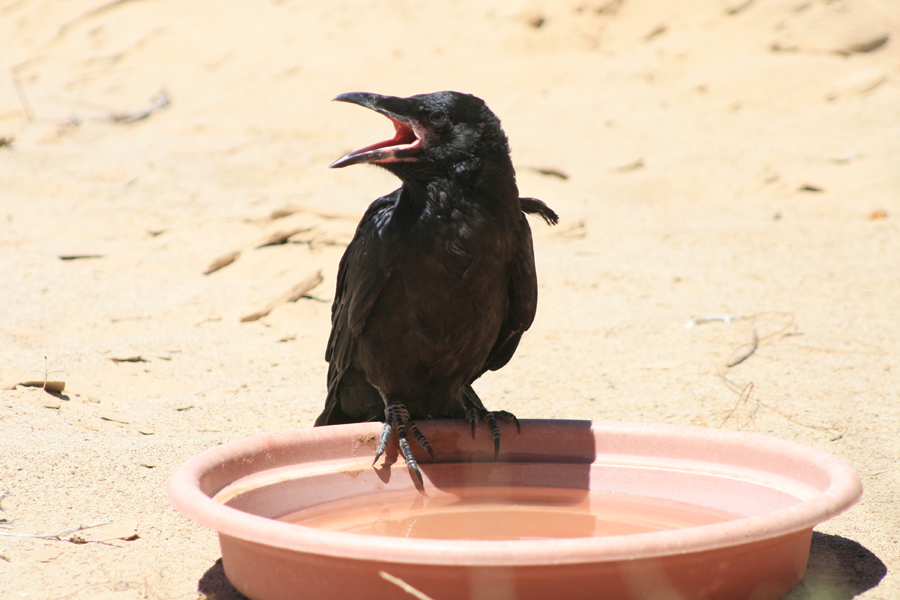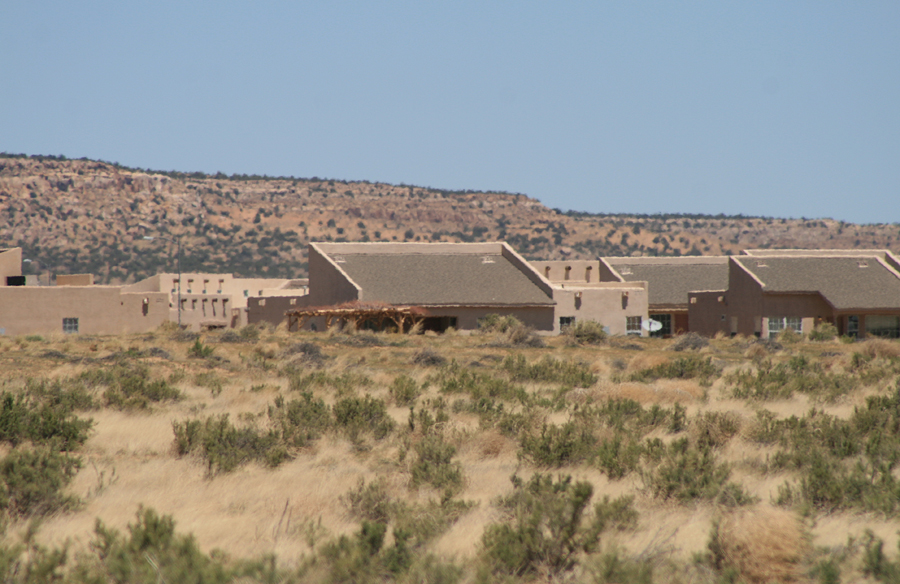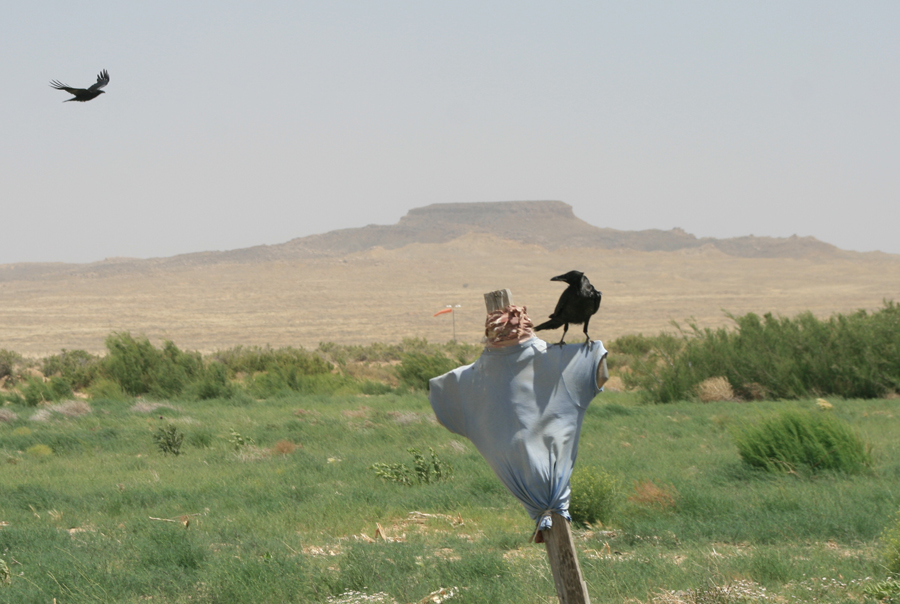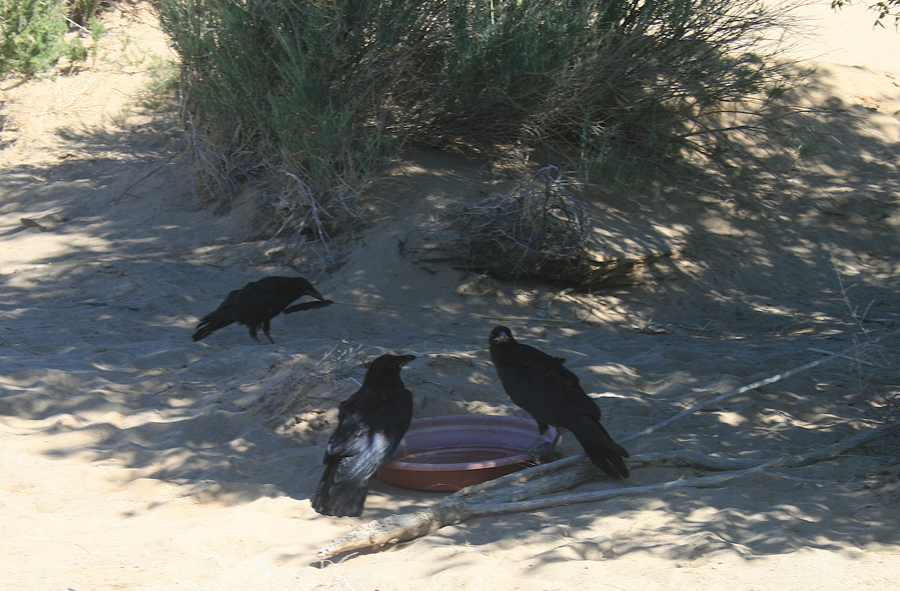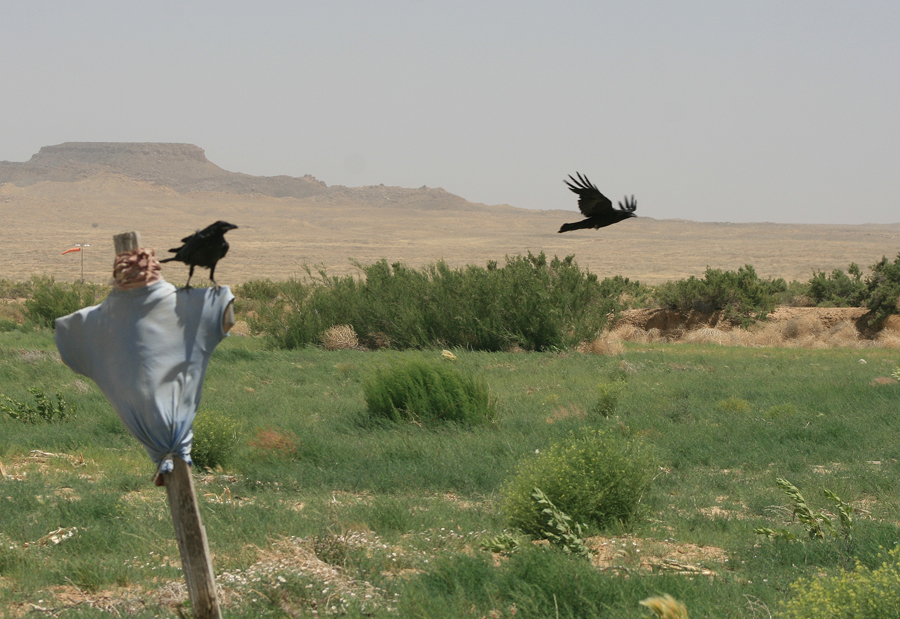
Poe imprisoned

Mazie and I.  We’re on our way home.

I’d been in Sonoma for 4 weeks.  Mazie had joined her friend Grace in LA for the last few weeks while I was working through the house details.

After being away from Poe for over a month, we now found ourselves in Flagstaff, checking in to see how Poe was getting on with the wildlife rehabilitator.

He was not good.

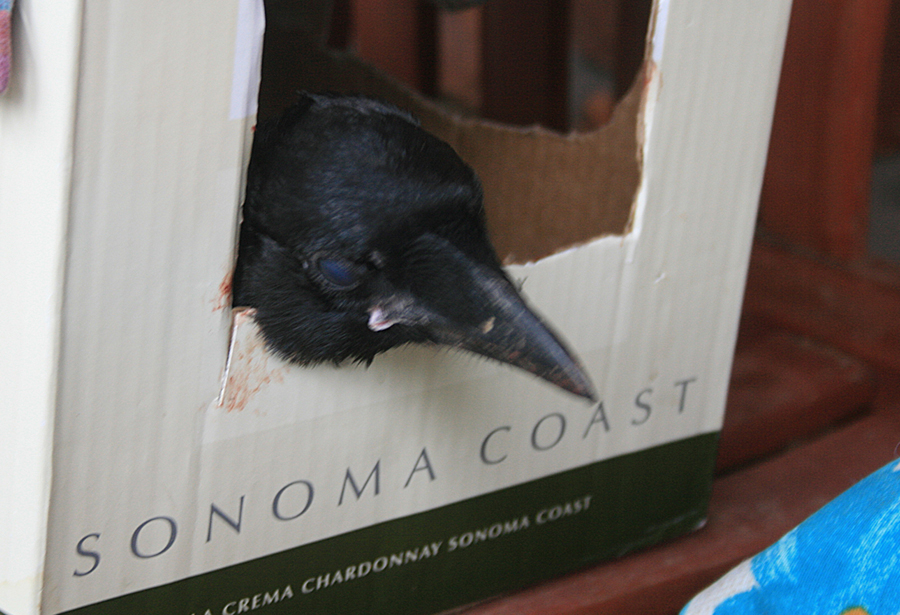
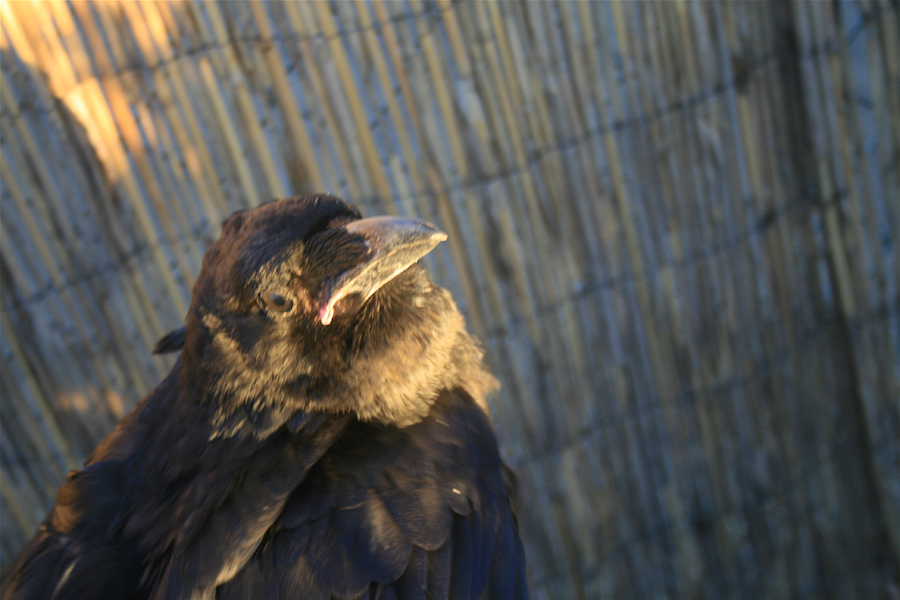
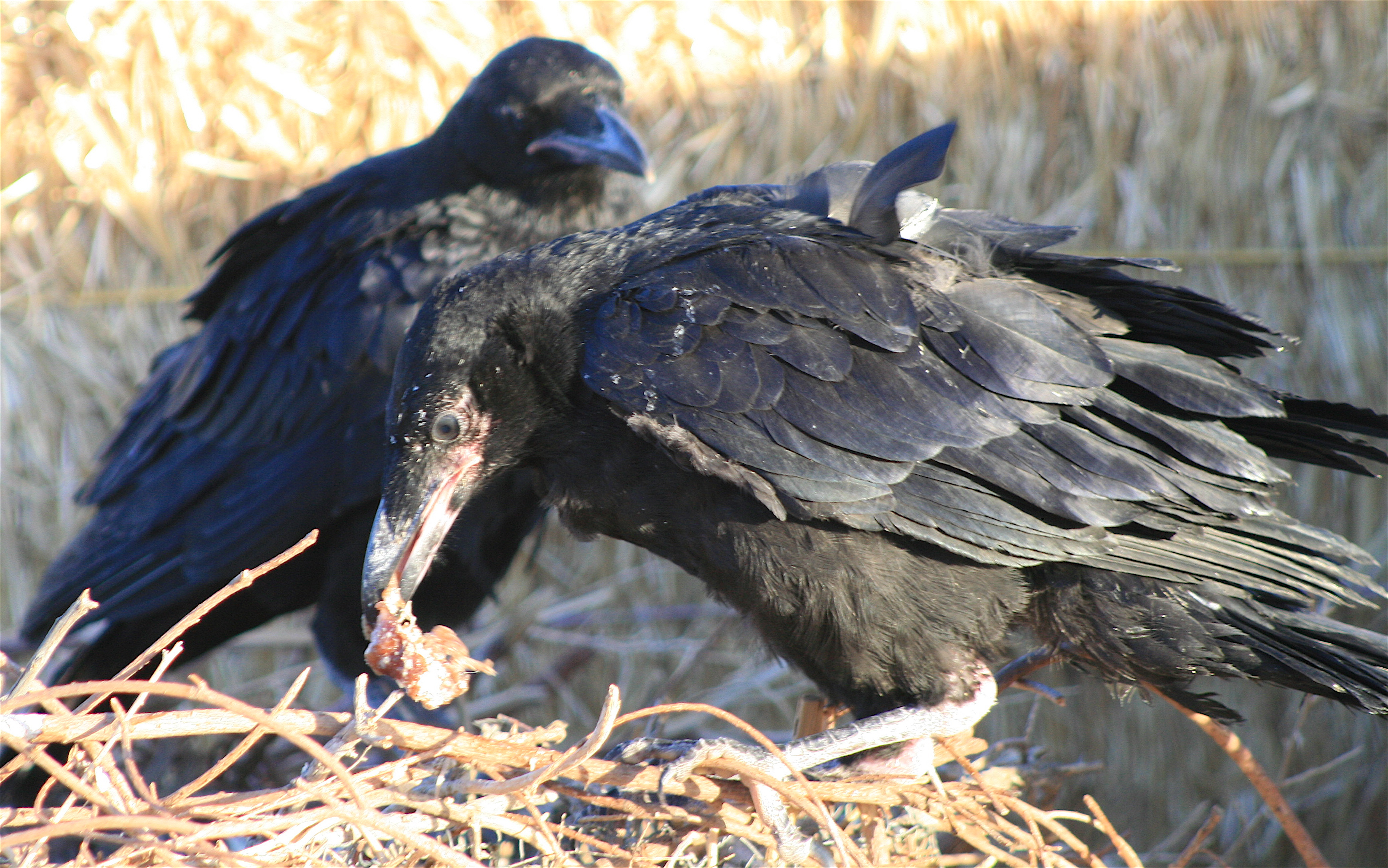
On one hand the rehabilitator had given Poe antibiotics, which undoubtedly had helped.  But for 4 of the 5 weeks, she had kept him indoors in a small dog carrier.  His breast feathers were abraded and missing.  His tail feathers were a complete mess.

In the last week she had released him to a larger cage outdoors, but on the adjacent property, literally a few dozen feet away, they were literally blowing up a limestone cliff.  The air was filled with the deafening sound of jackhammers.  And on the other side of the yard several large dogs barked incessantly.

This was madness.

Mazie and I stepped into Poe’s cage and sat down with him.  Drowning the overwhelming cacophony, he looked around skittishly.  He sat in a pile of dried dogfood – basically the staple of his diet.

It has vitamins in it, the rehabilitator assured us.

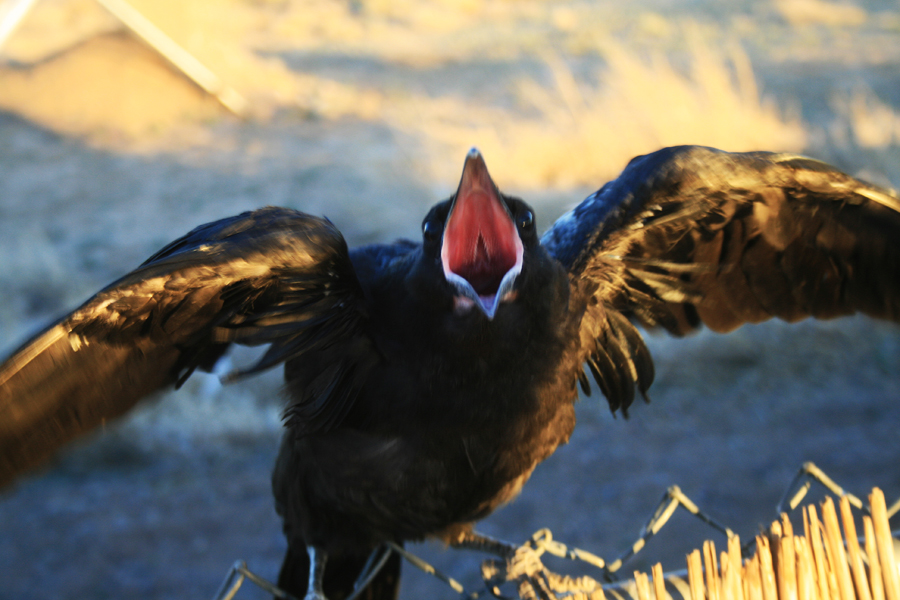
Poe looked up toward us and made his customary feeding calls.  He recognized us as his feeders. But this time the calls were soft and plaintive.

The rehabilitator went to retrieve a scale so that we could weigh him (I guess this is vital to rehabilitation), but as she approached, Poe grew even more skittish and flapped his wings aggressively.

The rehabilitator said that he didn’t like her because she had been forced to tube feed him.

As she tried to step in, Poe edged out of the cage and immediately made for the open yard.  The rehabilitator herself grew agitated and she turned to get him back in.

I looked around.  The expansive yard was surrounded by an eight foot fence.  Tall ponderosas shaded the grass.

What’s the problem? I asked.  Is there a dog?  Anything that can get him?  Let’s give him some space, I said.

Well, umm. It’s just that he might try and get away, she stammered.

Get away?  First off, isn’t that the point?  And secondly, he had a busted wing.  This bird wasn’t going nowhere.

The rehabilitator acquiesced, but not before reminding me that from a rehabilitator’s perspective, it wasn’t safe and that I wasn’t trained in this.

Under the trees, Poe easily relaxed.  He began to play with twigs and branches and dig in the ground looking for grubs.  Mazie and I sat with him as quietly as we could given the roar of the jackhammers.

Perhaps I could let him out a few times during the week, she offered.

The rehabilitator made an attempt to weigh Poe, but she couldn’t tell if his weight had gone up or down.  We helped her get him back in his cage and bid farewell.

Once inside the car, Mazie turned to me.

Did you see all the other animals she had in cages? she asked.
Offerings

One morning I go out at dawn to walk the orchards.

Is this a good place? Is it safe? What life will present itself?

I walk among trees laden with apples. The coastal mist dampens my skin. I imagine Hopi plants and how they would drink this moisture up. Gopher holes riddle the loamy ash colored soil. A civilization of them. I find old walnut shells. And ancient gnarled California oaks bend exquisitely toward the ground. An oyster shell pokes up from the dirt. There’s evidence of artesian springs.

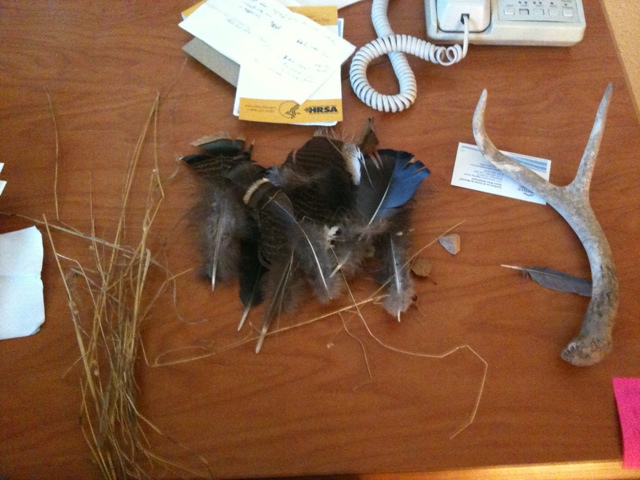
A flock of wild turkeys waddle toward the vineyard. Everywhere I find turkey feathers. And jay feathers.  And the horn of a deer. Quail dart among the trees. I see large cat prints. Rabbit pellets. Fox scat. Chickens wander in the distance. The grapes just now are coming onto the vine. A line of does steps up from the hollow. Later I learn that a mountain lion was spied coming up the Blucher creek. I see a few corn stalks volunteering among the Gravenstein apple trees.

I hear the sweet call of the crows. And then, at last, the rasp of the ravens in the fog. Two sentinel redwoods tower above one of the old farmhouses.

These are the beings that govern this place. The LaDukes. Me. My family. We’re all interlopers. We need the help of the others if we’re going to live here. And likewise we have an obligation to all of them. If nothing else, simply to let them live.

20110825-121155.jpg

The Farm

Feeling the watchful eyes of all those who protect, I pay a visit to the County Recorder’s office in downtown Santa Rosa.

I’m accompanied by our real estate agent and I want one favor from him. I want to trace back the chain of title on this house we’re buying. Eventually I want to go back to 1848 and the end of the Spanish land grants, but for now I’m just looking for one particular event.

—-

Our prospective house is old. Although it recently went through an extensive remodel, you can still see the outlines of what was once a craftsman bungalow from the 1920’s. But the current owners found in the walls a rolled up newspaper dating from 1893.

I suspect that our house was the original farmstead on what would have been a 40 acre homestead parcel.

You see, I’m the patron saint of all things lost. If you’re inhabiting a house, you’re taking on not just the house of today, but all the past lives of that house and the future ones as well. Everywhere we walk we’re surrounded by ghosts and what are we if we don’t choose to recognize and honor them?

By definition, life is a process of perpetual disintegration. Or rather, it’s persistence in the face of disintegration. Life wants to live. And in order for it to live, we must put ourselves forward as a countervailing force. Life is summoned in the face of death.

In this case, there was once a boy who lived in a sleepy seaside down in Southern California. The boy lost his parents and he watched the canyons and coastal chaparral be chewed up by a tide of development. He dreamt that one day he’d live in a place where he would be safe from loss and protected from those things that diminished life.

And once in Sonoma County there was a farm. The land supported orchards of cherries and nut trees and eventually Gravenstein apples. Over time it was divided up into ever smaller parcels, but by some miracle the orchards were never taken out and the land stayed under cultivation. And all the while an old green farmhouse and it’s inhabitants set themselves on that land and oversaw whatever life went on there.

But it only takes one change of ownership and that will cease to be.

—-

In the County Recorder’s office, I scan the yellowed maps on the wall. You can see the outlines of what were once the Blucher Rancho and the adjacent rancheria. Our parcel now exists on the border separating the two land grants. In hand I have an existing parcel map for our area, showing the house we’re looking at and two smaller adjacent parcels. One is owned by an old woman with the last name Horstmeyer. The other by an elderly lady with the last name Edmunds. Still under orchard, in all these years the land has never been visited by either of the ladies.

Before delving any deeper, I already sense the story.

The county recorder pulls up the chain of title on the computer. She can only go back to the mid-1960’s. But just from that we can see the current owners bought it 10 years ago from a fellow named Robinson. And Robinson bought it from a fellow named Percy LaDuke in 1964. to learn more, we need to go to the map ledgers.

We flip through a large book containing fragile maps until we come to one particular change of title in 1964. We see an original parcel comprised of our house and the two other plots of land. And in lavender pencil, two neat hand-drawn incisions divide the one parcel into three.

I turn to the real estate agent. The two old ladies – they were Percy LaDuke’s daughters, I tell him. When he sold the house, he deeded two portions of the land to them and their descendants. He loved the land. He had to sell the farm, but he didn’t want to lose it. He felt that there was value in land and that the land should go to his daughters.

We now turn to the microfiche. It only takes a bit of searching to find images of the change of title. And there it is. Percy LaDuke selling the farmhouse and in two separate documents he subdivides the property and conveys title to Mrs. Horstmeyer and Mrs. Edmunds.

I can hardly contain myself now.

The woman were already married. That means they were at least in their twenties.

The real estate agent is shaking his head now.

That means the two women were born in the late 40’s. It’s all so clear now. If they were born in the late 40’s, they were early boomers. They were born just after the war. If Percy were selling the house in the 60’s once his daughters were married and gone, that means he would have been young enough to serve. He’d fought overseas and once the war was over, he was discharged, he bought the farmhouse and he and his wife had settled down to raise their family. They’d all grown up here. Once his family was gone, the farm was sold off and divided.

To trace back the chain of title any further, we need to do it manually and the Recorder points us to shelves of dozens and dozens of volumes organized alphabetically and by year.

How do we find the previous transaction, I ask.

You have to go through each year, she tells me.

But there’s little need for that.

I walk directly to 1948-49, pull one book off the shelf and flip to the L’s. We turn a few pages and there we have it. Two contiguous, handwritten entries in black ink. The first registering Percy LaDuke’s discharge from the Navy in Oakland, California. He had fought in the Pacific theater. The second entry recorded his purchase of the farm.

20110825-115213.jpg

Guardians

Poe ensconced with a wildlife rehabilitator in Flagstaff. And Mazie and I are camped out in Sonoma California, trying to piece together a new life out here for our family.

We’ve found house to buy. It’s big and green and old and wonderful. But after eight years at Hopi, it’s hard to imagine a life as wild and wonderful and full of serendipity as the one we now have. Is this it? After decades of wandering, are we now settling down? Where’s the adventure in it?

On a Tuesday morning, sitting in the courtyard outside the Sebastopol Inn, I call our friends Kerry and Kristina back home. I’m worried, I tell them. How are we going to make a new life for ourselves out here?

Kristina’s answer is simple. This thing that we need to do is too big, she says. We can’t do it alone. So we need to put it out there, we need to seek out our allies and be available when they present themselves.

As for Kerry, he points out that when driving into Walpi Housing in the middle of a barren desert, would we have ever imagined that it was an ideal spot for building large wooden structures, and butchering a cow, and raising a mess of ravens? Could we have even conceived of the adventures that awaited us there?

Two hours later, Mazie and I sit in the Holy Cow coffee shop in Sebastopol. I’m despairing. Will I be able to talk to the ravens in our new home? I ask Mazie.

Daad, she says, and rolls her eyes in a way to indicate that once again I’m proving myself an embarrassment.

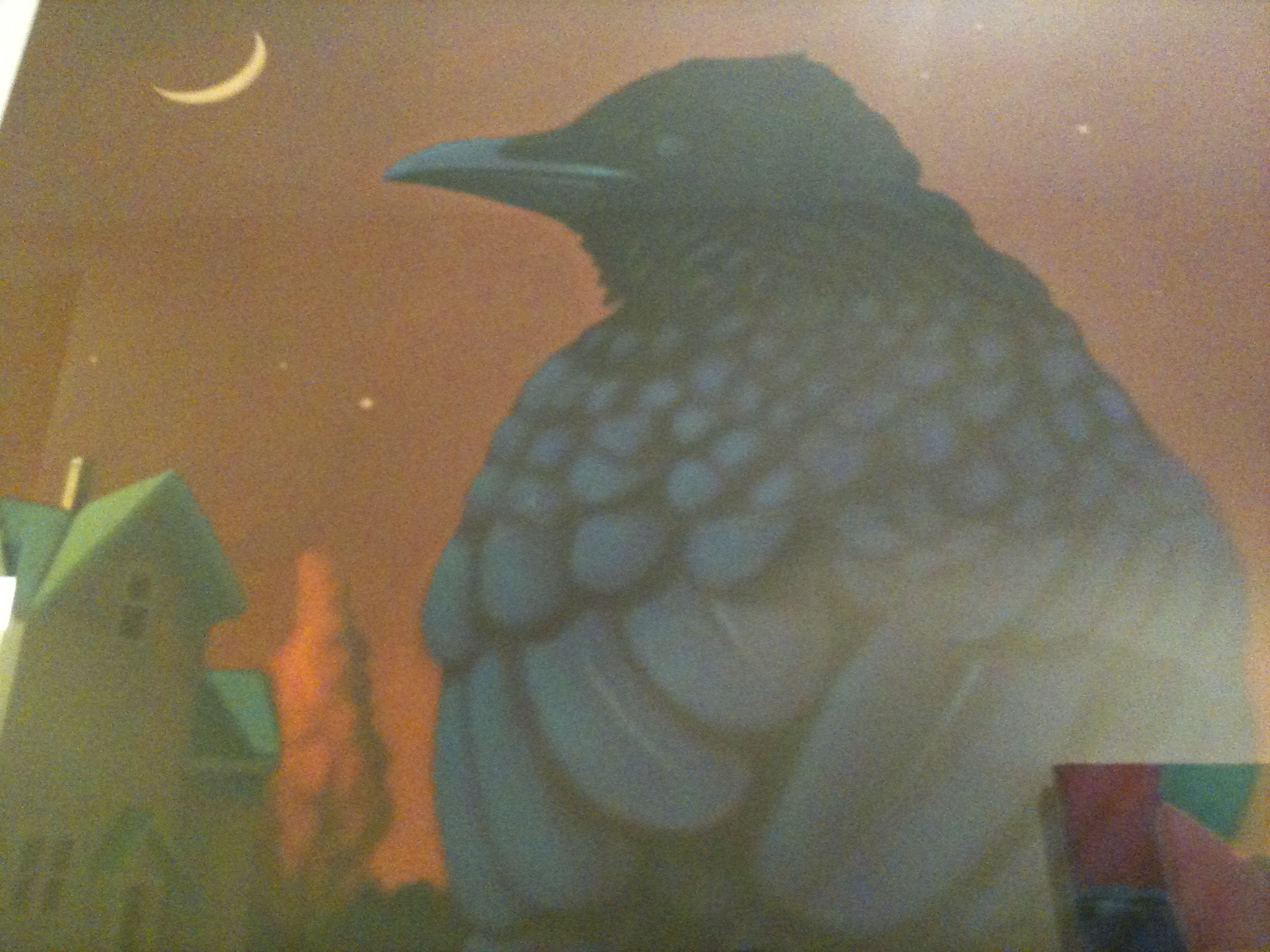
On the wall behind her hangs a large painting of a young girl cradling a crow. And further down, another canvas of an enormous raven perched on the body of a baby. I step up to take a picture of it and an older woman sitting at a nearby table asks if I’m interested in ravens.

She’s read all about them, she says.

Bernd Heinrich? I ask.

Heinrich is amazing, she says and we high five.

I tell her the story of the wash ravens and she tells me about herself. Her name is Maryann Markus. She used to teach, but she’s retired and she’s built herself a studio and she spends much of her time drawing nests. She is fascinated by ravens, she considers them her totems. There’s something I’ve never shown anybody, she says removing a velvet pouch from her purse. Inside, a hematite figurine of a raven. I squeeze it in my hand and rub it and squeeze it again. It’s heavy and has the dense sensibility of a low rumbling current.

She looks at me. It’s yours now, she says. They’re such powerful birds, guardians really. She asks if I’ve met Michael, the owner of the coffee shop and to fellow who did the paintings. She leads me to the back to introduce us.

He’s my age more or less, introspective and gentle seeming. Michael, too, says he can’t get his mind off these birds. He’s been fixated on them a while and keeps working them, making image after image. They’re deep, intense creatures, he says, and we’re afraid to let them into our lives. He says that the image of the baby and the bird scared people, but that they misinterpreted it. I see him as a protector, he says.

I tell him about the raven in our care and how our neighbor killed and maimed two of them. How I was fed up and in a weird way it was a last straw for us. I just wanted to get out of there.

But that’s all part of it, too, he says. You can’t run from that either. He says he hopes our move here works out well and that things take a good turn with the house. Before I leave, he gives me a hug.

I walk out of his office and see one more canvas.

20110825-100821.jpg

Rehabilitation

For all you ravenites out there, the saga continues.

In July, our family and Kerry’s were going to be gone for much of the month.  Never and More had joined up with the adolescents from the other family groups and were spending most of their time out in the desert.

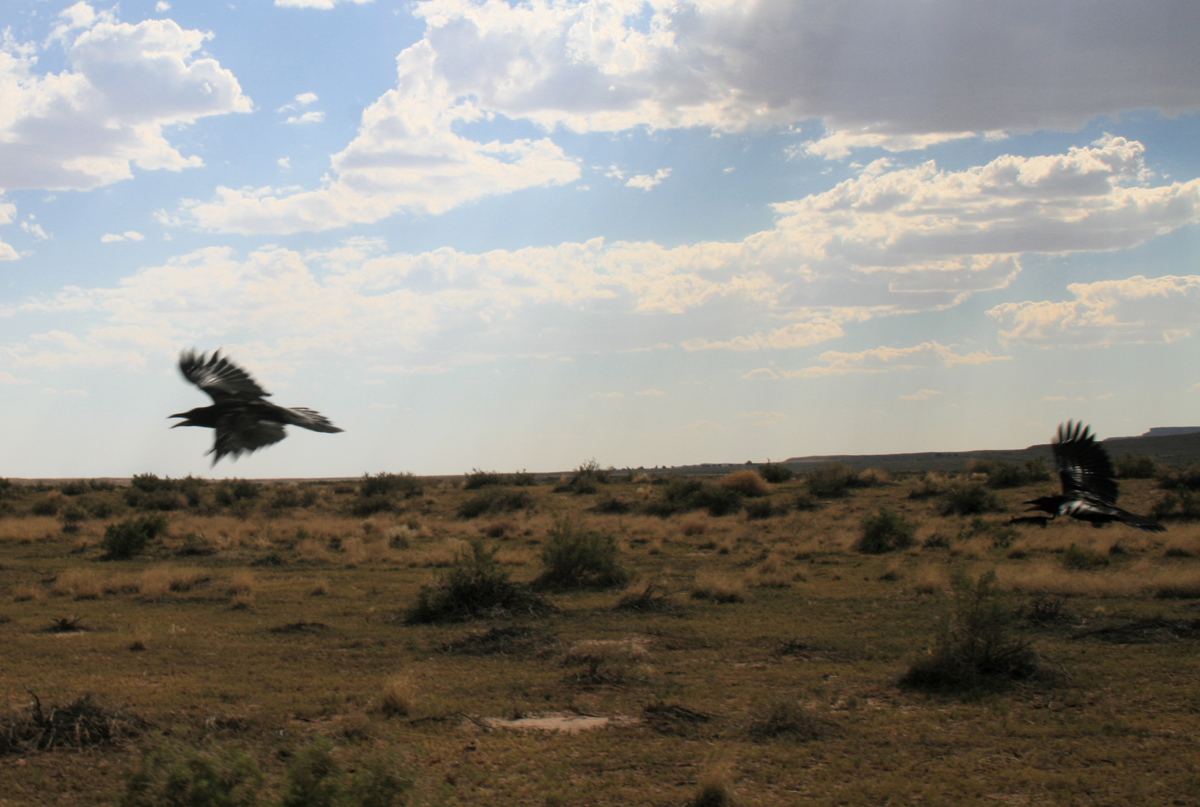
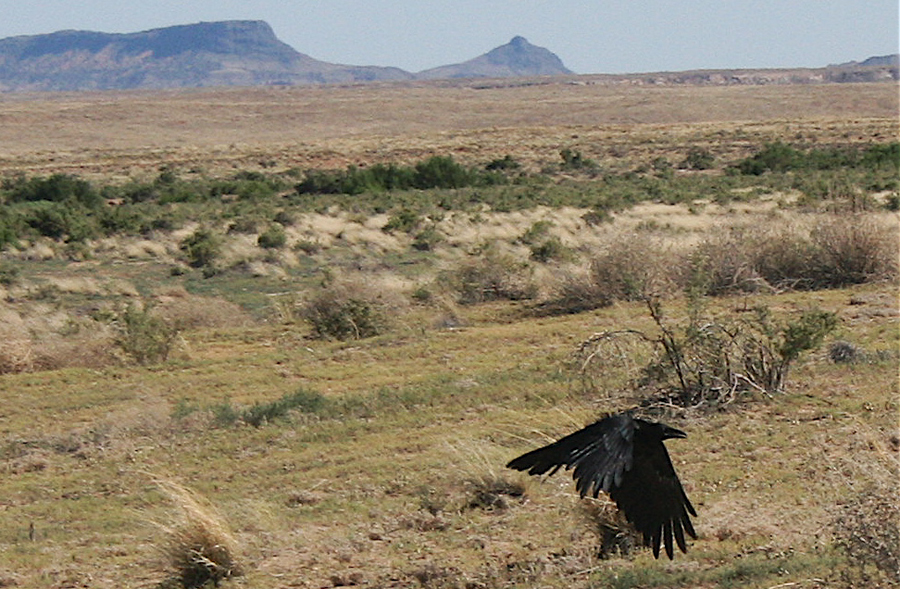
Kerry did an exemplary job meeting them in the desert, feeding them dead lizards, letting them fly off with their new found friends and capturing shots of their flying prowess.

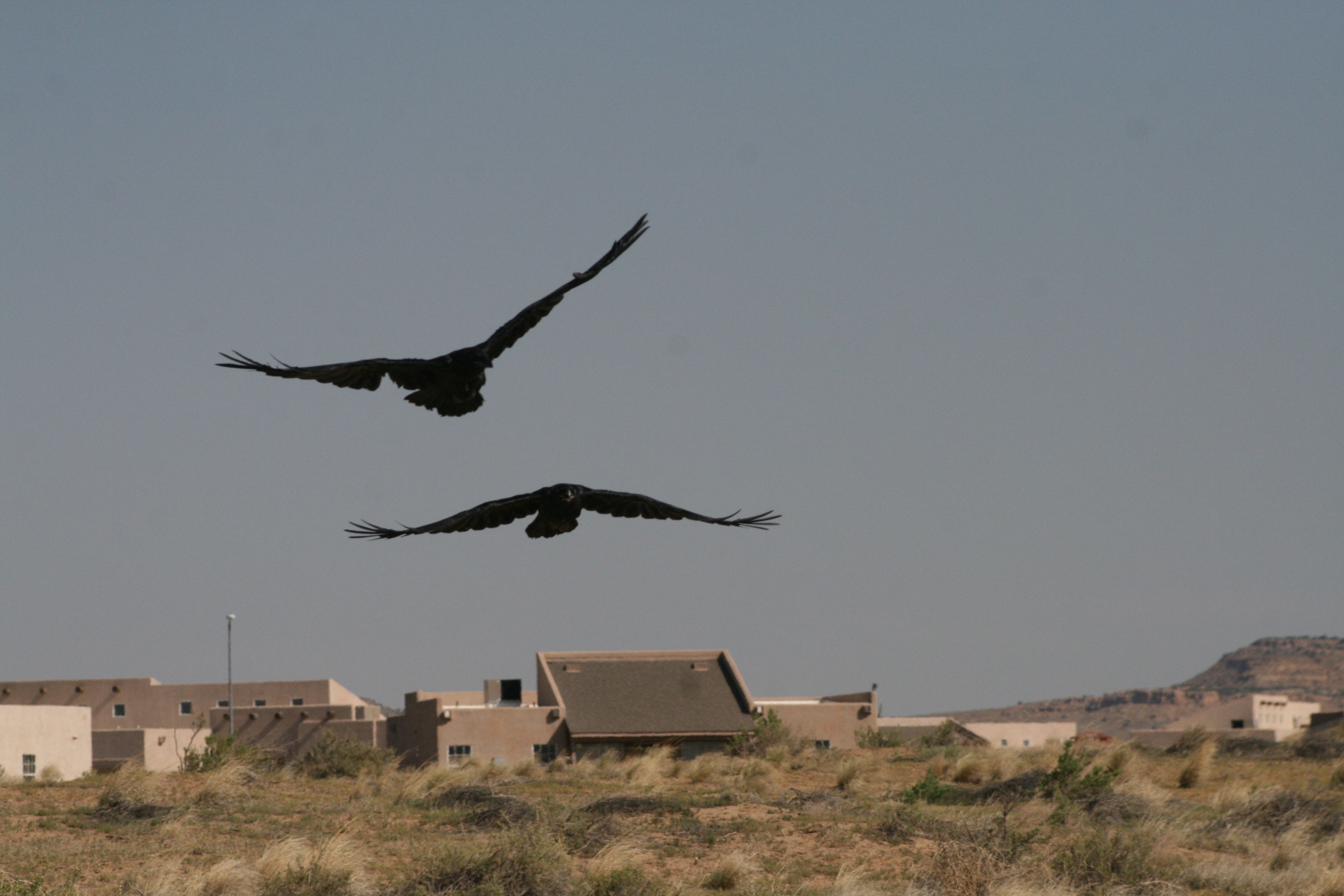
Never and More in flight © Kerry Hardy

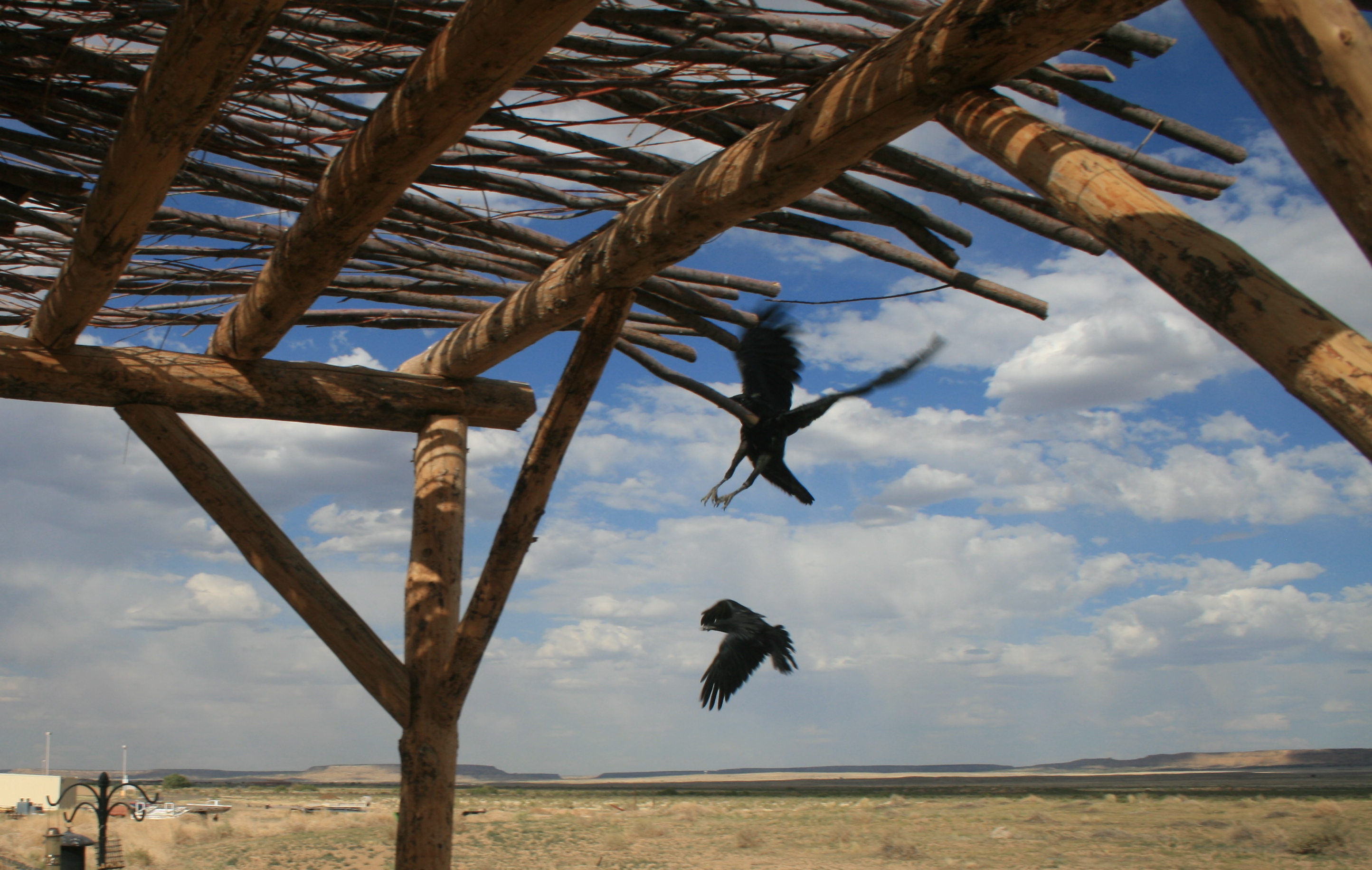
Pretty much every day, though, they would come home and hang in the shade of porch or visit with Poe who was still hobbled by his broken wing.

Never and More descend for a visit © Kerry Hardy

With each day, however, Poe seemed to be struggling.  It was tough with the heat, his appetite curbed, and with his siblings gone, he became less and less active.  Kerry and I agreed that with all of us gone, Poe’s chances of surviving the month were scant.

Injured Poe © Kerry Hardy

Resigned, we agreed that Kerry would took Poe down to Flagstaff and place him with a “wildlife rehabilitator.”  Which he did.  And all seemed good.  Poe settled in with the elderly woman.  And we were told that if he didn’t recover his flight, he could move to Bearizona, a wildlife sanctuary near Williams.  There he would be used as a “teaching tool.”  The ravens there were quite smart, we were told.  If they were handed a dollar bill, they would drop it in a piggy bank.  And if they were handed a plastic frog, they knew to put it in some water.

The thought broke my heart.

Poe being transported to Flagstaff © Kerry Hardy

15k in Therapy

Something got into our yard this morning and decimated the chicken flock.  The black hen dead, the two Plymouth’s carried away, the Yellow Leghorn freaked out.

I’m done.  Done with neglect.  Done with rabid dogs.  Done with unnecessary death.

I spoke with my friend Patrick yesterday morning.  He called me the prophet of loss – all that which has occurred and that which is yet to come.

He’s right.  I stood on the Sonoma plaza looking up at those California oaks and I realized he was absolutely right.  It’s the story of my life and my writing voice and all I really care to think about.

All of that loss.  And more to come.

Yet who are we without it?

Raven Cognition. Raven Food.

I’ve been trying to feed Poe industrial hamburger meat (from Circle M).  It’s the only time I’ve ever seen one of these ravens spit food out.  And we call it fit for human consumption…

Call it the end result of what we call civilization:  Advanced Meat Recovery.  In a modern day slaughterhouse, they  blast a carcass with a high pressure hose to recover any last bit of flesh and gristle and then churn it into hamburger.   Or as Kerry said, it’s what you do after you’ve already taken the lips and asshole and served it up to some poor unsuspecting consumer.

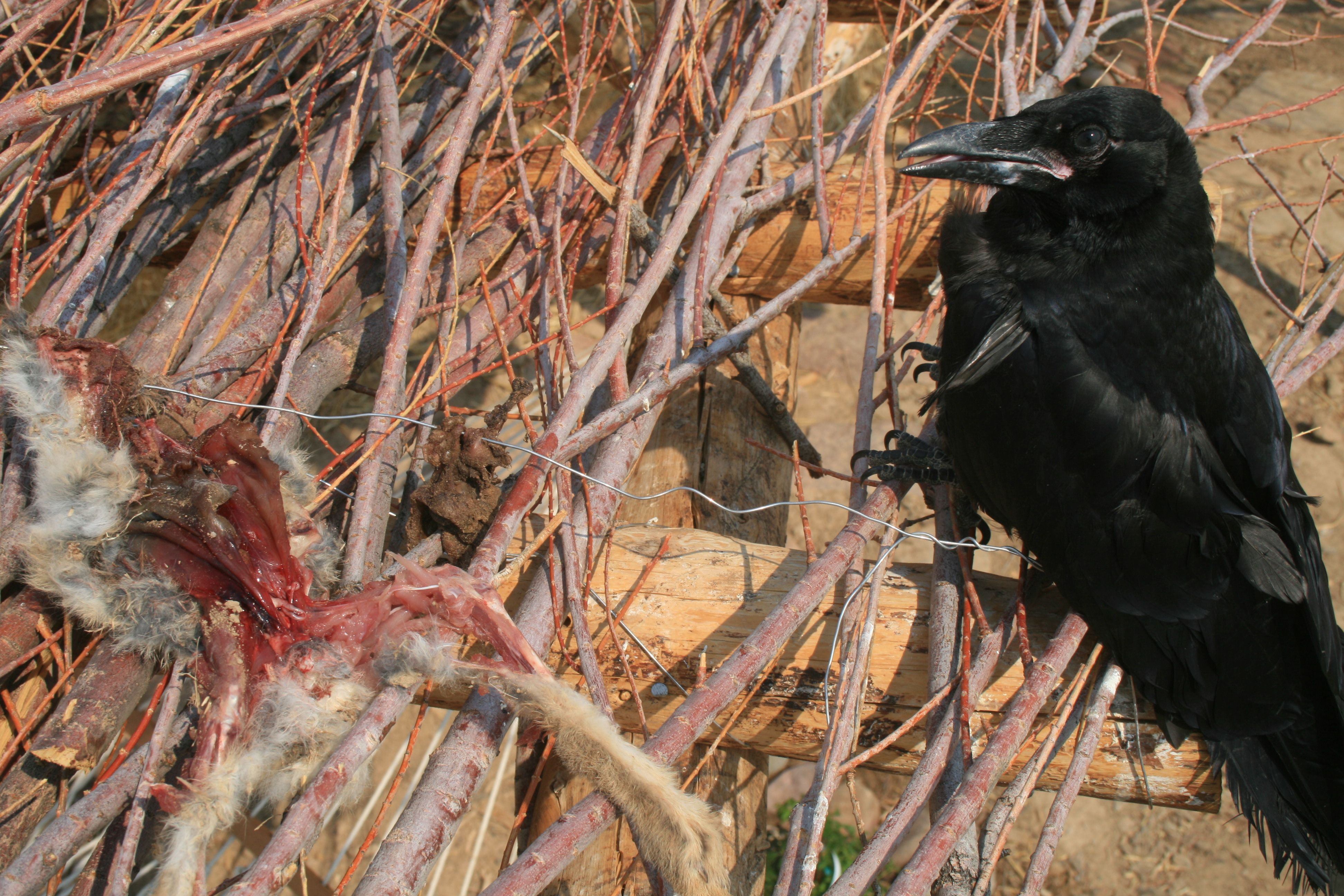
This morning Kerry brought over a dead rabbit that his dog had caught.  He fastened it to the top of the ramada and placed Poe proximate to give him a chance to pick and feed in a more raven like way.

He also set out to retrieve the other two ravens from the wash.  But as he stepped away from the yard (us conversing loudly all the while), we saw two lone figures making a swift approach in the distance.

Sure enough, it was Never and More.  They soon circled the yard and alighted on the fence near Kerry.  They kept bouncing and circling around him.  Amazing window into their cognition.

  1. Ravens recognize Kerry as a source of meat. This idea has persistence in their brains over many days.
  2. They recognize his voice as distinct from other voices.
  3. They associate his voice with him.

Not receiving food from him, they took to the ramada where Poe was, but they boosted away from him and the carcass pretty quickly.  Again:

  1. They showed a fear of a new foreign object.  A dead one at that.
  2. Death is scary.  That is, until we recognize it as food.  Then all is fare game.

Kerry brought his hand beneath the carcass.  The other ravens caught the gesture, squawked and flew back to the ramada.  He fed some rabbit entrails to Poe, they observed. He tried baiting Never and More with intestine, but they wouldn’t take it.

  1. They need to learn that a carcass is food.

How long will it take them to learn?  If the parents were present, would they teach or model behavior and would the ravens learn more quickly?

  1. Poe began pecking at the carcass.  Never and More squawked.
  2. Never and More gave their danger squawk.  We looked outside and saw Lola approaching.
  3. More grabbed rabbit entrails and took it to the ground.
  4. Poe continued feeding and Never ascended to observe.  He later flew down to join More.
  5. More, however had cached his meat on the ground.  Never found the meat and began to taste it.  I’m sure that caching is a sign that an object is of interest.  If More cached something, it must be good, it must have value.
  6. Never and More got into an intestine contest.
  7. Poe continued at his chowing up top.
  8. A lone adult perched on a lamppost facing us and called out in four short repetitive, gutteral trills.

Neighbors wonder if the ravens are hanging out at Kerry’s now, looking for food.  Folks don’t get that we have complex relations with these birds, that they come and go and fly about based on a whole set of variables.

The house sitter thought at one time taking them to the wash was too close if our goal was to make them go away.  Again, she missed it.  Our goal is not to make wild things go away.  Instead it’s to reintegrate these birds back into their environment and ecosystem.  That ecosystem includes the Wepo Wash, the other flocks, the parents, and to a limited extent, Walpi Housing.  For years the mating pairs have been doing flyovers, observing us, perching on the lamp posts, scavenging nest materials form our yards.  It’s fine that the birds come here, as long as it’s within the context of the larger environment and they’re capable of surviving on their own.

I hear the other young calling out in their playful sing song from somewhere out in the wash.  Never and More playfully follow the motions of the dancing hummingbirds.

The young flock approaches and circles and dives above our house, calling all the while, and eventually break apart and disappear to the south.

As I sign off, Poe has descended from the ramada.  Never soaks in the water.  More explores the yard.  Two hummingbirds circle.  the Plymouths rest in the shade.  The two other chickens scratch by the honeysuckle.  Two doves hang on the fence.  Lots of flies (call them pollinators).  Mango sits at my feet, watching it all.

Going Wild

More and Never didn’t roost at home last night.  But we think we know why.

While on his run yesterday, Kerry spied six ravens in the wash tributary by his house.  He displayed some raw elk meat (leave it to a downeaster to be running around with raw meat in his pocket), but none of the ravens were interested.

Later though, after he had fetched Poe from the wash, two split off from the pack and landed right next to him.  For the second day, Poe and More had been hanging with the adolescent flock!

Earlier I thought I had heard the sing song call near our house which now seems quite possible.  The new routine for Never and More now includes some house time (they like picking through the chicken feed and hanging with Poe), and lots of away time.  They’ll come and go during the day.  When they get bored at our house, they’re just as soon to take off and maybe check out Kerry’s or to go off elsewhere, presumably with the other birds.  If they can keep it up, we all will be quite happy.

More questions, though.  What’s the normal routine for the other adolescents?  Are they always in a pack?  Do they split off into singles and pairs as well for part of the day and then recongregate?  Are they roosting communally?

Do they perhaps have a set feeding period in which they all split off to find food individually (less competition for a single resource)?  More and Never know right away where there’s some good pickings – they can get free water and lots of scavengy refuse from the yard and compost.  They also like the chicken feed.  The other birds may go off in different directions and catch as catch can.  They may then recongregate in the afternoon for hang out time.  Lots yet to figure out.

As for Poe, we’ve decided that  since we’re no longer leading More and Never to the wash, he might as well stay at home in the yard to recoup his strength.  If More and Never are out and about, he’s basically alone down there and it doesn’t seem to push him to develop strength.

He’s a sitter and observer.  At least in the yard he has the stimulation of the other animals.  And the approaching dogs sometimes keep him moving, which is good.  We also have more chances to incent him to flap his wings and get a move on it.  I fear, though, that he may be settling into his crippled mode and perceiving himself as disabled.

That dang bird.  I love him so.

I’ll have to look into adaptive skiing programs.

Poe Learning © Andrew Lewis

Quoth not the Raven

I heard a new sound from the wild ravens today.

When Never and More returned (or so it appeared) with the four wild ravens, the four adolescents called out in a delightfully sweet sing-songy call.  Even after they settled in the desert 50 yards from the house, the continued to fill the air with sound.  Never and More, however, sat mutely on the fence.

According to Heinrich, ravens may have the greatest number of vocalizations out of any other birds [Any readers who’ve gotten this far have to check out Ravens in Winter].  But he also cautions that we shouldn’t get sidetracked by this idea of “language” as a sole proof of cognition.  Animals (including humans) can have (and communicate) symbolic or visual ideas without expressing them through “language”.  What’s key here might be whether the birds can use sound and motion to communicate intent and information to influence the behavior of their peers.  Clearly they can.

Our ears here at Walpi Housing have detected at least 6 distinct vocalizations.  There’s the loud relentless hungry call.  They would do this as young, their mouths gaped open, yawning to be fed.  Then the defensive/aggressive call used to scare away an intruder.  It’s feels like a shrill growl and is sometimes accompanied by a circling and prodding forward and falling back (imagine a boxer baiting an opponent in the ring).  Third, there’s the gentle gurgle when being fed or recently sated.  Fourth, the call and response murmur. It’s like a brief purr, or the “hmmm…yes…hmmm” that you get from a good active listener.  Fifth is a conversant squawk.  I squawk, you squawk.  But it’s not aggressive and more like a loud animated conversation between friends.  Except that they know what’s being said and we don’t.  And now lastly, the playful, sing-song call.

Of course, I would bet that these birds can say a hell of a lot more than that.  I’m just slow at learning raven.  As with prairie dog speech [Also check out the great NPR/Radio Lab story on prairie dogese], their language could possibly include a range of microtones that our ear can’t detect.  Their language could also include accompanying behavior or gestures or the simple (and complex) modeling of behavior.

Our birds have largely grown up feral:  they’ve been removed from raven society and have had to grow up in a human/cat/dog/chicken society.  Although we’ve done our best to feed and care for them, any well-meaning raven equipped with a cell phone would have long ago called CPS.

We are totally unskilled at communicating the wealth of information and skills a parent raven would model and teach their young. We can’t fly, let alone fly efficiently.  We don’t know good food from very good food, from bad.  I can’t build a nest with my hands let alone a beak.  And though I can pretend, I can’t talk raven.

Of course, that’s not entirely true.  Inter-species communication revolves in part around communicating intent.  And that may or may not involve words.  It may happen through creating a “sense” in one’s mind and being, and letting that sense communicate itself (through sub-conscious behavior or telepathically or whatever).  It sounds wacky, but how many times have you walked into a room, seen someone and recognized immediately, I like that person.  I want to be with them.  It’s Malcolm Gladwell’s “first handshake” – that the majority of your impressions of a person are formed within the first five seconds.

Or take our recent time away.  A nervous house sitter stepped in and the household slipped into chaos.  The cats ran away (for 15 days!), Mango the dog was afraid to go out, the stray busted into the chicken coop, and the chickens stopped laying.  Ravens wouldn’t allow the house sitter to approach, while Kerry could just saunter up.  Then we returned.  A few minutes of meows and calls by the hospital and the emaciated cats poked their heads out from the culverts.  Chester the stray returned to his characteristic abeyance.  Mango perked up, and we’re back to two eggs a day now.  We’re back to a peaceable kingdom.  How is it that our presence can communicate “all is well, all is safe” and balance be restored?

Think also of Cesar, the Dog Whisperer.  Or better yet, the original Horse Whisperer [the recent documentary Buck is a must see].

So back to the sweet sing-song call of the ravens.  I heard it from the four wild ravens, but not from Never and More.  It could be that they were wary, or didn’t yet know the social cues that would help them fit in with the crowd.  But it made me wonder about the language instinct and language acquisition among birds.  I hazard that something like the language instinct is there; even without the influence of the parents, the ravens share information.  Hungry birds call out shrilly (imagine the nerve-rattling quality of a baby’s cry).  Or dog approaches Poe, and Never and More call out defensively.

But what of more nuanced communication?  Like humans, do ravens have a critical period in which the parents can jumpstart the language acquisition ability, and if they miss the window, the birds won’t be able to get it?

I think of the girl Genie [check out the classic New Yorker article by Russ Rymer]   who in the 1970’s was raised in far more feral conditions than our poor ravens. She spent the first 13 years of her life locked in a room tied to a potty chair.  Her father beat her and silenced her whenever she attempted to make a sound and other family members were forbidden to speak to her.

Genie grew up without language.  And despite being strikingly intelligent and communicative, she could never learn how to communicate her ideas through speech.

What of our birds, then?  We’ve spared them from grievous abuse (as far as we know), but have the poor things missed a window that would have allowed them rich communication with their fellow birds?  Why should emergent neural pathways in a highly developed and socially oriented avian brain develop any differently than that of a human?

I want their fellow birds to ask them.  And what if they can’t answer?  What if quoth not the Raven?  What if Nevermore?

Mowgli

This morning, Poe alone in the yard.  No Never.  No More.

In the west toward Floyd’s field, a mile distant, I heard a few calls.  I suspected it was More and Never, but wasn’t sure.  Two days ago on the walk back from the wash, a solitary raven did a fly over.  Poe (in my arms) was the first to catch sight of him and struggled excitedly.  One of our ravens observed where the wild one landed and flew over to join him.  The second raven soon followed.  Never and More had taken off to join one of the wild ravens.  Since it was solitary, we assumed it to be one of the parents.  And there they remained together, all three flitting about in the desert and getting acquainted.

At dusk, Never and More returned and settled in for the evening.

So now, this morning, I have little doubt that the two are off with their new found friend.  But lo, what do I see approaching?  What appear to be six adolescents, dipping, soaring, circling around one another as they approach the house, all the while calling out playfully (more on this in the next post).  I step to the back yard just as four of the ravens settle onto the rise beyond our yard.  And there are Never and More perched on the fence.  The wild ravens continue to call.  It’s not defensive, but more like a summons:  come out and play, join us, why are you sitting on the fence?  But More and Never don’t respond.

I swaddle Poe and set out toward the wash, hoping the other two will follow, (as part of the on-going experiment, I don’t overtly lead them with food this time, waiting to see if they’ll just follow Poe) but they remain where they are, tired perhaps from their morning exertions.  The four wild ravens, however, follow (and lead) us out, and eventually settle in the brush on the far bank while I put Poe in his customary place beneath the tree.  I feed him and he turns to face in the direction of the other birds.  I also leave meat out for them, hoping to attract them to Poe.

I feel like a doting parent trying to introduce my child to new friends on the first day of pre-school.  Please, I want to say, he’s a good bird.  Please, will you be friends with him?

Poe, Alone

We’re trying to help the ravens return to their kind.  But it’s hard.

They’ve all had a good number of Wepo Wash days.  We have to carry Poe, but Never and More will go back and forth between our house and the wash at will.  At dusk, though, they return home to the ramada to roost.

Yesterday was blazing hot.  We were to be gone into the evening and so didn’t take Poe out because we wouldn’t be able to retrieve him before dark.

Never and More didn’t leave either, though. Instead they chose to hang around with Poe.  It could have been that it was just too dang hot (all the birds sat around, following the shade, their mouths gaping open as a cooling response).  Or it could have been that they enjoyed being in close proximity to water.

Or perhaps they just wanted to be with Poe.  A couple times when one or the other of the dogs approached him (Poe tends to hang out on the ground), the other two alighted near by and cawed defensively.

When I returned that evening though, More and Never were nowhere in sight.  For the first time, they chose not roost at the house.  A good thing, I thought.  But that left Poe, alone, roosting on the back of one of the porch chairs.  The dogs sniffed at him and he was safe, but I thought it not good for him to become too comfortable with our house.

I carried him over to a log leaning against the ramada and he clambered up it in an ungainly way.  It wasn’t too comfortable of a roost and he had to work to stay balanced, so I brought the ladder over and he soon alighted on that.  He took to his customary habit of staring off silently into the desert, as if awaiting for someone or something.  He’s one to always look out, away from even his siblings.  I wish any of you could experience his gaze, so solitary and at once both hopeful and resigned.

I lay in the hammock, looking up at the stars.  And I talked to Poe.  And he murmured back.  I felt sad and worried for him, stuck with my meager human company.  He needs to get better.  He needs to fly.  Or soon he will be left behind, first by his siblings and then the other ravens.  And then even by us.  It felt too unjust.  Too undeserving.  And with only that, he and I continued to wait.  We stared out into space and that deluge of stars.


Analog

Interesting © Kerry Hardy

My problem with our species?

For all our gloating about our big brains, we still are largely only able to comprehend two states of being at once.  Good and bad.  Black and white. God and the Devil.  Republicans and Democrats. And then we often try (very hard) to reduce them to only one.  That’s about all we can handle.

Like good sound recordings though, the the universe is not binary, but analog.  There exists a whole range of states, meanings, perspectives – a vast heterogeneity of experience.  How could we possibly distill something to being solely good?  Or solely bad?  How about something in between and open ended, something like…”interesting”?

So what brings me to this?  Ravens, of course.

Yesterday morning, Kerry and I together went through the wash routine with the birds, now down to three (or really just two and a half).  I swaddled Poe (we’ve now identified Broken Wing as him, partly due to his consistent aloofness from the other two, his blazingly independent cross-desert walks, and his consistent backward twisting of his head when we feed him), and we led the other two across the desert to the trees in the wash.  Once there, we all settled down in the shade:  the ravens to play, Kerry and I to talk.

What a wonderful gift to observe these creatures at such close range.  And how sad that many of our neighbors continue to miss the opportunity, just because they’ve chosen to label them a nuisance.  Even more ironic, we’re pretty certain that one of them is (intentionally or unintentionally) responsible for killing one bird and injuring the other.  Without his engagement, we’d now have four ravens flying freely out in the desert essentially minding their own business.  Instead, Broken Wing Poe still depends on us for feeding and the others routinely come back to hang and visit with him.

We all had some nice doings out in the wash, though.  Never and More played tug of war with sticks and grasses.  More found some meat scraps and tried several times to cache it in the sand.  We observed More, as always far more quick on the wing and the first to grab stinkbugs and treats when he spies them.

We watched the birds hunt insects.  At close range, you can also see their eyes can be directed forward and hence may be capable of stereoscopic vision (a hallmark of predators).  Which suggest that these guys may not be just scavangers and feeders of carrion. They may be able to hunt lizards and small animals, putting them in the same hallowed space as eagles and hawks.

Poe, meanwhile, hung in the shade, tested his wings, knelt in a cooling position, and sometimes talked.

And in all, very, very interesting.

Yeast Shit

Call it what it is. Fermentation is basically what happens when certain yeast cultures do their thing. They eat, they breath, they shit. Yeast eats sugar. When it breathes, it exhales carbon dioxide (the stuff that makes bread rise and beer fizz). And when yeast defecates, it shits out alcohol.

Which, it turns out, humans actually like to drink. Kind of gross isn’t it?

And that brings me to Colorado spirits. Back in the day there were lots of small scale yeast farmers. Practically everyone did it. Picture the toothless guy making his hooch in Appalachia. Then it became the exclusive provence of industrial distillers: factory farms for yeast and yeast crap.

But now we see the resurgence of small-scale local artisanal distillers. And the San Juans have become a hotbed. Maybe it’s the remoteness or the mining past (when any three block town sported six saloons and as many cathouses). Or maybe just chalk it up to southern Colorado wackiness.

Throw it all together in a copper still, boil away the vapor, and what’s left? Jackalope gin out of Telluride. Montanya Platino rum (big gold and silver medalist) out of Silverton. Telluride vodka (rated 92 by Wine Enthusiast). And of course Stranahan’s whiskey (actually out of Denver, but they count for wackiness).

So do you really need to drink all that yeast shit? Not really, though it’s all exemplary for smoothness and taste. The really BIG thing is that those gazillion defecating yeast are leading the way in the relocalization of our economy.

And as big oil falls apart, those little yeast (or at least their agricultural counterparts) will become literal lifesavers. In ecosystems, heterogeneity and diversity equate to stability. As does small scale interdependence coupled with relative self-sufficiency. You make the whiskey. I’ll grow the corn. And if you don’t come through with the whiskey, I’m still good for the corn.

Furthermore, when I get my whiskey from you, 80 cents out of every dollar remain in the community and are shared among us. If I buy from Diageo (the world’s largest liquor company) god knows where that money goes. And on top of that, both my corn and your whiskey create social currency – you and I have a relationship, we’re working to support one another. Relationships are uber-currency. They’ll support us when both the dollar and the euro fall apart.

Which leads to a great irony. All those abandoned silver towns high in the San Juans that have struggled for five decades? They’ve had a head start in trying to figure it out. And woe to those large cities that are still on petroleum life support.

I’m sure there’s some mountain rat who’ll drink to that.

Written in Mancos

20110628-040819.jpg

Raven Energy

Raven Energy © Kerry Hardy

It seems our house sitter may be losing it.  She’s become scared of the dogs.  The ravens.  The spiders and creatures that may come into the house.  She won’t go to the wash because it’s too dangerous.  There are snakes, she said.  She’s basically feeling scared of wildness.

I talked to my friend Darron this morning.  It’s probably the raven energy, he said.  It’s powerful stuff.

Raven energy.  Now there’s something to think about.

Darron is one of the few Hopi who gets, I dare say identifies, with our perspective.  He works for Facilities at Health Care.  He was one who originally opposed the destruction of the native nest.  Wait, he advised.  Wait a few months and soon enough they will fly away.  At the time, he said that all things have a purpose, that there’s a reason those birds are here on this earth.

Which is to say that every living thing occupies an environmental niche.  Each has evolved to survive in a particular place in a particular way.  And the life and demise of every thing allows others to survive.  Each of us has co-evolved with the creatures around us.  Unmanaged, we together compose an ecosystem.

Which brings us to raven energy.

The universe (at least as we know it) is basically energy moving through a system.  There’s the energy and matter that we encounter in our daily lives:  speeding cars, a musical note, plants, granite fireplace stones, metal bowls, breaking glasses.  And then of course, there’s dark matter and dark energy which we don’t yet have the correct range of senses to detect.  That stuff composes 95% of the universe and yet we can’t perceive it.  And we don’t know what the heck it is.  We don’t yet fully understand what butterflies and dogs and horses can sense.  Perhaps they know of dark energy.  And if we spoke the same language or had the hearts to listen, perhaps they could tell us.

As for the scant world that we know of – basically things and movement and explosions and music – these are really just the suds floating on the surface of the “real” universe.

In that world – the world that us humans know of – there’s kinetic energy; basically energy released from it’s material form.  The rock rolling down the hill.  A vibrating violin string, Ichiro’s bat swinging through space.  And there’s potential energy that’s still locked into atoms:  Ichiro’s bat at rest. The stilled bow.  The rock resting at the top of the hill.  Or better yet:  Ichiro’s bat waiting to be burned. And even Ichiro himself, his flesh waiting to be consumed by our ravens.

Ichiro’s flesh consumed becomes raven energy.  It’s that life force that has become instantiated temporarily in the DNA and bodies and behavior and flight of the ravens.  In this form, it feels like old energy.  It’s fierce and keen and primeval.  We associate it with death because ravens consume death.  And there has always been death which probably accounts for why ravens have been around for so long.  But they’re also opportunists which means they figure things out.  They can be just as prone to eat life (corn), which is why we just as easily revile them.

Darron advised that we need to be careful around those birds.  They can probably even hypnotize you, he said.  Which may very well be true.  Five people now are following their behavior, tending to their needs, helping them be who they want to be.

Burn cedar, Darron advised.  Bless your house sitter.  Smoke the house.  Smoke yourselves.  Smoke the wheels of your car and even Mazie’s violin.  You need to heal this, he said.

He said that yesterday they came to visit him.  They were at the Health Care physical plant observing his movement and behavior.  He approached to see if they would land on him.  The ravens gazed, perhaps with interest, and flew away.

Born Free (sort of); June 22 evening

A final dispatch from Kerry from yesterday evening.

Gotta go hiking w/ John in a few minutes, so I went down around 4 PM to collect Broken Wing. Halfway down who should I see flying up but Never and More. They went 3/4 of the way to the house, then landed for a quick tete-a-tete– and decided to come back down! When I reached the wash, Broken Wing gave me the same affectionate greeting as usual; ran right over and perched almost on my shoes.

We headed for home and then stopped halfway there for a little snack for everyone. You can see them in their usual places– BW closest, Never deciding it’s OK to come right in on the gallop, and More lurking in the distance– probably knowing that I’ll walk over and give him some. The two fliers just leapfrogged along with us, and everyone got one last bite once we were all in the yard.

It’ll be a slow weaning away from us.  Once Broken Wing is better and they can function more freely, I’m hoping we won’t need to intercede so much.

More Catches Up © Kerry Hardy

Born Free (sort of): June 22

Kerry Hardy, naturalist at large:

The same routine worked well once again– Broken Wing as decoy, and this time the sibs even beat us down to the wash and were sitting there waiting (I daresay their pattern recognition skills exceed those of most of our neighbors). Broken Wing apparently has a favorite seat down there; he headed right for this elevated tussock and hunkered right down– until he noticed the one last scrap of elk that I was saving for bait to lure the others over. He hopped from about 20′ away and was just about to nab it (pretty good eyesight to spot the small red morsel among the black, blue, and green objects!) when I spotted what he was up to. Two minutes later, Never and More had joined the party, and were swilling away at the water dish and getting cozy in the elm’s shade. Not a bad setup.

I was talking with Shawn this morning and he said he’d gotten a ‘call’ (i.e. complaint) about the birds. I explained that we were doing our all to rehab and wildify them, and were making good progress. This relieved him– he’d done his job and told us, and now he was off the hook.

More flyovers from the resident birds, and (so far) no sign of hostilities, just curiosity. Never and More flew several hundred yards uninterrupted on their way to the wash, and actually landed about fifty yards from the big nest tree– which had several birds sitting in it– and spent five or ten minutes just wandering around there, so I think they’re getting a handle on the raven geography of the area.

Slow progress.

Broken Wing © Kerry Hardy

Born Free (sort of) June 21 evening

Broken Wing is definitely the star today. I was pretty late heading down to get him tonight (owing to a flat tire on my bike ride), so I took the truck. About halfway down the road who should I see, gamely hopping back towards your house. Quite touching! and such a trooper. I picked him up and just held him as I drove; he was quite happy with it all (and even gave Lola a good peck on the nose when she got too friendly!).

The sibs greeted us enthusiastically when we reached the yard, and all three (successfully) begged a little nightcap of elk from me. I figure it’s good to keep that food connection strong so that they’ll follow me to the wash each day. Cindy was amazed (and relieved) that they had spent the whole day there, and I think she’ll be game to lead them there herself in my absence. All in all, I’d say really good progress today.

To complete the picture, the wash is a quarter mile distant from our house.  In order to reunite himself with his siblings and return to the ancestral roost, he made a beeline on foot for the entire distance.  You have to love the guy.

It also spotlights the importance of the intra-raven relationships as well as physical place.  They need to be on the ramada by nightfall.  It’s not willy-nilly choice, but rather a pit in the stomach as dusk advances and they’re not in a place considered safe.

The beauty?  When they are fully airborne and mobile and integrated, is there really any problem in a couple birds sleeping in our yard?

Here’s to Broken Wing.

Broken Wing © Kerry Hardy

Born Free (sort of): June 21

And the odyssey continues:

This morning Cindy couldn’t get the ravens in the cage. No problem; with enough elk meat anything is possible. I just grabbed Broken Wing, wrapped him in a towel, and headed for the wash, feeding him tidbits as I went. The sibs couldn’t stand the thought of not getting their fair share, and they flew along quite nicely. Just left all three of them down there with water, and they seemed happy. Even more interesting is that at least four ravens did flyovers, and have perched just 100 yd. up the wash in the big cottonwood. Let’s hope that they talk today.

Today’s pix: #1 is the native birds settling in up the wash; #2 is a shot from the wash of that weirdo’s unit in Walpi Housing (what’s up with that guy and all the brush?); #3 is Broken Wing, my prize decoy, enjoying a well-earned drink.

Broken Wing is getting stronger and stronger; some very vigorous flapping today, apparently pain-free. Flying in 3 days? As I walked back up I was chuckling at the irony of your being at the bluegrass fest, surrounded by world-class musicians– and diving for your computer three times a day for updates on the ravens. I’m sure this will be used as evidence when they lock you away. . .

Native Raven © Kerry Hardy

Broken Wing © Kerry Hardy

Walpi Housing

The four wild ravens were either the other set of fledgelings or the two mating pairs.  Note the incongruity of our units in this setting (despite the groovy ramada).

And I’m fully ready to be committed on this one.  We’ve been encountering our share of bumps on the human side, starting with the forced removal from Health Care and continuing on to neighborly complaints.  But it only steels our resolve.  If we as a species are that removed from the environment around us, then it’s time to hone the edge and take it to the streets.  Time for us, perhaps, to reinhabit the wildness that is our own nature.

Born Free (sort of): June 20

More from Kerry:

Another good day, with all three safely roosted in the yard at dusk. I went down to the wash just at sunset to round up Broken Wing, who literally came running to me in his best baby-like behavior. Wrapped him in a dishtowel and walked back up, with him calling himself almost hoarse the whole way.

The sibs were on the ramada; they heard us coming and got excited; they did a flyover when we were still 100 yd. away. I gave everyone a little elk nightcap to calm them down (almost as good as Stranahan’s).

Cindi’s going to try and catch them all around 6:30 and will call me when she has them– and she’s also going to ride down with me! I saw Gary in his yard so I brought him up to speed on our plan of a gradual separation– which seemed to relieve him. “All signs look hopeful,” as the magic 8-ball would say.

Roosting © Kerry Hardy

Key fact.  We’re dealing with autonomous individuals here.  We can’t dictate the pace at which they readapt to their natural environment.  This might take weeks or longer.  And even if they integrate with the flock in the wash, they still may continue to come “home” to roost.  Can’t fault them on that:  the ramada is a nice place to hang out.

Pleased to Meet You

Poor More.  It’s the first time he’s met a human without arms.

Pleased To Meet You © Kerry Hardy

Scare Crow

Baby and Parent Flyover © Kerry Hardy

I love this picture for reasons other than the humor.

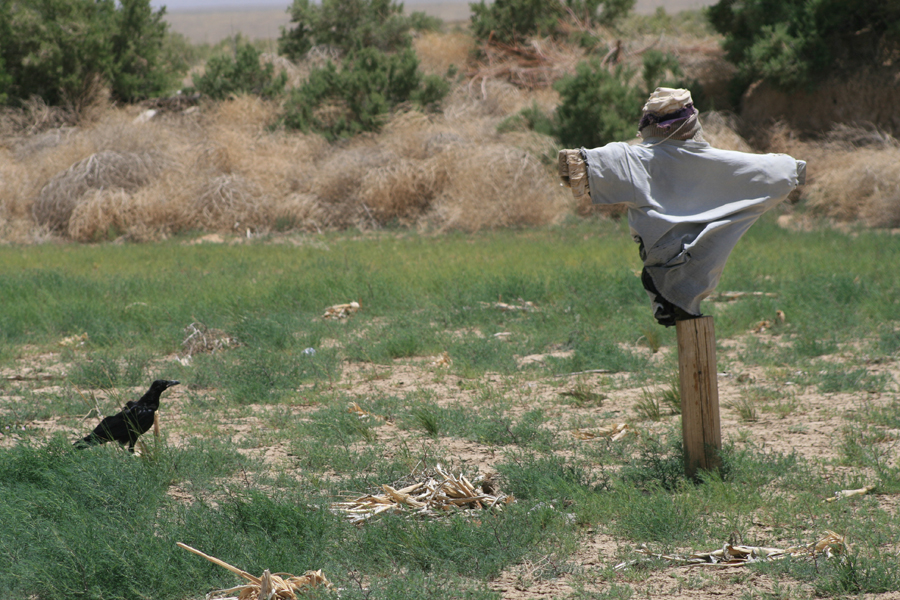
The house raven feels comfortable perching on the scarecrow.  The wash raven doesn’t.

That suggests that the dang things learn.  And if they can learn one thing, they can learn another.  A wash raven has learned to fear and distrust the human form and so it steers clear of it.  The house raven, though, has grown up perching on our shoulders.  It associates those shoulders with sustenance. To perch on a shoulder is no biggy.

The wash raven and the house raven probably consider one another deranged.

But what if farmer and animal got to know one another?  More, meet Lloyd.  Lloyd, this is More.

As for the farmer (I’m talking to you, Lloyd), behavior is malleable.  In what way can we encourage good behavior?  Is it possible to both preserve the corn and coexist?

Born Free (sort of) June 19

For those that have been following the saga, I’m providing Kerry’s notes, straight from the horse’s mouth.  If anything, they suggest the richness and nuances of the relationships, interspecies and otherwise.  Hurray for Kerry:

Big doin’s in the wash. When I took them down there, they got separated (because More freaked out a bit and got out of the cage) and were too skittish to recapture. So, I put the more timid of the two in the nest box which was about 150 yards away from where More was hiding in the sagebrush. I was pretty concerned about them finding each other, so a few hours later I went back down.

They were each exactly where I’d left them. I used water to coax Never(?) down out of the nest which he came to immediately. He seemed very affectionate, so I started squawking to him and walking towards More, and sure enough he followed– and meanwhile More was interested enough to fly and walk a bit closer, down into the cornfield.

My squawking brought two mature birds almost instantly; they did some real close flyovers.  Finally the two babies spotted each other– and I’ll tell you, it was quite touching to see them figure it out and hop together for a nuzzling. Palpable relief on all parts, myself included.

Then I walked back to the nest. Never followed along, and More did too at a safe distance. When we got back Never drank some more, and More almost dared to. When I gave Never some elk scraps and he went into full open-mouth-begging calls, More broke down and came over for his share too. So– they’re fed, watered, and both know where the nest box is, and they’re together (at least when I left them).

Lola and I sneaked away and they went off to explore the wash. Parents stayed in sight at all times– fingers crossed that they’ll adopt, rather than attack. Never even pecked and ate a bug at one point. If Broken Wing is still looking chipper tomorrow, I’ll take him down along with their breakfast. More heart-rending photos expected then. Enjoy these! A memorable Father’s Day, in its way.

Who needs TV.

Settling In © Kerry Hardy

Reunited © Kerry Hardy

Parent Flyover and Baby  © Kerry Hardy

Parent Flyover © Kerry Hardy

Born Free (sort of): June 17

The day that the fourth raven died.  Kerry pushed onward:

 I procured a 3′ long bullsnake that a friend had bravely bludgeoned with a 2 x 4 yesterday. I opened its belly and wove the whole schlange into the top of the chainlink fence with the two bravest ravens watching intently. . . and before I had made it to the road, they were both up there pecking, and seemed excited. One grabbed some intestine and flew down to the gravel roadway with it; the other joined him and the two of them danced around it like it was some great exotic delicacy. So there’s hope for them as ravens. . . of course, if the smell of day-old dead snake in 90º weather hasn’t faded out of the Prius by tomorrow morning when we go to Flag, there may be no hope for me. Hang in there, I’ll see what I can do tomorrow once we get back from Flagstaff.

Kudos to Kerry for doing the snake.  Although our house now resembles some charnal house with heads on pikes, etc.

Our wonderful house sitter is none too happy with it, though.  She’s worried that it’ll begin to stink and will attract flies and that the neighbors will go ballistic.  The whole thing is horrifying.  She asks to take the snake down and give it a respectful burial.  She also wants to take the remaining ravens up to the Cultural Center and leave them there where they can pick through trash.

Which summons a whole range of thoughts.

  1. What’s more horrifying:  a rotting dead serpent woven into our fence or a overweight man bludgeoning a harmless bull snake to death with a two by four?
  2. Why do we pay respect to things once they’re dead and not when they’re still living?  Living things (be they spouses or snakes) are messy and involved tangled relationships.  Dead things are simple.  They’re dead.
  3. Ravens are not solitary dumb birds.  They live in family groups and have extended relations.  This family group has been living at the confluence of the Wepo and Polacca washes for a while now.  A Hopi can’t live apart from Hopi.  A Hopi outside of the clan and village and this particular spot of land is nothing.  They exist in groups.  To an extent, the same holds true of ravens.  To send them up to Second Mesa, we might as well ship them to Siberia.  Furthermore, they’re adolescents yet and a huge amount of learning is to be had, ideally through the parents.

But our poor house sitter.  She (along with the rest of the neighborhood) are under the impression we want to keep them as pets.  Time for a massive media campaign.  Perhaps through a blog or something.

Trust © Kerry Hardy


Born Free (sort of): June 16

The ravens are returning to the wild.

We’ve waited until they’re confident in their flying and they can safely evade predators.  Unfortunately, I’ve been away for the reintroduction and it’s fallen on Kerry Hardy’s shoulders.  Don’t get me wrong.  Despite his shameful and perennial unemployment and his poor standing in his wife’s eyes, he’s capable enough.  He’s from Maine, after all.  But what an opportunity to miss.

High wind day at Hopi.  Kerry went up on the ramada despite it all and removed the straw bale windbreak and the nest.  Two  of the birds pretty much  out and about for most of the day while the other two stuck to the yard.

Prison Yard © Kerry Hardy


Killing Prejudice


Hanging © Andrew Lewis

I think I’ve had it.  Forget this abortion we call civilization.

A few days ago our house sitter called all in a panic.  The vibe in the neighborhood was getting bad, she said.  The neighbor was upset because the birds were going to get his corn.  And they were loud.  Another was upset because they were flying to his house and shitting in his yard.  Another complained that one of the birds was calling outside her son’s window in a threatening way.

They’re birds.  Simply birds.  And they’re beautiful.  Beautiful when they squawk.  Beautiful when they fly.

They care for one another.  They don’t sell meth. They don’t kill their spouses or their young.  They don’t watch TV.  How many ways can I count my love for thee?

The following evening our neighbor returned one of the ravens to us.  It was threatening his corn, he said.  Never mind that his corn is only a couple inches high and that the birds don’t yet feed themselves.  

The bird was injured.  He wouldn’t take food and he couldn’t move his wings.  By the next morning he was dead.  Our house sitter buried him in the desert.

Every Hopi who’s heard of our raven adventure has expressed aversion.  Not just surprise, but something close to downright disgust.  They’re ugly black birds.  And they eat the corn.  I might as well tell folks that I’m raising rats.  

Last fall I found a bag of shotgun shells and a bottle of soda beneath the wash nest.  A farmer had perched on the bank and set to taking pot shots at the infants.  In talking to farmers here, they here don’t distinguish between the young and the adults.  They don’t even distinguish between the ravens and the crows.  How can they set to killing them? 

A farmer once told me that he crucified the “crows” in his field because, he said, “Crows are like Navajo. They’re afraid of their own dead.”

Funny.  True on some counts, but not on others.  First off, the things hanging in his field are ravens and not crows.  Secondly, I’m sure the ravens can recognize their dead.  And they probably know to steer clear.  But isn’t that a sign of a higher intelligence?  And shouldn’t intelligence of any sort be respected?  And then there’s the likening to Navajos. In contemporary Hopi culture, they’re seen as raiders and thieves.  I can’t speak for the Navajo, but the ravens out there are as much a part of the ecosystem.  And though Hopi trump all other human occupation on the plateau,  the ravens were here long before the Hopi.

But in some ways I get it.  Crucify the bird.  Set an example.  But do it with prudence.  And attention.  And thoughtful care.

I transplanted vegetable starts last week.  Within an hour the chickens had decimated them.  Chickens and children willfully trample our gardens.  But our first instinct isn’t to haphazardly kill them and hang them in a corn field.  

And christ, if you’re going to kill it, at least know whom it is you’re killing.  Know it by it’s name.  

No.  Our first option should be to figure it out.  In the garden incident, I erected a small chicken wire barrier around the vegetables.  In another, I might discuss the matter with the child. 

Isn’t it our responsibility to protect without killing?  If not, what are we then, but beasts?

Crucifixion © Andrew Lewis

What Good Are These Damn Birds?

Easy enough.

In recent years, what have we learned about them?

They may have more distinct vocalizations than any other bird.  Some believe they may have a highly developed language.  Although they’re frequently confused with crows, they are distinct both in a behavior and appearance:  they’re larger, have longer more pronounced beaks, a bearded tuft beneath their chins.  They raise their young for up to two years.  They have extended family units and complex social networks.  They can distinguish friend from foe and can share this information with other ravens.

They’re omnivores, but primarily feed on carrion.  That means they keep things clean. They eat grasshoppers and rodents that feed on corn.

But them just things I’ve heard.  What have I personally observed?

At times when I’ve approached a nest filled with fledgelings, the male (I assume) has shadowed close (within 15 feet) making loud distress calls.  The female remained in the nest guarding the brood.  At other times, both would follow me with loud calls, chasing me away from the young.

Over the years, as I’ve worked in the yard in the early mornings, the mating pairs have settled on light posts and observed me.  When I’ve called to them, they’ve responded.  Some mornings they approach and call out during their flyover.

When we first placed the young ravens on our ramada, the parents responded to their distress calls.  Since then, they’ve made multiple flyovers, seemingly observing their young.

The parents have relocated to the wash and have joined the nesting pair there.  At times I’ve seen all four perched in the cottonwood, collectively staring toward our housing a quarter mile distant.

The young at our house each have distinct personalities: Poe, the recluse.  More, the insistent.  Never and For hunkered together like twins.  They display affection toward one another and toward us.  When spoken to, they respond with vocalizations.

They’re curious.  And keen observers.

But there’s more.

Serendipitously, they’ve also provided a new lens through which to observe the world. Through their personality and behaviors and all they’ve summoned, new realms, ideas, relationships, phenomena have risen in sharp relief.

So listen for them.  And observe.  Perhaps the best we can do is to follow their call.

Raven Dusk © Kerry Hardy

Biodegradable

I just gave some money to Greenpeace. Why?

  1. Because it’s Father’s Day.
  2. Because my daughter will need to contend with all the environmental havoc that her father and her father’s father have wreaked on the earth.
  3. Because the young canvasser and her young mates receive so much rejection and someone from my generation should give them a bump.  Even though she told some white lies to get my donation.
  4. Because they take direct action. And direct action will be needed to help shut this baby down.
  5. Because I could get away with only giving my name and so I won’t have to get any crap from them.
  6. Because they gave me a nice sticker. And it’s biodegradable.

20110619-013208.jpg

Industrial Feeding

Mazie and I drop into Sam’s Club before leaving Flag.  We need cheap food.  Some for the ravens, the rest for a catering event.  

This cavernous place feels disconcertingly inhuman.  No, inlifelike.  In a strange way, it’s our contemporary Versailles or Great Pyramid, intended to inspire awe or even drive us into submission through sheer scale and illusion of abundance.  The far walls are not even visible.  Gargantuan piles of frozen meat stretch out into the distance.  Anonymous product is stacked 20, 30, 40 feet in the air.  Even the carts are obese. 

But note the corollary: in a living or social system, quantities such as this can’t exist without foul play.  This huge amount of product must come from an equally huge place. And it requires not just massive organization; to do anything at that scale requires fundamentally the mechanization of not just things, but people and life.  I suddenly get the willies.  Sams Club can only exist through the mechanization and enslavement of living systems.  The thought makes me feel dizzy and I can’t breathe.  I grab my daughter (along with three boxes of frozen potstickers) and we head for the door and make our escape.

Safe Way

In town, Mazie and I drop by the Safeway to get some expired meat.  The nice lady behind the counter says they have plenty.  But she can’t give it to me.  If she did, she would get fired.  Fair enough.  I exit and circle back around to rifle through the dumpster only to discover that it’s hermetically sealed and accessible only via a closed chute that leads in from the store.

Yet again the ravens have provided a new lens through which to see the world.  Without them, I wouldn’t know this wonderful fact about Safeway.  As my friend Kerry pointed out, “it’s safe.”  We can’t get expired meat there.  Or rather, meat that has passed “the date”.

And what is this thing about the “date”? It’s basically a random number designed to keep the store “safe” from liability.  How often have we purchased food that’s bad before the date or stays fresh for weeks after?  But we often treat the “date” as gospel.  Despite the reality that truly good food has no date because a) it comes fresh from a field or animal or b) is so unladen with preservatives that it will of course turn immediately.  

The nice lady behind the meat counter, though, gives me her husband’s phone number.  He works in animal control.  Basically kills raccoons and things that bother people.  Nice.

We may be able to use the rotting carcasses, however.  He says he’ll get back to me after he checks the regulations.

God knows.  They’re dead.  We’re not.  All safe.

Thought Full Raven © Kerry Hardy

Learning is Fun

Three ravens came down from the ramada today.  One takes to drinking water from the bird bowl. The others pick and pull at cardboard, straw, bread scraps in the yard.  They peck at loose material with their beaks, feeling their way through the world, learning about different materials. 

We learn through play and exploration.  We take flight, not because it’s time to feed ourselves and wing flapping will help us do so.  Sometimes we fly out of fear like Poe did yesterday.  But mostly we take flight just because it’s fun.  We learn through play.  We also learn from our peers.    One raven left up top, calls out yet to the others, afraid to make the leap.  Their presence down below goads him. I can’t help but think that they’re also observing the other birds and picking up something of how to fly.  Self-feeding is learned behavior.  I wonder too about flying. In the absence of true parents, how quickly will they learn what to do?

They will be left to learn only through play.  Feral, without society and species context, what new world will they discover and invent?

Self Feeding © Kerry Hardy