Game 4

A week ago we hunkered down in a standing room crowd in the Public House, the bar holding up the bleachers just behind home plate at AT&T Park.  The Giants were still battling it out with the Kansas City Royals and at that moment the Royals had just scored 4 runs at the top of the third inning.  The crowd had grown somber and quiet, folks clenching glasses of beer as we watched the wall to wall screens.

It’s not like I’ve ever followed baseball.  I shouldn’t have cared less, except for there was one person who cared a whole awful lot.

940997707_fLEod-XL

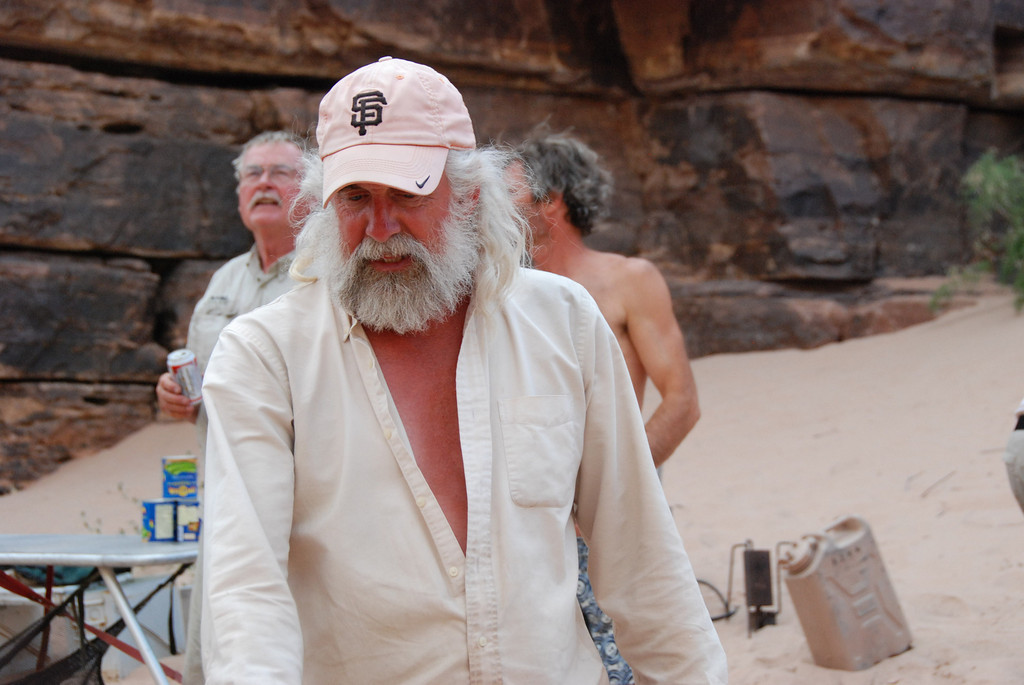
Howie Usher

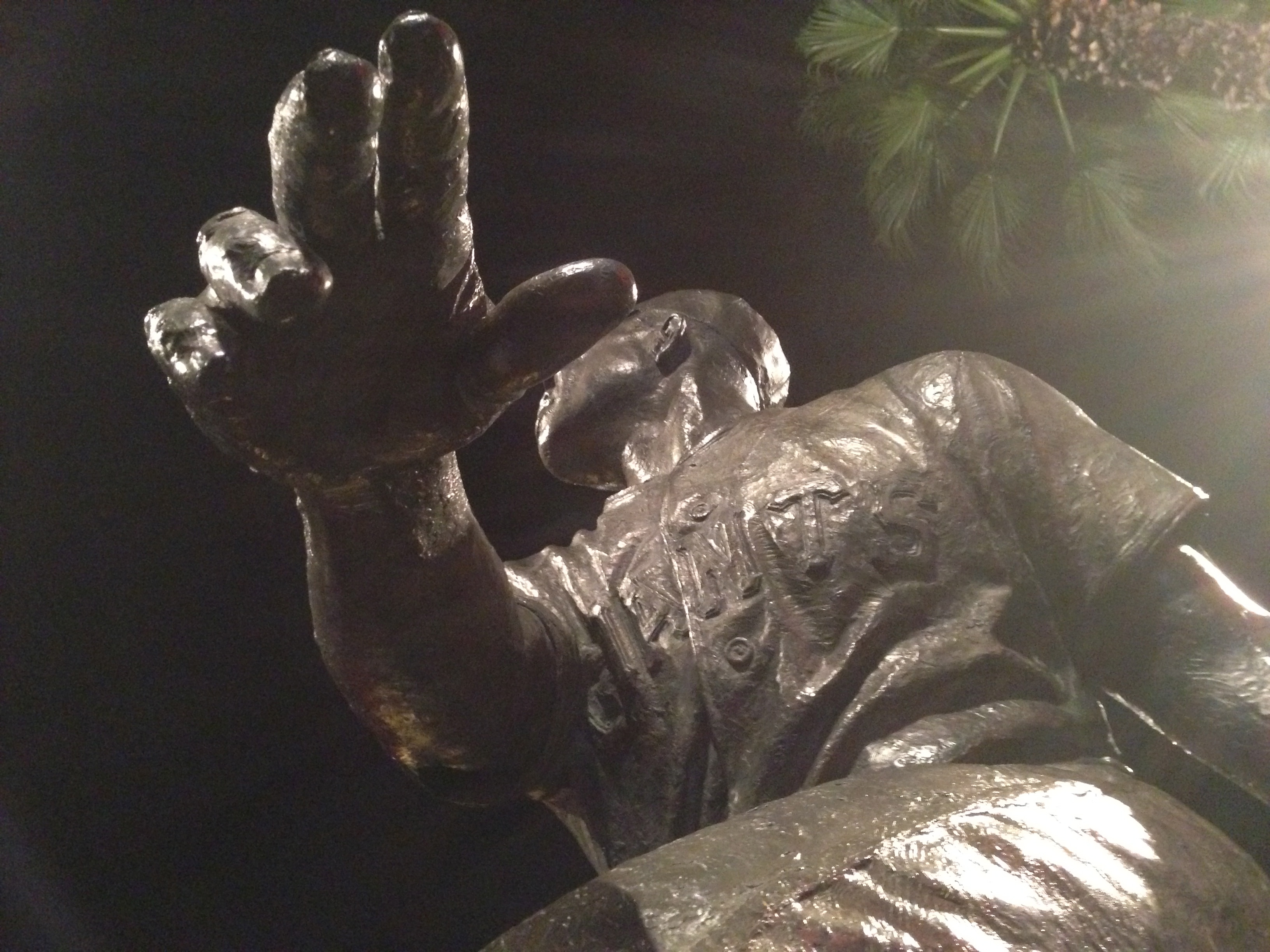
Howie Usher, our friend river guide, had suffered a stroke two years earlier.  He was defined by the river – he’s probably been down the Colorado and in the Grand Canyon over a hundred times in the last thirty years.  And he was defined by the San Francisco Giants.  Despite having grown up in Southern California, he’s been a religious Giants fan for close to fifty years.  He suffered through the 56 year drought when the Giants had gone without winning the championship. He reveled in 2010 when they at last won the World Series.  And he sat at home post-stroke, his left side mostly frozen when they won again in 2012.

At that time, he told everyone that he was going to get back on the river, not just get back on, but actually row, taking trips down through those daunting rapids.  It was not a likely prospect.  That kind of work is mostly for younger men and requires both parts of your body to be working at full capacity.

But for two years he counted and arranged stacks of pennies for hours to build his fine motor skills.  He swam  to rebuild his mobility.  His friends took him out on a boat on a lake so his muscles could relearn how to row again.  Mazie returned his lucky penny to him because it seemed that he needed it most.  He took long hikes every Monday to rebuild his stamina.

At the end of this summer, a small envelope arrived postmarked from Phantom Ranch at the bottom of the Grand Canyon.  It came from Howie and the envelope contained his lucky penny.  Earlier that summer he had rowed on two trips and once more had guided his boat through Lava.

A few days later, Howie emerged from the Canyon and on the long drive up from Diamond Creek to Seligman and on to Flag, he was able to hear fragments of the epic post-season game between the Giants and the Nationals.  He listened inning after inning all the way home to Clarkdale and walked in the door just in time to see Brandon Belt score the winning run in the 18 inning game, the longest in post season history.

And on this night of Game 4 in San Francisco, Howie had a chance to watch his first World Series game in AT&T Park.  He and his friend sat up high, just to the left of home plate, and cheered as the Giants crawled back from the third inning, scoring run by run by run until they upset the apple cart with an 11-4 lead.

In Game 5, Madison Bumgarner pitched a 5-0 shutout.  A few nights later the Giants were trounced in Kansas City.  And in the final moment of Game 7, Pablo Sandoval caught the foul ball at the bottom of the ninth and the Giants brought it home in a nail biter.

As Howie is always wont to remind: beware of calling the game too early.  The World Series is nine innings in each of seven games.  You can be way down and there’s always up.  There will always be a lot more baseball yet to play.

And one more equivalency for the river guide.   If it’s true that you’re always above Lava, then it’s converse must be equally true:  you’re forever below it as well.

IMG_4987


Disconnected

Image

All I had to do was one thing, the right thing, and this post may not exist. But instead something else is gone. And in it’s place we have this.

Last night my friend Johnny Meyering took his life.  Before he did so, he changed his Facebook profile picture to an image of the ocean and a warm beach.  A line of footprints traces the line of the surf.  I would like to think that he wanted to find peace.  And that he cared enough that he wanted people to know that.

Twelve of his friends liked the picture.  Two posted comments. One said, “Beautiful!”  The other asked if he was alright.

The problem is that he’s no longer there to receive it.  The line is now disconnected.  And no one will be there ever again to pick up.

Every thing in Johnny’s life up until last night could have possibly been fixed. And for some reason he couldn’t see that. And so he did the one thing that in fact could not be taken back.

This morning I looked at his Facebook page, that strange 21st century totem that is all about memory and memorial.

I wanted to Message him to tell him to please stop, to please not do it.

I wanted to Poke him to let him know, hey, someone is out there and cares.

I want to Post on his Wall and tell him to come up and stay with us for a while. I know some kids who are struggling to stay in school.  If you just go and sit with them for a little while and help them a little bit with their writing and math, you will immeasurably change the world.  And you alone can do it.

But he’s no longer there to receive any of it.

I look at his Friends.  I see faces from Seattle and from Japan and San Diego and Chicago. I know a few, but by no means all.  But the person who is friends with every one of those people?  The one person who bound all those people together into a circle of friends has made himself gone.

I look at his Likes.  The movie Gerry, and the movie Samsara, Jazz, and The New Yorker.  The Wire, Raymond Chandler, David Sedaris, Art Spiegelman, Taberna 1931, The Bill Evans Trio, Langston Hughes, Paolo Coelho, Huruki Murukami, The Urban Land Army.  And more.

This is the filagree that composes a person.  There is no one in the world who liked exactly the same things as Johnny.  And there never will be.

When the person becomes gone, the Likes and the Friends lose their life as well.  The thing that gave rise to the Likes and the Friends has gone away and in turn they have become a dry and intractable husk.

I remember decades ago a crazy Thanksgiving dinner we held in a small walkup apartment in Golden Hills in San Diego.  Anna and I weren’t married yet and a good handful of Meyerings were there and Johnny was too.  Anna’s high school English teacher came and left and got a DUI.  All the rest of us probably could have been in the same boat.  And Johnny was there, he had been studying Japanese.  He was looking youthful and handsome – he always, for as long as I knew him, looked youthful and handsome.  And his manner was funny and dry and he was as gentle and brilliant a person as I’ve ever known.

And that’s the weird part.  Even now, on this Memorial Day morning, I can feel him.  Which is to say that he had a feeling, a presence that was unique unto him.  No one else in this world ever has, nor ever will, feel like Johnny Meyering.  The feeling was so special.  And so precious.  And such a great gift to the world.

But we never recognize it in ourselves.  And we fail to understand that it will actually matter when it’s gone.

It’s so wrong.  And now nothing will ever bring him back.

That’s what I would tell him.


On being right

ImageThe strange thing about the South African revolution, I explain to my daughter this morning, was that it didn’t just occur in South Africa. Millions of people around the world, many of whom will never in their lives see Pretoria were part of the fall of apartheid. Who in the world of our generation was in some small way not part of Mandela?

Or so we like to believe.

I was part of the college class who, during our junior and senior year, saw the mushrooming of shanty towns in university plazas in 1986 and 1987.

I remember one particular moment (which my friend Patrick insists is apocryphal) in which a parade of students demanding that the university divest from South Africa, followed the tweedy university dean on his walk home. In loud unison they chanted, “You can’t run, you can’t hide! You’re responsible for genocide!”

Which in hindsight presents some interesting ironies. The dean was actually a super decent guy. A white man from the Northeast, as a young college student he had actively participated in the civil rights movement. His moral compass was dead on. He, like most people it seems, was trying to find his way through a difficult situation.

Beneath the long light of history, it turns out that we all may have been on the same side – students and university administrators, imprisoned ANC leaders and white Afrikaners . The time of apartheid was coming to an end. It was crumbling under the weight of it’s own injustice. And everyone was trying to find their way out of it given the cultural context in which they existed.

As the students erected wooden shacks, unbeknownst to them, the ANC and even Mandela himself was in secret negotiation with the Afrikaner National Party. As described in the wonderful New Yorker article, the Secret Revolution, his captors even escorted him out of prison on field trips so he could become reacquainted with South African society. Afrikaaner and ANC leaders went on covert outdoor retreats to become familiar with one another and lay a human foundation for the change that they all knew was to become.

As college students we understood the story. But we didn’t understand the whole story.

And on the other side, Fareed Zakaria, the head of the Yale Political Union (and now media pundit) consistently dismissed the protests. We have abandoned the politics of debate, he said repeatedly, for the politics of dance. He scoffed at the theatre of mock shanty towns and the riot of chants. Singing songs cannot replace informed debate, he argued.

He was right, of course. But not absolutely right.

The divestment movement, the protests, the refusal of the Oakland longshoremen to unload cargo ships arriving from South Africa, and yes, the anthology of songs and the dance – all contributed to the fall of apartheid.

If you are not included in the conversation, then you are forced to change the conversation. And if the very nature and arena for discourse excludes you, then you must change the arena. Government exercises power through courts and laws enshrined in civil and economic institutions, and racism and injustice can become encoded in those very laws and institutions. The conversation of the disenfranchised by definition must occur outside those civic channels. When you are frozen out of the conversation in the legislative chambers, then the conversation will continue outside in the language of the streets.

Listening to the news coverage of Mandela’s life, I’m struck by the volume of songs that were written about him. And its safe to say that change founded in joyful song stands a better chance than that founded in shouts of rage. In hindsight, it turns out the songs and the cascading melodies were part of the informed debate. People rallied to and around those songs. And thoose throngs placed unbearable moral pressure on those in power.

And lastly a story that is almost certainly apocryphal. After he was released from prison, Mandela had his study remodeled to the dimensions of his prison cell. He had lived there for decades and he apparently knew how to function in that environment. And ironically, outside of prison as he entered his elder years, he felt a loneliness that he perhaps had evaded in prison. Once you come to incarceration you learn that there’s only one true release.  And a few nights ago it was granted to him.

The Ache

Gallery

This gallery contains 3 photos.

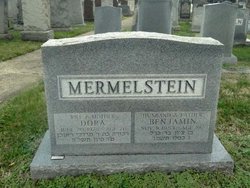
Benjamin Mermelstein had married Dora Mirowski. The Mirowski’s left their village of Bedzin in Poland near about 1880. There were at least a handful of Mirowskis who stayed behind. In 1939, many of them were photographed, their names inventoried and … Continue reading

Trochenbrod

trochenbrod 2In translation it means dry bread.

In the late summer of 1942, the Jewish ghetto was liquidated and the entire Jewish population of 3000 was murdered. Afterwards the village was set on fire. Less than 40 individuals survived.

Never in time will this place ever exist again.


Illumination

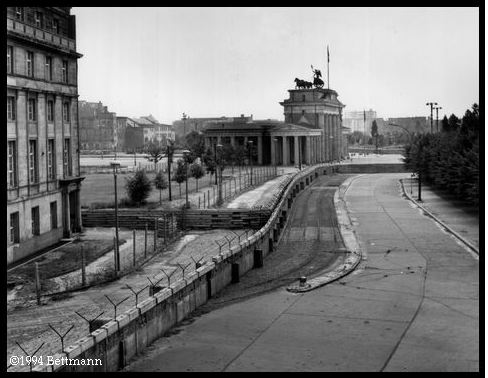
die mauerBefore the Wall fell, Anna and I once took a train across East Germany and Poland from Berlin to Moscow. But to get on that train, we needed first to get past a Dutch-German Intourist agent, Hendrik Grave who, it seemed, was the only one who could book us a berth, but in Berlin something went terribly wrong, the reservations were not complete, the seats unavailable. We would have to delay. But no problem. We would stay with Hendrik, he said. But instead he put us up in a friend’s flat, but that friend stole our luggage and so we were forced to remain with Hendrik day after day, waiting for something to happen.

And always the patter of Hendrik, telling us about Die Mauer, about the twisted psychology of Berliners, of the unfolding of life and of self-understanding. Driving through the streets of Berlin, Hendrik would proclaim apropos of nothing and everything, “All ist gut, All ist klaar.” And always referring to himself in third person, Hendrik, he said, would take care of everything.

Over the days his story unwound. How his father had been part of the SS and had been a Reich officer. Of how as a boy during the war, he was told that his mother had died and he was sent off to live with a relative. He grew up without mother and father. Nazi exultation. The Reich’s collapse. Loneliness. And then as an older boy, a woman appears. She holds him carefully outside his home. People tell him that this is his mother.

But how could this be his mother? She is dead. She died during the war. This is not his mother. He pushes away and runs. The strange horrid woman was a ghost. And if not a ghost, then the adults around him were monsters for telling such a lie.

How had a war neutered a generation from it’s past? Who was Hendrik’s family and what deeds and lies had they all perpetrated, he would ask.

One afternoon sitting in Hendrik’s flat, the golden midsummer’s light casts his sharp features and white mane of hair in profile. He listens to Mozart’s Requiem.  Turning the volume to full, he drains a glass of white wine, head tilted back. All ist gut, Hendrik  says, eyes shut. All ist klaar.

The Welling

mermelsteinAfternoon drive time and I’m talking to my college friend Danny as he commutes home from work in Baltimore.

At times people have confused us as brothers which has sometimes made us wonder how far apart we really were. Before family emigrations, how many days afoot separated our ancestral villages? It couldn’t have been much.  Enough of my family came from Poland and Russia and enough of his as well.  Lives and families cast vast to the winds. People move across the oceans. Children are born and people die. One hundred years later, the son of one family and the son of another ascend the stairs to the third floor suites in Silliman College to begin their freshmen year at Yale. They set down their bags, they catch sight of one another.  They sense a vague recognition.

Now, twenty five years later, I tell Danny about my ancestry experience and he provides the names of his paternal and maternal grandparents. That night I go online and enter names and birth dates. Family trees and homes and turn of the century censuses coalesce and link to family trees compiled by other people. Danny’s maternal grandfather, Benjamin Mermelstein emerges out of the fog. Years in Baltimore. Naturalization, emigration. Poland. The Ukraine.

It’s two in the morning in California on an autumn night. It hurts to stir the waters and have this debris surface. I sense these people welling up out of Poland and the Ukraine and the Belorus in the 1880’s. Something ungood was afoot and by some miracle, Danny’s kin and my kin sensed it. They registered a tidal pull and one way or another they decided that now, in this moment, it was time to go.

Documents appear that identify Danny’s ancestral home. And here I feel a pit in my stomach.

Benjamin Mermelstein came from the village of Trochenbrod.

Taking Count

1910 Census

1910 Census

Last week my daughter busted on me, saying that we had no right to celebrate Thanksgivingkuh. We’re not even Jewish, she said. She’s technically correct since my mom’s family hailed from the Baltics. And as for my dad’s side, it’s a mystery.

After my dad died, my paternal line was largely lost to me. I have vague memories of information that my grandmother had once shared. A Max Lewis, the last name Barsh. Time spent in Camden. They amounted to the barest shreds of a long disintegrated family fabric.

Last week, during a bout of sleeplessness I paid a visit to Ancestry.com.  It makes sense.  What else should one do during a dark night of the soul?  Isn’t it all about uncovering who you are?

Lying there in the darkness I entered a few bits of information: my name and birth date, that of my parents. Within minutes little “hint” leaves began popping up left and right on the tree that was self assembling. My dad’s birth certificate led to the names of his parents. His parents’ birth and death records auto populated and led to 1910 and 1920 census records in Philadelphia and Camden, New Jersey. These led to names of cousins and great grandparents and possible countries of origin.

In the dim illumination of my computer screen, I stared at images of reports handwritten by census workers in 1910 as they trudged up and down soiled tenement stairs, inventorying the names and occupations of my ancestors. I saw the names Isaac and of his brother Max and of their father and mother, Solomon and Rachel, bearers of ancient biblical names, but recently hailed from Poland and Russia. What did they know of their great grandson of the future who would use 21st century magic and technology to pull back the veil of the past to reveal some distant home?

On that day in 1910, they sat impatiently in some squalid and small flat, answering a stranger’s questions in broken English. We left that place, they may have said to themselves. It was done and over. And of this, what good would ever come of it?

Aningaaq

Video

For all you Gravity fans out there, here is the accompanying Cuaron short that aired at Telluride. As Sandra Bullock curls up in a Soyuz, turns down the oxygen and prepares for her own death, she sends out a distress call to Houston that never arrives.

She reaches a terrestrial stranger. This is what happens on the other end. As lovely and gripping a counterpoint as there could ever be.

Yes, Virginia….

ImageI’m kind of the Duke of Snark.

But I have to hold off on this one.

And I wish deeply that Herb Caen was still alive so he could have shared in today. I have no doubt that it would have made him proud of the city that he so loved.

What is it about Batkid (or #SFBatKid to be more accurate) that’s so captivating?

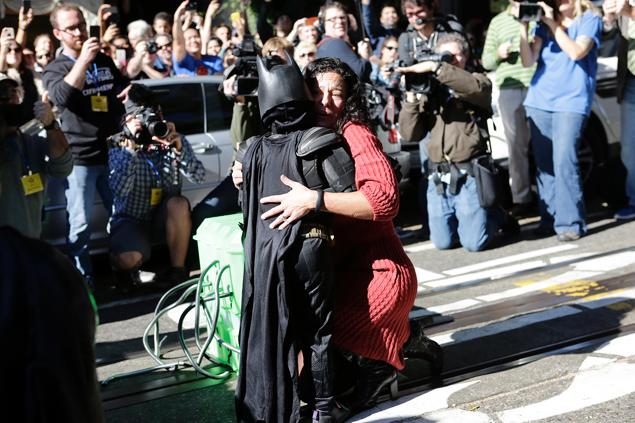
Like many others, I tuned it by chance late Friday morning. My wife said there was a picture of Batkid on the internet and when she saw him she began to cry. As did millions of others. Within hours the Twitter and Facebook and international news feeds were lit up with coverage of Batkid as he raced about the streets of San Francisco foiling one caper after another.  Workplaces ground to a halt as folks tuned in to the boy’s activities.

The chance to dress up in a bat cape and bound through San Francisco in a Lamborghini cum Batmobile dealing with the likes of The Riddler and the Penguin? I’d do it in a heartbeat. The reality is that little Batkid’s day is the day we all wish for. We all want to be battling the bad guys and saving Gotham, but typically it takes the form of correcting an expense report, or dealing with a call from the school, or recovering from a fight with a parent or child or sibling. Wasn’t there once a simpler time?

In this world, we got enough bad guys. Or maybe just sad guys. The ones who shoot up schools, or overcome by their own prejudices light other teenagers on fire. Or terrorize the city of Boston with mayhem and murder. Or engineer government shutdowns and hold our debt ceiling hostage.

penguin

It’s such a relief to have bad guys of the old fashioned stripe. The ones who tie up a Damsel on the Trolley Tracks or try to Rob a Bank or Kidnap Lou Seal the SF Giant mascot. The old timey kind of stuff. The kind of stuff that can be taken out by a 5 year old kid in a bat suit who believes.

riddler

Some may ask what 12,000 people could do if they applied themselves to other perhaps greater causes. But it’s not an either/or proposition. As my friend Al Azhderian once said, It’s a Big Tent. One good deed does not preclude another. Our world and our selves can accommodate as many good deeds as we can dream up. In fact, each act creates the space or possibility for even more.

And the thousands who turned out today didn’t do it for the kid. In the end, it’s not so much about Batkid, but about that thing people have been hungering for. It’s about what Batkid gave us. In this sour season, he and Make a Wish reminded us, if only for a moment, of our ability to believe. To believe in the power of caring and love. And in the power of a body of people who for many competing reasons all felt it important to come together. And in our ability to transform reality simply by choosing to make it so.

aptopix-boys-batmanIs San Francisco really Gotham? Did Police Chief Greg Suhr really go on TV and plea for Batkid to save the city? Did the Giants and the Raiders cheer Batkid on? Did the District Attorney really indict the evil doers? Does Batkid actually have his own parking space? Is it truly Batkid Day for now and forever? And did the President of the most powerful nation on earth (along with competing members of Congress) really give Batkid shouts of encouragement?

Of course not. We all know such things could never really happen. It’s impossible. Isn’t it?

Graveyard Run

IMG_3212I took a cue from my daughter’s cross country team and this morning took a Halloween Graveyard Run.

It made me appreciate even more the brilliance of the coaches.  What better way to infuse young teenagers with a gratitude and love for their  strength and beauty than to present them with a meditation on the mortality of their own bodies?

I grew up under the shadow of Harold and Maude which means I take a certain pleasure in cemeteries.

With a little help from Apple Maps I end up in the Santa Rosa Memorial Park.  I like the name.  It’s almost as good as the antiquarian graveyard, but with the sense that we go there to recreate and remember.

Today I do both.

My first circuit takes me through the new area of the park, utilitarian and efficient like everything else of the 21st century: neat rows of flat plaques are set into tightly trimmed grass and adorned with plastic flowers, revealing the restrictions again any sort of plantings. Clearly only one thing is intended to be planted here.

Which gives pleasure when I catch the click and whir of the sprinkler systems.

The dead have no shortage of wisdom.  And I like them for that.

IMG_3209

And there’s no shortage of loss in this place.  And probably no shortage of entreaties.  Please help.  Someone. Please.  Just help.


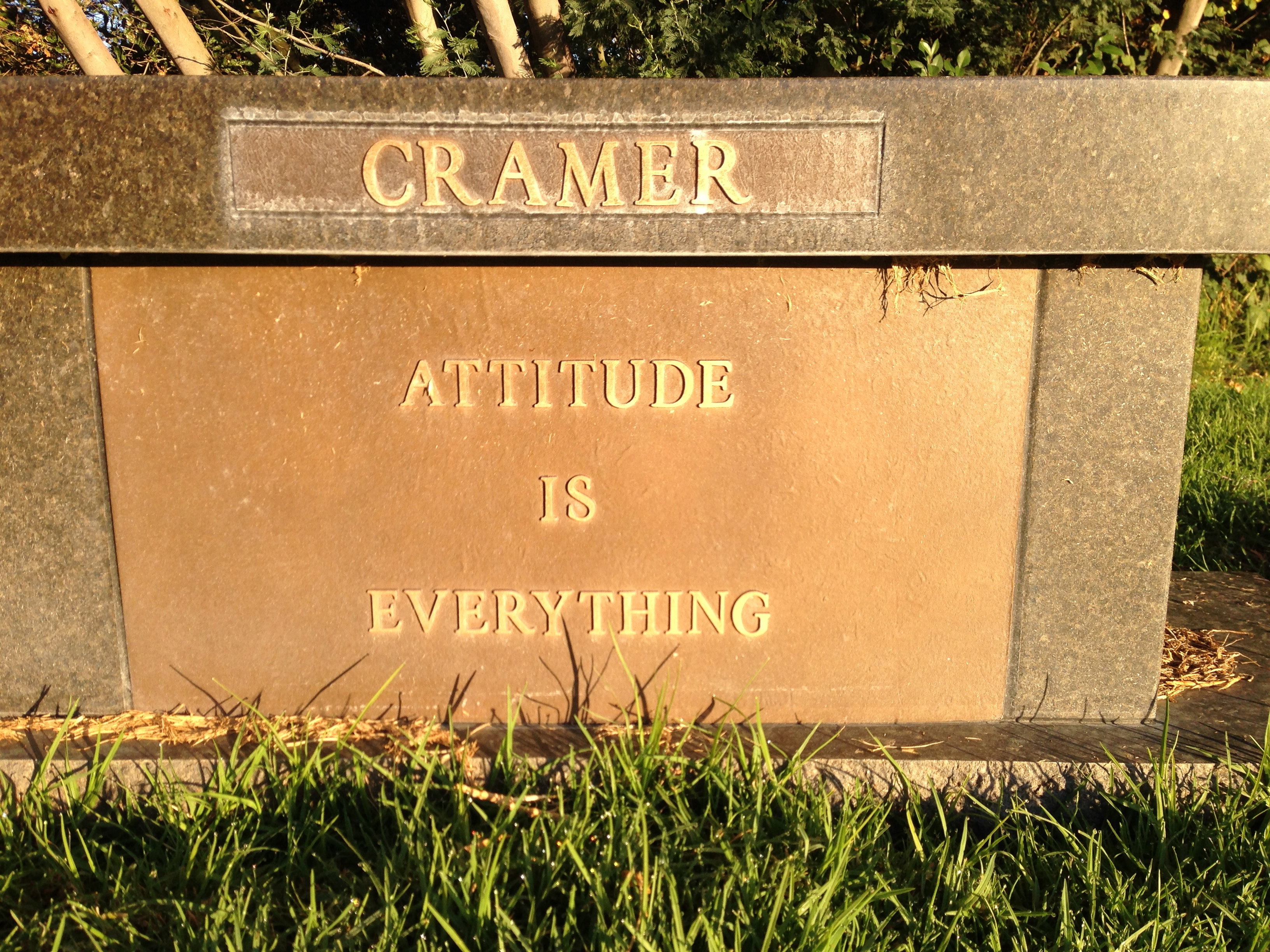
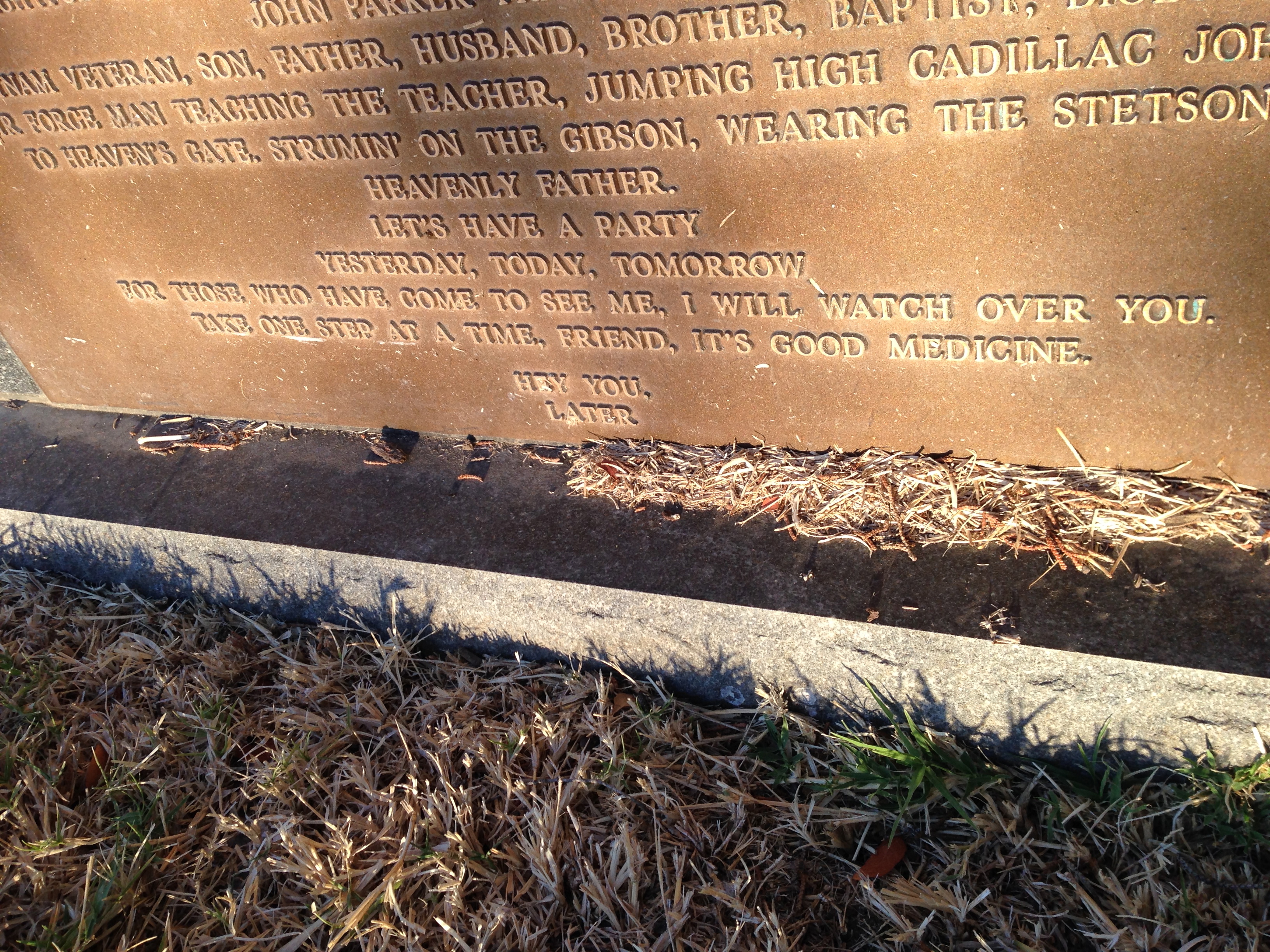
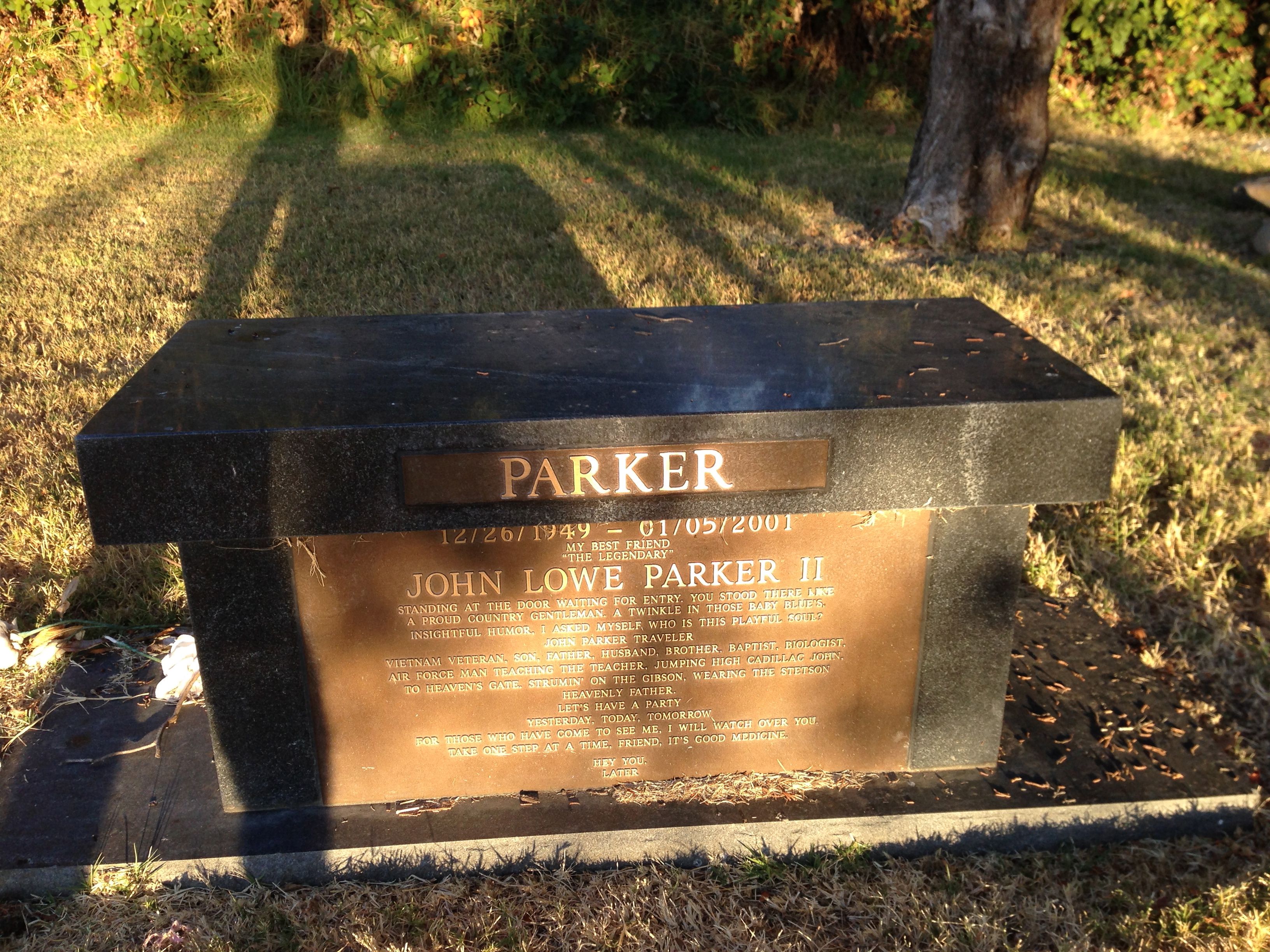
IMG_3214On the periphery of the yard, I catch sight of a memorial bench. The fellow was only 51 when he went on.  But a good guy he was.  He promises me, a complete stranger, that in exchange for my visit, he’ll forever look after me.  It’s quite a commitment if you stop to think about it. It’s far greater than any of us can offer to one another. This guy is actually out there. Gosh knows what powers he has.

And he reminds me that it’s okay.  I’m on my run.  And runs are all about one step at a time.  I’m there.  I’m with him.  And that gives me a strange strength.

IMG_3216I set on my way, but realize that the commitment goes both ways. I turn back.

His name was Parker.

John Lowe Parker.

The Second.

It would heed all of us to remember.

IMG_3205

I eventually find my way to the old part of the cemetery.  And there’s the gem.  The whole hilly range has been turned over to a native oak restoration area. Unmaintained, the headstones tilt and fall akilter; the trails settle under deep swaths of fallen leaves.  I run through here and absorb the life and the loss and the longing.

Grave, where is thy victory?

There is no death here. Instead, the abundance of autumn and the wealth of these glorious trees.

IMG_3208

Letting Go

Quote

This one is from my friend Mary Fillmore who lives in Burlington Vermont.

It fits the moment I’m in right now.  Perhaps also for others.


Cutting off is not disentangling,

and even disentangling is not

letting go.

Letting go is what the dandelion does

when it gives its seeds to the wind,

lighter than any feather –

letting go is allowing ashes

to slip through your hands

into the earth

where they belong.

Cutting off is not disentangling,

and even disentangling is not

letting go.


Telluride Picks and Unpicks: Part I

Some reflections on a subset of this year’s slate.  Telluride once again flexes it’s high altitude muscle. With 27 features films as opposed to Toronto’s 400, it’s much easier for the cream to rise to the top.
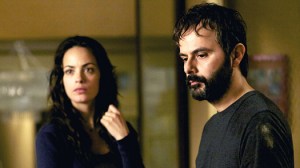
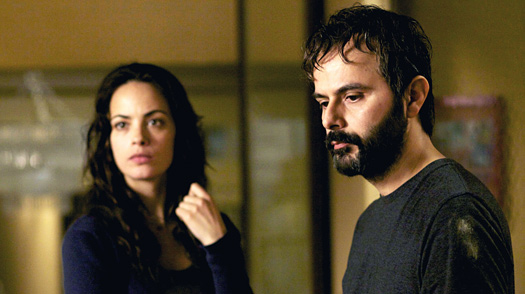
le-passeThe Past (Le Passe).  Even a cursory plot summary of this movie would amount to a spoiler – the story is not just about what unfolds, but what you feel in the unfolding.  By Iranian Director Asgar Farhadi (A Separation), it begins as a story of an Iranian man who returns to Paris to finalize a divorce from his ex-wife.  As the narrative steps forward, new details are revealed such that moment to moment it becomes a different movie from the one you thought you were watching.  The protagonist who initially appears to be callous and irritable, discloses maturity and prescience as a disrupted family situation and blistering reality comes into focus. Don’t be surprised to see it as an Oscar foreign film contender.  US release date in December.

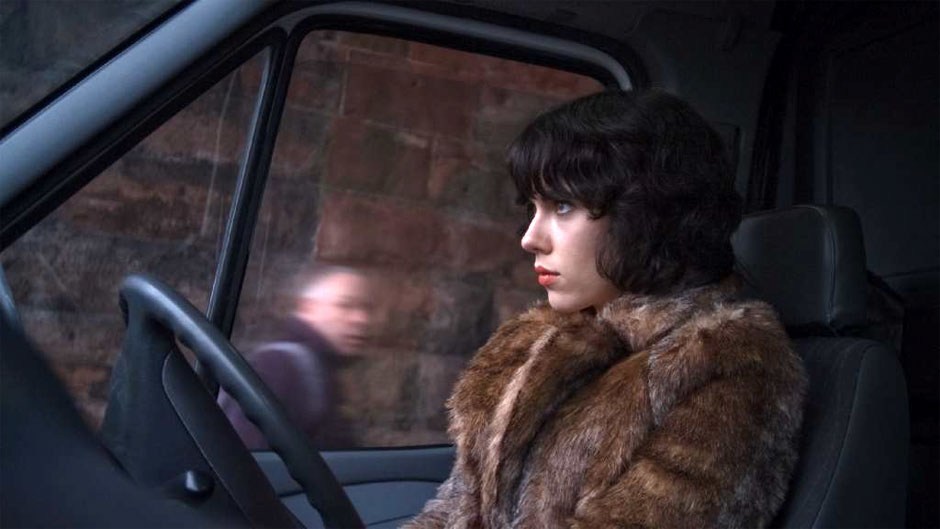
under-the-skinUnder the Skin:  Pygmalion. Bride of Frankenstein. Seventeen years in development before it received the green light.  Never have I seen Scarlett Johanssen so naked and cared so little.  Other people naked. I want my two hours back. Ducks performing Othello. Voice dub by Mel Blanc. Will play well in Venice. But not at the Palm. In Scottish. Like Macbeth. Except it needs subtitles. Do they even speak English? I don’t mind working. Alien. But not for so little. Tarkovsky. No. Scratch that. He had deep Russian monologues. Fast motorcycles. Tin Man seeks a heart.  Except in the Wiz you had Dorothy.  A family drowns. Dystopian. Never Let Me Go. No. That was engaging. This: black succubus. The Horror!  The Horror!   Like that sex addict movie. But more excruciating. And dull. I like the scene after the soccer match.

The worst cowboy movie I’ve ever seen.

Vespucci Studios lives. But now they have a budget.
the-lunchboxThe Lunchbox (Dabba):  In Mumbai a network of more than 5000 dabbawallahs deliver home cooked lunches from Indian housewives to their husband’s offices, and then later return the lunch boxes back to the appropriate home. The lunch boxes change hands many times as they travel by bike and train and porter to the warren of office buildings that lace Mumbai. Largely illiterate, the dabbawallahs rely on a complex language of colors and symbols to ensure the lunch pails arrive on time at the appointed place. A team from the Harvard Business School found the system to be highly efficient – only one in eight million lunch boxes arrive at the wrong location.

This story is about one lunchbox that get’s misdelivered. Instead of arriving at the desk of her inattentive husband, Ila’s sumptuous meal is delivered to the desk of Sajaan, a lonely widower. Food is consumed, notes are delivered, and a surreptitious love affair blossoms.

Throughout, the ebb and flow of relationship is governed by the pulsing roar of the Mumbai transportation system, the frayed edges of an evolving city drowning in it’s own growth and decay. The loneliness and alienation of it’s inhabitants are mirrored by the uncountable lunch pails carried blindly through the maze of streets and alleys. What are the chances of intersecting with the right person and finding true love? And perhaps the wrong train that will deliver us to the right station.

As visually sumptuous as Ila’s cooking, the story remains emotionally restrained as Sajaan’s guarded expressions. But as the narrative builds, we see both characters relax into themselves and find the emotions they’ve long since buried. Without the polished arc of Monsoon Wedding or neat ending of Slumdogs, this story hovers a little closer to the grit and mud on the ground, and the very real messiness of our life choices. And it affords a chance to be a voyeur on the streets of Mumbai to boot. Delightfully sad and a crowd pleaser.  Look for it’s North American release on September 20th.

gravityGravity:  Although it will be hitting the theatres in wide release on October 4, the movie gave the TFF folks a chance to put the new Werner Herzog theatre sound system and 3D projection through it’s paces.  And how was it?  The Zog, assembled in the town park ice rink, blows away the competition.

From the first moment we delight in watching an extended sequence of George Clooney and Sandra Bullock floating in space as they complete repairs on the Hubble Space telescope.  When disaster hits, Bullock and Clooney (looking ever more like Buzz Lightyear) are left floating in space like a bit of cosmic debris.  Against all odds they must find their way home.

You’re only a few minutes into the movie before you suddenly wonder, how in God’s name did they film this?   For 91 minutes astronauts float about in zero g’s.  And it feels real, perhaps the best tribute to the film’s greatnessIn Gravity, director Alberto Cuaron (Y Tu Mama Tambien) veers away from his terrestrial and more character driven stories into an extraterrestrial minimalism.  He and his team labored for more than four years to develop the technology needed to recreate the clear light of space and what appears to be a zero gravity environment. And it does what movies are supposed to do – bumps the pulse and make you feel wonder.

Cuaron casts a vision of human experience that includes the exosphere of our planet.   We feel the oblique loneliness that our descendants will carry as they chart a course ever deeper into the terra incognita of space, and away from terra firma.  And you realize that yes, indeed, we at last are living in the 21st century.

Here Be Dragons:  I mention because it’s classic Telluride Backlot fare.  Shot with a flip cam for less than $3000, filmmaker Mark Cousins presents a film essay chronicling a trip to Albania to consult on the preservation of the Albanian film archive. Living under wraps for fifty years, the Balkan headlands of Albania may be the last place on earth for which we have few visuals.   Cousins now supplies them.  And his associative mind lends meaning to the starkness.
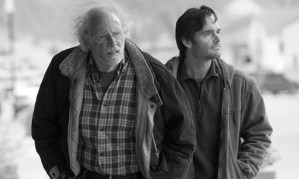
Nebraska film stillNebraska:  This one turned out to be the biggest show stopper this weekend.  Following his success with The Descendants, Alexander Payne has committed to becoming a regular at Telluride.  His delicate and human touch make him a nice fit.  When Woody Grant (Bruce Dern) receives a letter in the mail informing him that he may have won a million dollar sweepstakes, he sets off to Nebraska to claim it. His youngest son aids and abets him and a family locked in its dysfunctional dynamic is splayed open.

Grant returns home, he connects with his old friends, and his life time of low grade trauma is replayed for him as relatives and friends are revealed for who they are.  In this, he and his son find their own redemption.

When Bona Fide productions received the screenplay from first time writer, Bob Nelson, they asked Payne to step in as executive producer, but he said he wanted to direct instead.  Payne, himself a Nebraska resident, relied on open casting to give these midwestern characters a some flesh. These are understated people eking out livings in an understated world.

Another Oscar contender.  At the tail end of his career, Bruce Dern should be up for a nomination.  A moving must see when it’s released later this year.
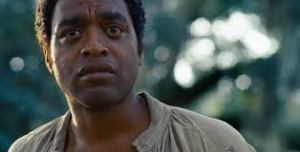
12 years a sliave12 Years a Slave:  The LA Times gave five reasons to see McQueen’s latest.  Without knowing theirs, mine might include Fassbender’s performance.  Brad Pitt taking a moral high ground.  Paul Giamatti doing anything in the 19th century.  And the 19th century articulated sentence structure.  Beyond that, I’m an outlier amidst the rave response to 12 Years.  What more does it add to the slave narrative, other than the slight nuance of an educated free black man being abducted and placed in chains in the deep South?  Not much in the way of character development, beyond the protagonist shifting his forthright voice and gaze to one of subservience, leaving the affair somewhat cartoonish. And don’t we already know about the depravity, the ways in which slavery dehumanized all participants, and the ongoing effects of the lash?

Which raises a difficult aspect.  The graphic violence, I assume, is intended to galvanize  audience emotion.  Except that in today’s cinema graphic violence comes easy.  For me it amounted to a cheap thrill not dissimilar to the cheap (and very different) thrill that the slave owner gained by whipping his property.  Rife with great performance, the film depicts brutality, but not much more than that.
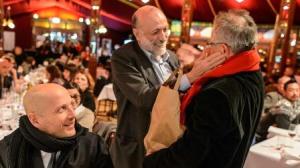
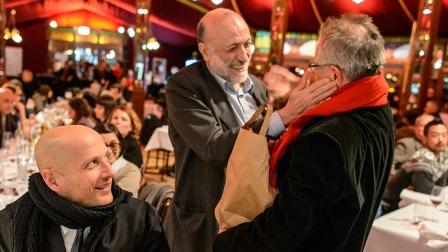
slow-food-storySlow Food Story:  If you’re a foodie, I’d give it a must see.  A fresh addition to the heavy morass of many foodie documentaries (e.g. Food Inc.)  Filmed almost exclusively in Bra and Northern Italy, the playful flick lays out the origins of the Slow Food movement and it’s joyful, extroverted founder, Carlo Petrini, considered by some to be one of the most transformative persons on the planet. You can’t help but love this man who dreamt big as a young man, got involved in Italian leftist politics, infused his work with the social goof of the Italian street theatre, and realized that the politics of the mind would have a far lesser effect than politics of the stomach.  Before we had ideas manifestos, we broke bread.  The film transects this new world we’re creating of urban gardens, and White House gardens, and food once again sourced from the ground on which we walk.

First time director Stefano Sardo does a delightful job of creating something uniquely italian – part cartoon, part street grotesque, but vivacious and animated.  This is not so much about a movement, but about life itself.

40 Years of Film in Telluride

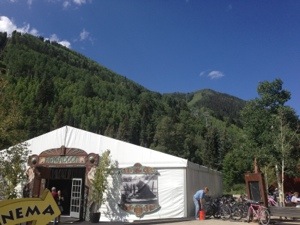
IMG_2951Tuesday morning, things are wrapping up, the crowds heading home.  And the Telluride Film Festival, now in it’s fortieth year, still stands as the reigning queen of festivals.  After five days of immersion in films and conversations and ideas, your head spins and you feel the need for some time to process.

The Festival is unjuried (no prizes given), is not a market festival (no sales or seeking distribution), the content unannounced (people come in from around the world not knowing what will be served up until the first day), no paparazzi or red carpet (this is about the craft and the story with a bit of buzz, so real conversation between filmmakers is possible), has a tradition of sneaking films (they don’t list some items in the program, allowing them to show films freshly canistered and scoop Venice and Toronto, showcasing movies before they’ve officially premiered) contains a healthy dose of film hauled from the vaults (you come here to see stuff you will never have a chance to see anywhere else), and it’s in Telluride (everything within a gondola ride or a couple block walk).

All this makes for Telluride to be a movie love fest.

What are these things we call films?  At one point I found myself lying on the floor of the Sheridan Opera House, surrounded by images and ephemera from the last forty years.  I listened to Werner Herzog’s solemn intonation and Andre Gregory expounding.  I overheard another person explain how she’s been visiting for a few years and TFF feels so intense and even emotionally transformative that she can’t stop coming.  It’s not so much a film festival as a body of people immersing themselves in collective dreams, then surfacing and recounting their experience.

TFF was once known for it’s informality and rough edges. This began as a festival about movies and about the love and communication between people.  As guest director last year, Alice Waters curated the Fanny Trilogy by Marcel Pagnol – the stories that long ago inspired her to start Chez Panisse, creating a space that would become a vessel for food and pleasure and love shared.  This year she was honored during a screening of a documentary about Carlo Petrini, the founder of Slow Food.  Through her cooking and her involvement over four decades, Waters has been instrumental in growing and nurturing the Telluride gathering.  In the Sheridan Opera House on Saturday morning, she described the Festival as an international family reunion in which the artists and creators whom we love most gather each year to revel in each other’s company.  The festival counts as one of her many homes.

And It’s no wonder that many pass holders return year after year.

Back in the day, films projected in the quonset hut community center would be drowned out by rain pelting against the tin roof.  And in 1984 the rough informality allowed for a baseball game between team Paris,Texas and team Stranger than Paradise  in which Wim Wenders caught a flyball in the outfield and then left the game so he could go out on top.

Here viewers are willing to receive images in the purest, most trusting way.  And owing to the outstanding programming of the festival directors along with their collective willingness to take risk, the Telluride films have had a streak of Oscar runs (Slumdog Millionaire, The Kings Speech, The Descendents).  And Telluride has also had it’s share of delightful bombs.  Which is wonderful. The last thing we want to do is discourage people from taking risk.  Only in risk can a new world be created.

We don’t know the ultimate effect of Telluride’s market making power.  This year, the Coen Brothers, Alexander Payne, and JC Chandor pulled their films from Toronto so they could premiere at Telluride.  The buzz on Nebraska overshadowed the Silver Medallion Tribute to the Iranian filmmaker Mohammad Rasoulof.  (Manuscripts don’t Burn).  But the spirit is still there.

Let’s hope that the crew out of Berkeley and the town itself will succeed in remembering who they are and from whence they come, and will continue to honor the power of the moving image.

IMG_2936

Perfect Telluride Film Fest Moment

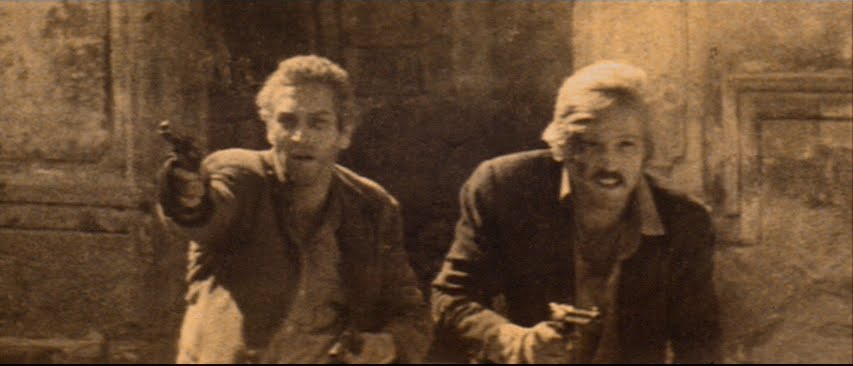
Riding my pink townie down Colorado Ave at ten at night. I hear Spanish, I see the glint of celluloid, and right then catch the tail end of Butch Cassidy and the Sundance Kid playing outdoors at the Abel Gance in Elks Park. Paul Newman and Robert Redford pinned down in a Bolivian plaza, they stand and bolt out, frozen in time, guns blazing.

I cruise down the darkened street and roll right past the former of site of the San Miguel Bank. On June 24, 1889, a young Butch Cassidy walked into the building with his two partners in crime. That morning he robbed his very first bank.

A fine place to honor this years honoree.

Butch End

Birds of Chicago

Aside

Allison Russell
What? I don’t know. Depends on how many beers I’ve had.

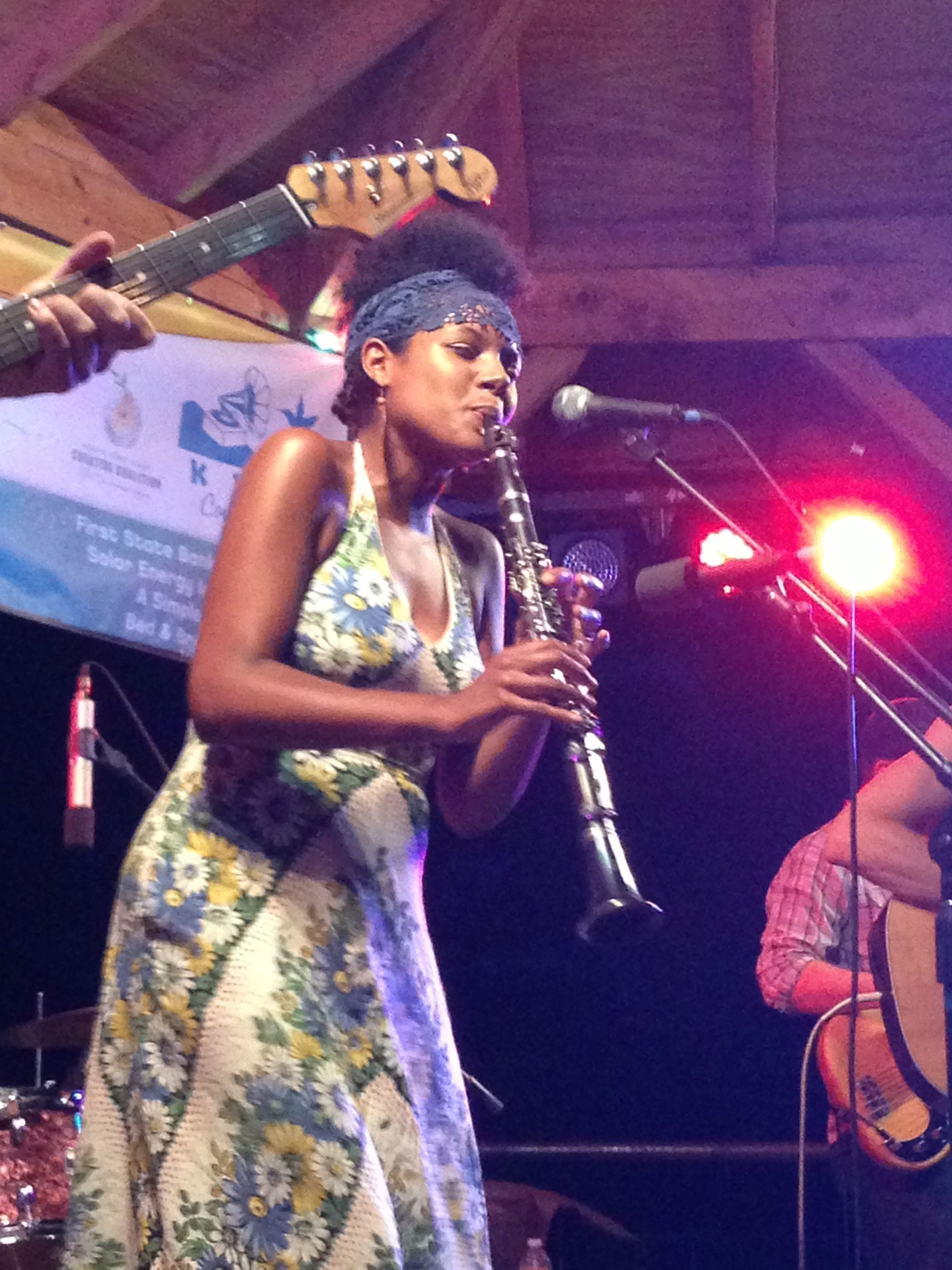
I’ve found some new heroes in the last few weeks. Allison Russell and her husband count among them. Picture some southern rock piling into the car, slamming it north, sideswiping the Carolina Chocolate Drops, taking a whif of Austin, picking up some funk along the way and then flooring it all the way to Chicago to have a hot date with Aretha Franklin. All the while with a cheek to cheek grin on their face.

Birds of Chicago is a great small band that played in Paonia town park last week. It’s worth it to take a night to go see them if they’re passing through. Allison is expecting come December, after which they hit the road again with mother in law in tow as babysitter.

These guys are all love.  And if you hear them, as well you.

Because You Have To

The Song SchoolIs why you do it. It’s that simple.

Last day of Song School talking with Beth Desombre. Sylph like, her voice is as delicate and precise as her guitar fingering. I’d heard her play the night before and realized that I had no memory of the song nor what it had even sounded like.  But what I did recall was the shadow of the feeling, that it was gentle and honest, as if she might be the sort of person you would want to turn toward when the airplane encounters turbulence and feel grateful to be embraced by her presence.

That’s kind of what the Planet Bluegrass Song School is all about. Not about being great or even good (although there’s plenty of that), but about finding that voice that is uniquely yours and giving expression to it.

These are people who are old and retired, or middled aged and struggling to make their way through day jobs, or some so young that they don’t know yet what a day job is. But what they have in common is a compulsion to give voice to something inside them. Sometimes it’s highly polished, or whimsical, or rough and unformed, but in all cases it remains unique to each person. That’s an Ali Handall Song. Or that one there can be none other than Will Pfrang. They’re trying to perfect their written and sung voices so they most accurately express that thing within.

We’re all humans. And we’re all uneven. But once you can accept that and get beyond the judging, things get interesting. Lots of great performers, all small. Most don’t have youtube hit counts over a hundred, but that’s hardly a measure of what they pulled off on stage a last week.

Each night on stage we were treated to the rare gift of watching a human being come into his or her own.  It’s that moment when you’re not paying attention and suddenly you can’t help but notice that up front something incredible is unfolding. And like the mariner fixing you with his glittering eye, you have no choice but to listen.

A round up of just a few that I remember:

Rhonda Mouser: Rhonda is maybe the reason why you go to Alamosa. Most of you will never in your lives have a chance to hear her sing Cecile. It’s not on Youtube. She has tried to record it but it just comes out flat. But what happened a few nights ago was nothing short of electric. By her own admission, she’s a performer and not a studio musician. Which perhaps is all the better. If you want Rhonda Mouser you have to find her. And what you may get will start out naive and unadorned in a Jonathan Richman sort of way, and then it veers left into the darkness of minor chords and swoops into elegiac longing, and then, if you’re lucky, it begins to soar. Try Feel the Ground or No Rain from Live at Milagros.
Will Pfrang: My daughter and I walked into town for a cup of coffee and ran into this tow head kid walking in the opposite direction. One hour and 31 minutes later we were heading back and crossed paths with the same kid in the exact same spot. And that simple coincidence of geography might speak to who he is. My daughter wondered if he was actually Mother Theresa. He’s finishing high school in Port Washington, Wisconsin and trying to figure out what he wants to do. Who knows. But as for who he is? His self seems to float almost immaterially on stage, trusting the world as might an innocent and exuding something: love, grace, gratitude – who knows what, you just know that you want to be around it.

Liza Beth Oliveto. In her role as the other half of Ten Dollar Pony, she lends a drop of nitro  to the music. As for her own songs, she still struggles with her identity as a songwriter. When in life is it too late? And what if it never is? And how do you know? I sat under a tent and listened to her play Beth DeSombre’s guitar. In that moment I could only wish that more people were present. Look for her and her songwriting partner in Carson City or Reno.

Christine Lodder. Picture this  17 year old girl still emergent, leaning over the keyboard and doing what she could to keep her body from twisting into a pretzel as she released herself and bent into the song. She’ll be leaving Salt Lake City this autumn for the Berklee School of Music.

Bethel Steele. A tough name to fill, but that night on stage Bethel’s person managed to do it. Again out of Massachussetts, you sense this woman wouldn’t hesitate to protect you from the schoolyard bullies. And she probably could out sing most of them to boot.  Try Whiskey.

Bella Betts:  Boulder may one day claim her as their own. Just a notch above her twelfth birthday, she’s been playing mandolin since she was six and only recently began writing her own songs. She strikes you as a permanent resident in the idylls and energy of youth. Not one to walk, she’s more prone to skip and run as she bounds around about the Planet Bluegrass Ranch. And she’s one of those rare kids who also feels like she’s a hundred. Listen to her if you’ve perhaps forgotten what it means to be thoughtful, or curious and young.

Bella Hudson: Mazie and I first saw her playing on a street corner in Telluride about three years ago.  Just turned 13, she knows how to own a stage and is able to sing a handful of years beyond that.  She’s recording her first album this fall in Nashville.

The Church of St. Mary Gauthier

mary-gauthier-07She’s definitely a Mary.  And she may one day qualify as a saint.

I heard more than a couple Song School participants refer to Mary Gauthier’s workshops as the Church of St. Mary.  She delivered fire with just a touch of brimstone.

Her basic word was simple:  you’re not here to cut a record.  Nor to get famous.  You’re here to give expression to the spirit that flows through the universe and ultimately through you.

That’s why you do it.  Because you have to.  Because this thing needs voice through your songs.  And you need to trust it.  And so it doesn’t matter if you spend your life banished to the wilderness so long as you follow the path that is your calling.

So go forth and listen close. And, as with the venerable St. Francis, deliver your song to whomever chances to listen.

Black Madonna

Mary the chaliceMazie’s at Song School in Lyons, Colorado. I’m working at the Stone Cup as a sandy blond lady adjusts the paintings hanging beside me. It turns out it’s Sally White King, the artist. I tell her that I like her bear pictures. Also how she decapitated the female heads in her portraits of the Mother and Child.

Her eyes light up. It’s an important detail. It’s because she’s the Black Madonna, Sally says. You see them all over Europe, but we don’t know who she was. The Black Madonna gave birth to the Holy Daughter. The Black Madonna was Mary Magdalene, she explains quietly. She was Christ’s true Bride.

When the morning starts with something like that, it’s time to close up shop. You basically have gotten enough for the day.

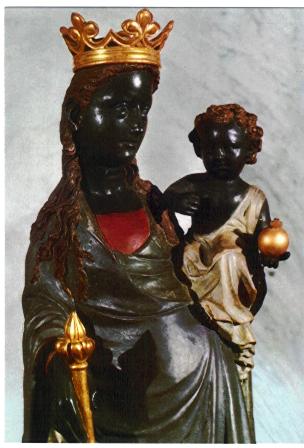
Black_Madonna - appleThere are over 400 Black Madonnas (or Black Virgins) throughout Europe, some dating back to the twelfth century. Aside from the black coloring, some of them have two things in common.

The Madonna holds an egg or an apple (both representing either fertility, worldly knowledge, or sexual corruption). And plaited red hair or vestments.

madonna 1   black madonna   black-madonna-75  black-madonna1-8280

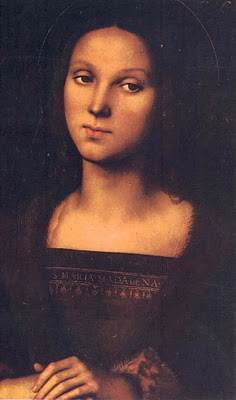
We may never know the true story of the historical Mary of Magdala, the anointed companion of Christ. She most likely was not a prostitute (the New Testament scripture does not clearly support this), but no matter. For much of the 2000 year Christian narrative (and officially since Pope Gregory in the year 591), poor Mary has been identified as a harlot, the fallen one allied with wayward women.

The belief left behind a two thousand year long trail of religious images and iconography.

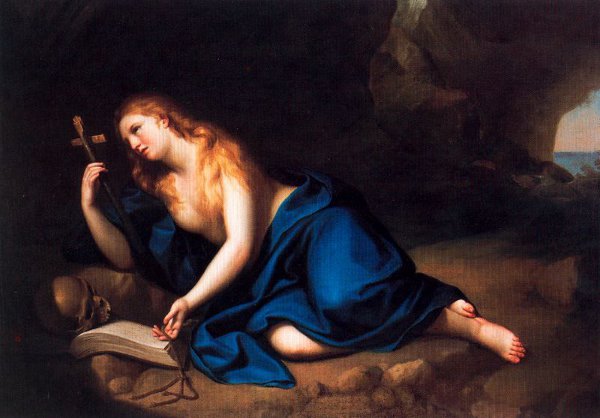
magdalene-in-a-caveMary of the curling hair, identifying her as an adulteress.  Mary being cast into the wilderness.


mary magdalena - alabasterPenitent Mary casting her eyes toward heaven, bearing the pure vessel, the Alabaster Jar.


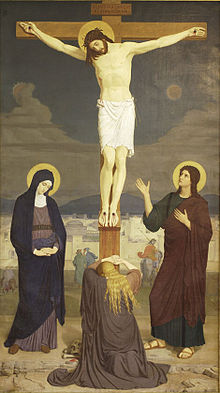
Mary-Wüger_KreuzigungMary, her red hair flowing down her back, kneeling at the foot of the Cross. Mary present as Christ is laid within the tomb.


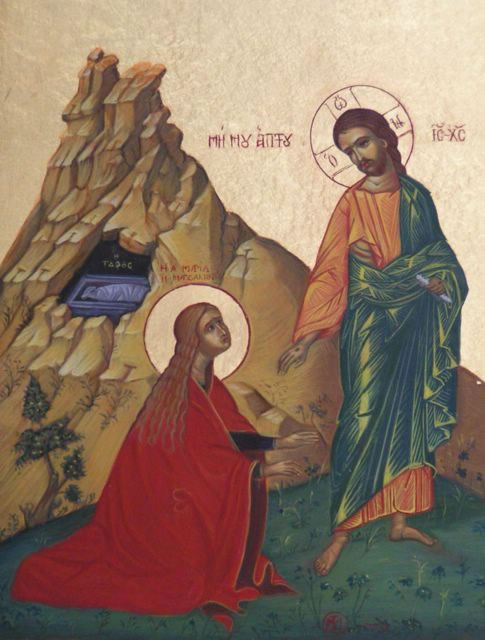
TheRisenChristAppearingtoSt.MaryMagdaleneBut these images also suggest another Mary, that of St. Mary Magdalene, the one who proclaimed to the world that Christ had Risen.This Mary lies prostrate before the empty tomb. This Mary heralds the birth of Christianity itself, becoming the Apostle to the Apostles.

St. Mary Magdalene is also the patron saint of penitents and perfumers,or to put it another way, the guardian of the fallen and those who anoint in anticipation of sex.

Mary-Magdalene - AlluringThis Mary is alluring.


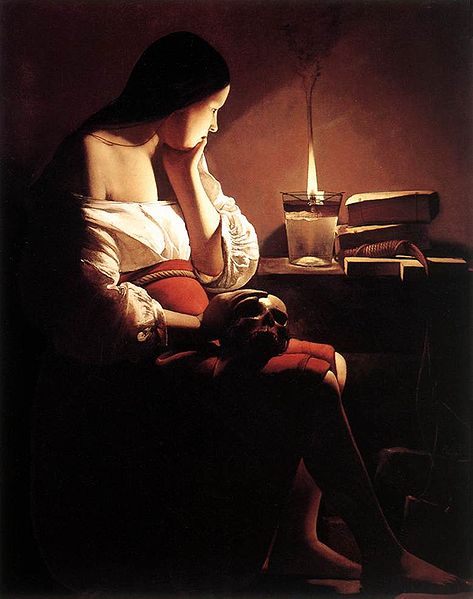
She contemplates and is illumined by the burning flame of god.

Magdalen_with_the_Smoking_Flame_c1640_Georges_de_La_Tour Mary_Magdalene_by_angelboi_red

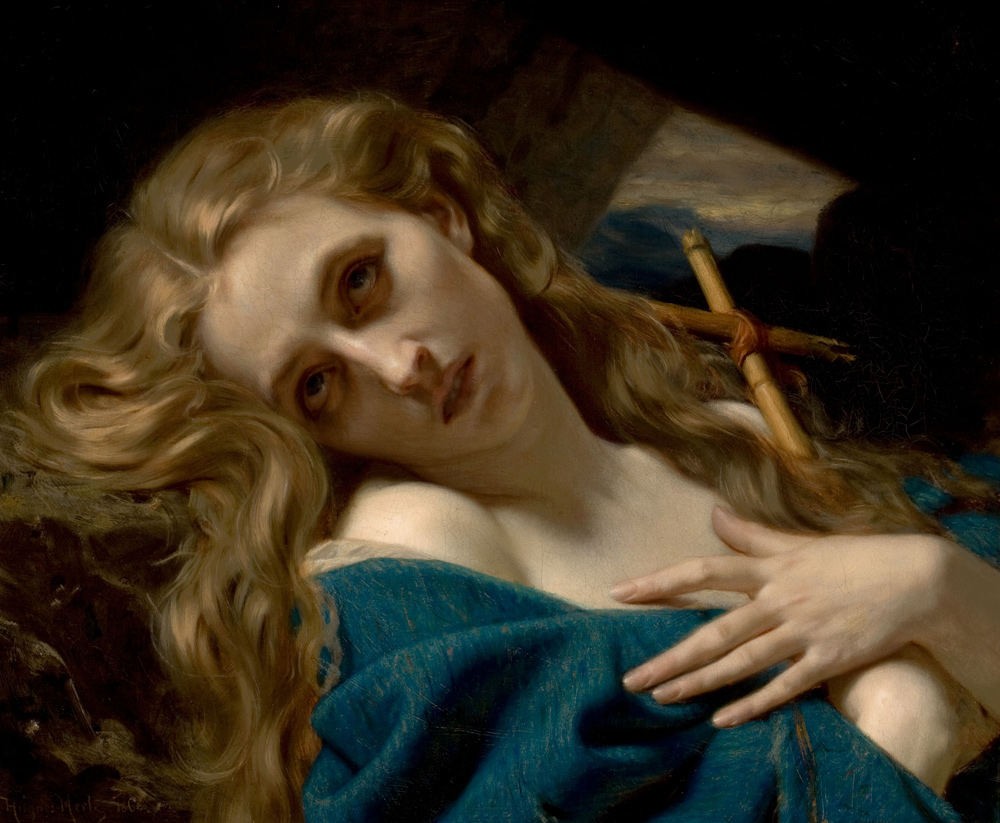
Merle_Hugues_Mary_magdalene_in_the_cave_ooc-largeThis is the Mary of the Cave, more voluptuous and sexual than repentant. Her flowing red hair suggests the flow of blood.


Mary magdalena w eggThis Mary is the one cloaked in red. She is the one to present the red egg to Caesar. This Mary gives Word (or birth) to the resurrected Christ.


But we sometimes use metaphor to give greater dimension to the literal.

mary - the brideWhat if Mary was confidant and companion to Christ in the fullest sense? What if this laying in and exiting of the tomb was of a different, more carnal sort?


black madonna - birth

In this narrative, Mary as the Black Madonna is not so much the temptress, but the actual bride of Christ, and in this narrative, she bears his child.


black virginMary of Magdala carries within her the blood of Christ on the eve of his death. Mary is the Chalice. She is the generative vessel. That’s why Sally sliced the heads in half.

The Black Madonna is the Holy Grail itself.


And that’s why Arthur and his knights (and later Terry Gilliam and his band of buffoons, swallows and coconuts aside) were never able to find the damn thing.

The Chalice was in fact the feminine counterpart to Christ (and the sexual drive) that had been surgically expurgated from the religion. Sex had been cloaked in the blackness of sin. And if the procreative impulse is made unholy, where does that leave us?

It gets even weirder. In the Middle Ages, to protect their daughters’ virtue from marauding soldier or to pawn off the spinster daughter, they would pack them off to nunneries. With the true Bride of Christ now gone, these young acolytes would seal themselves to the Son of God by taking vows of chastity. The sexual impulse would become sublimated and would in turn find expression only through religious ecstasy. The nuns would at times feel within their wombs the fire of Christ.

But what if we were to once again acknowledge the Black Maria, no longer painted black, but as the woman who perfumed and bathed the feet of the Lord and gave issue to the Fruit of Heaven? Hinduism, Paganism, Zoroastrianism, Puebloan and Mesoamerican cosmology to name a few, all make room for the procreative force. By making christ a celibate, we neuter a fundamental aspect of the human experience. Perhaps that’s why many of the firefights in contemporary christianity have to do with sexuality.

Who’s to say which narratives should be designated as apocrypha, and which canon? And as we evolve, will other narratives become more resonant?

Oh and by the way. Tom Wait’s Black Mariah? It’s slang for a paddy wagon hauling away the condemned. And also, perhaps most beautifully, the nickname given to a black tarpaulin shack built by Thomas Edison in Orange, New Jersey.

That misshapen building? It was the first Movie Studio in America.

Or, you might say, the womb of our contemporary imagination and desire.

St. Vrain

Saint Francis Saint Veranus What if it’s not real? my daughter asks. I mean, what if none of that Jesus stuff happened and two thousand years of religion was based on it?  What a total complete waste of energy.  All the churches and wars and books and songs and stuff might be based on something that never existed. Just think of the amount of time people have spent on this stuff, she said.

Indeed.

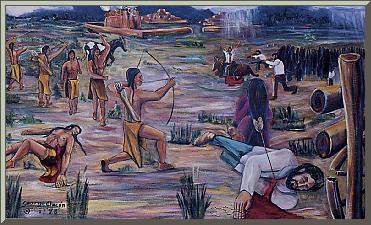
The St. Vrain Creek running through Lyons, Colorado is not directly named, as one might suppose, for Saint Veranus di Camillon, but instead for Ceran de Hault de Lassus de St. Vrain, a child born of French nobility in St. Louis in 1802, who later decamped to the American West in the 1830’s to establish himself in the fur trade. To distinguish himself from his brother, he appended the St. Vrain.  He was responsible in part for the collapse of the Western beaver populations by 1842. He later helped crush the Taos uprising after the native Puebloans and Mexicans defending themselves against the invading Americans killed and scalped his trading partner, William Bent.  The volunteers serving under St. Vrain killed more than 150 rebel Taoans and Mexicans.  St. Vrain later served as a translator for the rigged military tribunal.  Deliberating for only a few minutes, the angry mob commended fifteen more souls to death.

Taos uprisingThe Taoans originally followed the intricate Puebloan ceremonial cycle, but later subsumed their beliefs to Catholicism after the Reconquest in 1692.  In that year, Diego de Varga retook the Southwest and subjected the natives once again to Spanish rule and the dominion of the Franciscans.

Which leads to a greater irony.  In April 1847, a man of French descent who carried the name of Saint Veranus, a 6th century French bishop known for his charity, bore witness against 15 Mexicans and Taoan rebels who were then hung for treason.  Fifteen men who had allied themselves to the will of St. Francis – patron saint of animals, the environment, Italy, merchants, stowaways, and the Cub Scouts – fell to the will and untoward legacy of St. Veranus, the patron saint of nothing in particular.

An even greater tragedy is that you couldn’t make this stuff up. It’s enough to make you believe in God. And what a fellow he is.

taos_cemetery_2007x2

Song Birds

ImageHer card describes Kristen Hein Strohm as a Wildlife Biologist and Statistician and is illustrated with a songbird (the species of which I do not know) and a warble of lambda equations and binary sets of numbers.

Last night Kristen (with her husband Steve in accompaniment) warbled something far different than lambda equations. Sweet and lilting, her voice strayed between a whisper and song. It was quiet and full in a way not dissimilar from her manner of speaking.

I bumped into her this morning as she was making her way toward coffee, her skirt stitched with swatches of fabric outlining an owl basking in the moon.

In addition to her fieldwork, Kristen also leads workshops in teaching people how to observe wildlife. Once you know what to look for, you don’t need many more tools. So much depends simply on abandoning preconceptions and investing the time to make the observations.

Kristen’s expertise begs a pet question: Did other species of birds express the same social complexity as the corvids?

It doesn’t take much to get a trained wildlife biologist going so fast that you can’t keep up with her.

The corvids are incredibly complicated, she says. They have intricate language and distinct vocalizations. She went on to describe how many species have song patterns that sound identical and repetitive to us. If you examine a spectrograph, however, you can see that these songs are chocked with microtones that are undetectable to our ears, but signal a range of meanings and references to the song birds themselves. Despite our manifold abilities, we perceive only a limited range of sound, essentially moving through the world with mufflers on. She goes on to explain how certain species of hawks hunt cooperatively and that each hawk is trained to fill a specific role: chasing, banking, cornering, going in for the kill, which they fulfill every time.

All the while as she talks, Kristen parses her sentences with the sweet chipper of bird songs, as if she herself was some hybrid genetically engineered species.

But not all birds communicate with songs, she says, and she talks about the condors, the carrion vultures that don’t have much vocal expression (at least that we presently know about), but instead demonstrate rich and complex gestural displays. As they reintroduce the condors to the wild, they bring in wild condors to tutor the young in the complex code of visual signals. The mentor condors teach the fledgelings a language that is particular to that set of birds. When at last reintroduced, the young have been known to seek out the training condors. When found, they repeat the gestures that they have been taught, including what amounts to a spread winged bow, as if expressing a kind of abeyance to the creature that taught them to be wild.

So much for coffee. Proof, perhaps, that we are, in fact, at the Planet Bluegrass Song School.

From the Other Side

OLYMPUS DIGITAL CAMERAThis is a keeper.

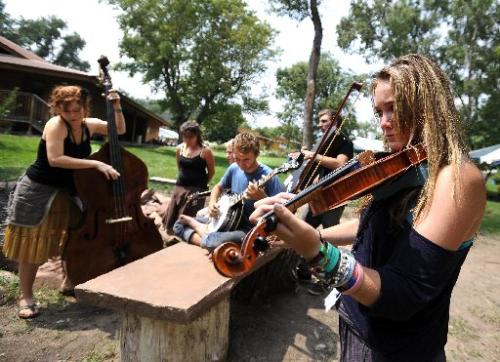
Last night, Mazie hovered in the dark in a squatted campsite and pulled eerie sounds out of her violin. Her companion was Mark Risius, he crouched on the ground, his guitar illuminated by a headlamp. These two musicians had just met and had unpacked their gear right there in the pitch where they happened to be. They didn’t know no notes, they didn’t know no theory. Right then it was about giving voice to that strange sound busting inside them.

Mark is a full instrument.  He’s classically trained and knows his stuff.  But for now imagine a guy tooled up with a can opener, three rubber bands, an old apple box and a saw. But imagine that all these things are in fact a guitar. He sets it on his lap and plays percussive on the body and the frets doubled capoed as if he’s trying to pull as many different kinds of sound out of the box and let it be a channel for his ADD or autism, I don’t know which.

He plays with his whole body as if palpating the sound itself. You can actually see it.  Something writhes inside  him as if it’s trying to come through from the other side and it senses his body as a portal. He picks up his guitar, and then Bam! This thing – part physical, part sexual, part something else – bursts out and is loosed free upon this world.

Marks an interesting guy. And for a lot of reasons. Clinicians might call it ADD. But it might also be remaining present with whatever is directly in front of you at that moment.

I bump into Mark again this morning – he’s on his way to class because, well, class really is the most important thing. But now we’re together and we’re talking about their jam session and now our conversation becomes the most important thing. We talk about Tangle Eye. We talk about Tom Waits doing a slap down to Mick Jagger in the Oakland Coliseum because that also is the most important thing.

Stay tuned.  Mark, I sense, is a live wire, an antenna to the world, and in his thoughts and receptive hands, invisible currents will soon be made apparent.

Remix

tangle eyeMy prayer to the Lord? If this is the last thing I ever write, then least let it be written.

I stand in front of the coffee urn at the shed in the middle of the meadow. A drummer out of New York wanted to play some tracks for us on his iPad. Hangmen, just slacken up your line, quavers the ancient voice of Almeda Riddle. But in addition, a heavy beat and groove has been layered on top of it.

The song is part of a recording project by the name of Tangle Eye. Produced by Steve Reynolds and Scott Billington of Rounder records, the album attempts to resurrect a handful of the songs recorded by folk music historian and archivist Alan Lomax in 1959.

How strange and powerful.

Almeda Riddle of Cleburne County, Arkansas, issues that song as a plaintive plea and as a prayer and a hope. It’s what we all want every day. Just one more day, Lord. Hangman, just loosen up your rope.

But unlike for many of us, for this old woman, in a way that was chillingly beyond perhaps her greatest imagining, her prayer was answered. The woman? Long gone  she is. But her being, her self – her voice – the very core of herself, has been resurrected. She pleads to her Maker, and her Maker has answered in turn and has reinstated her in a contemporary dance groove.

Here the day is just warming in the high country outside Rocky Mountain National Park. The morning light has just hit the red rock. A songwriter from Denver, a drummer out of Brooklyn, myself – we all huddle around an iPad on a dawning moment in the 21st century. Hangman, just slacken your line, she pleads again to us.

It’s so clear now. The afterlife?

It’s simply a remix. And the texture? Why, it looks and sounds like us.

Changing Shirts

ImageMazie is off to class and I’m off to work at the office. The day has warmed so I stop at the car for a change of clothing.

What do I wear? What do I want to present out to the world today? I rummage through my suitcase. Today, I decide, is the day to wear my colors. I don my maroon and yellow Hopi Day School t-shirt (Proud to be a Hawk!) and am ready now for what the day will bring.

I need not wait long.

300 feet later I’m exiting the campground into town. Zack, the entrance attendant calls out to me. Blond hair. Young and shaggy. Hey! Where’d you get that shirt, he shouts.

Hopi, I say.

You were at Hopi?

Eight years, I say.

You lived at Hopi, he asks incredulously. He steps forward and seizes me in his arms.

My grandmother, he says. She’s Suzanne Page.

She’s your grandmother? Now it’s my turn to be incredulous.

And Jake’s my grandfather. They live here in Lyons. Give me your number, he says.  You have to meet them.

There’s so much we have to talk about, I say.

I didn’t know that today would be the day. But I’ve been awaiting this moment for a long, long time.

Learning to Stand

Colorado SkyThe first thing she learned as a three year old violinist was how to bow. From that first gesture all things commence.

For most of yesterday, I holed up in the Stone Cup coffee house excepting a break to go back to camp and eat lunch with Mazie and listen to her sing a song she had written that morning about her song writing partner. In turn, her partner was supposed to write a song based on stories Mazie had told her. I asked her what she had talked about and Mazie wouldn’t tell because she “didn’t like me and didn’t want to share her stories.” Which is what, I think, this time is all about. After sharing lunch, she lamented that she wanted to connect with some other people, but didn’t quite know how to do it. I listened and made some feeble suggestions and then she was off, making as many tracks away from me as she could.

There’s the doing. And then there’s the allowing. The doing is the driving and periodic suggesting and the working and the paying for. And the allowing is the stepping back and letting her discover the person she is meant to be. Both, in their own ways, will go unrecognized. This morning after walking away, i caught sight of her writing in her songbook in the tent. And all yesterday and this morning she recognized people from Telluride and parts known and unknown. And I realized that our daughter was finally stepping out on her own.

We need to help her stand independently. But the sentiment immediately collapses in on itself. How do you help someone be independent?   We have to not help.  Instead we need to walk away.

So for the week, I’m her on call mule. If she needs an assist, I’m there for her.  But she knows what she needs to do.  And where she needs to go.  And it’s time to go.  And it will mostly be without either of her parents.  And, by definition, the very best parts of it neither of us will be there to witness.

Late on our first evening, she asked me what I wanted to do. After the long drive,  all I wanted was to pop some benadryl and go off to bed.  I told her as much.  But if there’s something else you want to do, I said, I’ll do it.  Well maybe I’ll just go to bed, she whispered. But then she hesitated, turned, walked over to a circle of musicians and pulled up a chair.  I followed. They asked if she wanted to play and she took the guitar and played a Patti Griffith song. She then left and returned with her violin.

A fellow asked if she could accompany him on a song . What would she like? he asked.

Something slow, she said.

And what key?

It doesn’t matter, she said. The fellow started to play, and within half a bar Mazie had  raised the violin to her chin. And then she fell in and let her instrument sing in a sweet and aching way. He sang and turned to her and the violin carried on, bearing the song in new directions and then back around so that he could carry it again. And like that they travelled for quite a while.  Folks sat, intrigued it seemed, and strangely moved.

How long have you been playing with your dad, another musician asked as they finished.

He’s not my dad, Mazie announced. I’ve never seen this girl before in my life, the song writer said.

Say Yes

You know that bucket list fantasy you might have, that one day you’ll get up on a stage in New York, let’s say, and sing with Sweet Honey in the Rock?

It kind of happened this morning. 150 songwriters and musicians sat groggy and expectant as Dr. Ysaye Barnwell just off from nearly a quarter century with the Rock, ambled up and took a seat in all her massive self.

From the moment she presents herself, you can’t help but think that this is what a fully actualized person must look and feel like: passionate, brave, mindfully scolding, patient, of brilliant intellect, and even greater heart.

You all get in a circle, she orders. We need to be in a circle for this. Two deep, bass to the left, sopranos on the far right. No matter the circle was three deep, and who knows if people were sitting in the right place.

As musicians you all only need to know how to count to four, she declares. Sometimes six. But we’re going to count to eight. It goes like this: one, one two one, one two, three, two, one, she sings. And so on. We’re going up to eight. With that she launches.

Man, you guys sound terrible, she announces when we conclude in something slightly more than a disorganized jumble. Again, she says, but this time instead of singing the number four, I want all of you to clap. And off she leads us. And then again, this time in round and then faster. Succeeding or failing at this exercise ceases to have meaning.

Which leads to the second lesson. Why are we here? Why is Mazie here at a weeklong song workshop in the Rockies? Why are any of us here?

Dr. Barnwell has us sing a quodlibet which, she explains, has two meanings. The first is a legal argument of which she knows little about. The second is a song in which different melodies (and even different lyrics) are sung in counterpoint to one another.

My soul is anchored in the Lord, sings one group.

Lord, I done done, sings another.

And through it all Dr. Barnwell begins to weave us together with her own voice.

Her three octave range seems to stretch out as she pitches notes to the highest soprano and then back down to whatever the basses can muster. Within minutes she has 150 people singing in different keys, different lyrics in round that merges into a a tidal chorus.

Lord. I done done. Lord I done done. Lord I done done what you told me to do.

If only we all could say that.

Say yes, Barnwell counsels. Don’t matter what it is. Just say yes. You may not know what they’re asking you to do, and you may not think you know how to do it. But don’t worry. You all will figure it out.

Terminal Conditions

ImageCall it the last heady days of summer.

Saturday evening. Mazie and I have crossed the Sierras and bullet across the Nevada basins and ranges, hoping to make Elko or something farther by night.  All the way, electronic signs remind us that the Amber Alert is still effect. The girl and the man had headed north to Idaho or perhaps Canada. No one knew which. Had she gone willingly, I wondered. Was she part of a plot to kill her mother? And if so, what kind of future had her or this man imagined. And if she’d been kidnapped, what had he imagined? Under what circumstances could this end in something less than bad for any of them?   At what point does the line of thinking break, and in the moment of breaking, what does it feel like?

Mazie will be attending song school in the Rockies, still many hundreds of miles ahead of us. She feels scared, I think, wondering if she will fit in or if she will be able to hold her own. But her fifteen year old self isn’t able yet to divulge her feelings to her dad. What energy she has must be directed at quelling the fear rising inside her.

At any moment she could ask to turn around, decry that she has changed her mind, that she can’t do it. But we have to go on. Regardless of what happens, it will at least be something, and something is more than nothing at all. There’s no gain in turning back. And we should take what’s been granted.

Life, after all, is a terminal condition.

Ditching the List

I turn 48 tomorrow.  And you now have a little bit of an idea as to why the still 47 year old man is partly incapacitated because of all the to do items cluttering his brain.  Is it possible for that habit to change?

The real question might be whether I even need a list at all.  If I had the courage to say no, then I could work consciously to build a whole new set of neural pathways that don’t involve compulsively scribbling down bulleted lists of things to do.  But that might be too much of a thing to ask.  For now it would be enough to just bring the list under control.

What if I still kept a list, but made an incremental shift in how I managed it?  What are the basic requirements given my list keeping pathology:

  1. Infinitely extensible (so bigger than a piece of paper)
  2. Always with me (I start new lists because I don’t have the last one with me)
  3. Enables easy prioritization (Next month’s stuff is separate from today’s)

So against my larger impulses, I’ve reinstalled a copy of Things on my devices and for the last six weeks I’ve been operating off of an electronic to do list. (Just to give you a visual  -Things is running on my laptop and phone and is constantly synching between both)

Why’s that newsworthy? Because (and this is important), it has required me to address a slate of other habits.

  1. I’m training myself to no longer write items down, but instead to add them to the electronic list. The floating sheets of paper have gone away.
  2. It’s forcing me to take a few moments at the beginning of the week to prioritize my activities. And then I can monitor whether the stuff I’m doing is really helping move forward on those New Year’s Evolutions.
  3. I’m not afraid of loss.  The list is endlessly extensible.  And the wild peripheral stuff like Riemann’s Hypothesis?  It can go in the bottomless Someday stack and I need not worry about losing it, nor having it clutter my head.

I hate to say it, but that incremental technological fix is, for the time being, giving me some air cover so that I can get to the real task at hand which is to retrain my underdeveloped prefrontal cortex. I’m training myself to order information, to make decisions, and to follow through.

I am now ready to tend to the next priority:  Dental work.