350

That’s the maximum number of CO2 parts per million that the planet can tolerate and still sustain life as we know it.

We are presently at 392.

I heard Bill Mckibben speak (for the third time) yesterday. I was reminded of why he was once such a hero of mine.

I remember when I read his first climate change article. Vermont. 1997. The Atlantic. Presaging Elizabeth Kolbert and Al Gore by a decade, he observed that something serious was happening to our planet, that if we didn’t act soon to curtail carbon emissions we would soon pass the tipping point.

His current message: we’re too late.

In the last few decades the global temperature has risen by one degree. 2010 was the hottest year on record. Last year we experienced cataclysmic drought in Russia leading to massive crop failure.  Last year grain prices spiked 70%.  Similarly Australian agricultural production has been decimated by severe drought and flooding. As the atmosphere warms, it holds more moisture.  Dry places are becoming drier.  Wet places face super storms.

All that is the consequence of one degree. We have enough carbon front loaded into the system that in the coming decades we will face another degree increase. Nothing we do can stop this. The consequences won’t be pretty.

If we don’t stop mining, pumping, and burning, the atmosphere will increase a third degree. That’s when things, as far as homo sapien civilization is concerned, will probably come to an end.

I won’t live to experience it. My daughter will. This I know.

What can I do now to help her?

1. Push back to 350. That means I have to stop adding carbon to the system. The effects of this action made today, though, won’t be felt for another 25 or 50 or 100 years. It’s a longterm play, and a small hedge at that.

2. Push for political action . Five weeks ago our congress passed a resolution denying the existence of global warming. The current administration may soon approve large infrastructure development to support the mining of tar sands in Canada.  McKibben calls now for mass action and civil disobedience. Especially by older people. Without even thinking we and our parents created this damn mess.

3. Community. Courage. Connection. These are from my friend Amy Levek. To that I would add compassion.

We’ve come to rely on very complex technical systems. If those fail us, what will sustain us? Human relations. Along with the courage to act. And the courage to face that which we fear most. And connection to a single place. If we feel that connection, if we realize that the place is us, then we won’t violate it. We can’t. Lastly compassion, the opening of the heart. We all will suffer. Some more than others. We all will need it.
Happiness

Morning words from directors Tom Shadyac and Roko Belic:

A biological system that takes more than it needs is dead. By definition it is deadness. It is cancer.

What is this thing that we have created? We relentlessly mine the earth for everything we can. Taking taking taking. Mine, mine, mine. Then we dam the rivers, not to harness, but to steal the life energy of the water. Dam the river. Kill the water.

This is what we’ve become. Mine, mine, mine. Damn, damn, damn.

Time to stop.

Zero is where the fun starts. Everything else is too much counting.

Inspiration

Picks from this afternoon’s screenings:

Barber of Birmingham. Simple men and women standing up. And being beaten down. And standing up again. And crossing that bridge on Bloody Sunday on the march to
Montgomery. And a delicious reminder of the euphoria of that 2008 election.

A Time Has Come. Six Greenpeace activists scale the interior of a coal power plant smokestack and effectively shut it down in the belief that the emission of CO2 is a crime against the planet. A story which, in this town and at this time, can only be received in the context of Tim DeChristopher (aka Bidder 70) who singlehandedly halted oil and gas development in parts of Utah by making fraudulent bids in a public auction. He now faces 10 years of jail time. And he has said publicly that he is happier and more at peace than he has ever been in his entire life.

What action would we give our lives for to make the world a better place?

Blown breaker

Midway through Skateistan.  Power blows.  And the screening turned into an improvised conversation about the valley floor, Mountain Film, and social action until someone broke out a fiddle.

This is the only film festival I know of that actually doesn’t need any movies.

20110528-052417.jpg

The Bowl and the Spoon

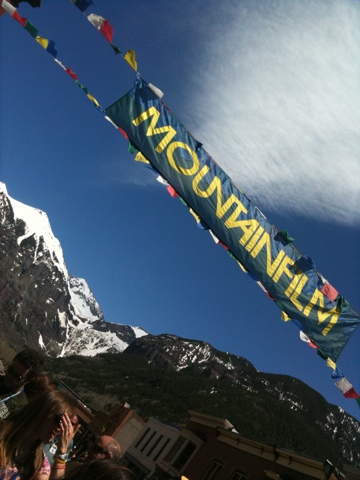
This year they’ve declared Mountain Film, a zero waste festival. That means I’m carrying a small canvas bag containing a cup, a plate, and a utensil. The initiative came directly from the screening of Bag It last year. Since then the presence of any single use disposable in my life has come to feel like a mortal rather than a venal sin.

I’m grateful to the festival for upping the ante. We’re all grownups, after all. They don’t need to give us plastic chum. They can ask us to bring our own plates and we should be able to figure it out. Stores can stop giving out bags and we’ll get it.

But their policy summons even greater questions and action. Candidate rules to live by:

1. Don’t buy anything. Ever again. In my life. Why should I? I live at the top of the food chain in the richest country in the world in the twenty-first century. What possibly could I need or want?

2. Don’t buy food unless I’m hungry. Truly hungry. Am I eating because I need to or because I want to? And if I want it, do I really want it?

3. Try to see the whole life of the food. Where did it come into being? How was it harvested? How did it come to me? Eat only those plants and creatures that I know.

4. Substitute human energy for fossil energy. This is a big one. Where can we use our hands and bodies and not rely on the grid?

5. When it gets dark let it be dark. Darkness is a gift from the universe. Why mask it with light? What a colossal waste.

6. Be where I am. Why talk with someone far away rather than the person right next to me? And why look in a device rather than the vista ahead? How much energy could we save if we weren’t trying so hard to be somewhere else?

7. Think twice before flipping a switch. Any switch. Every switch incrementally warms the world.

Anything anybody would care to add?

What I Told Them

That in some ways the world that greeted us when we first came here no longer is. And in other ways it hasn’t changed. That both make me feel equally sad.

That they will remain. That they need to look after the farmers and after the fields. That I attended the junior high promotion and felt these little lives moving into small and uncertain futures. That a boy who liked Mazie didn’t even finish the eighth grade.

How can spring feel so autumnal? I will miss this sky. This air. The landscape of people who have been part of our lives. But many of them have already gone on and I’ve mistakened my memory of them for their actual being.

But these ravens for now actually are. And I want to hang on to that.

They sat quietly. And they listened.

20110525-074224.jpg

Ravenous

Physical experience excavates language.

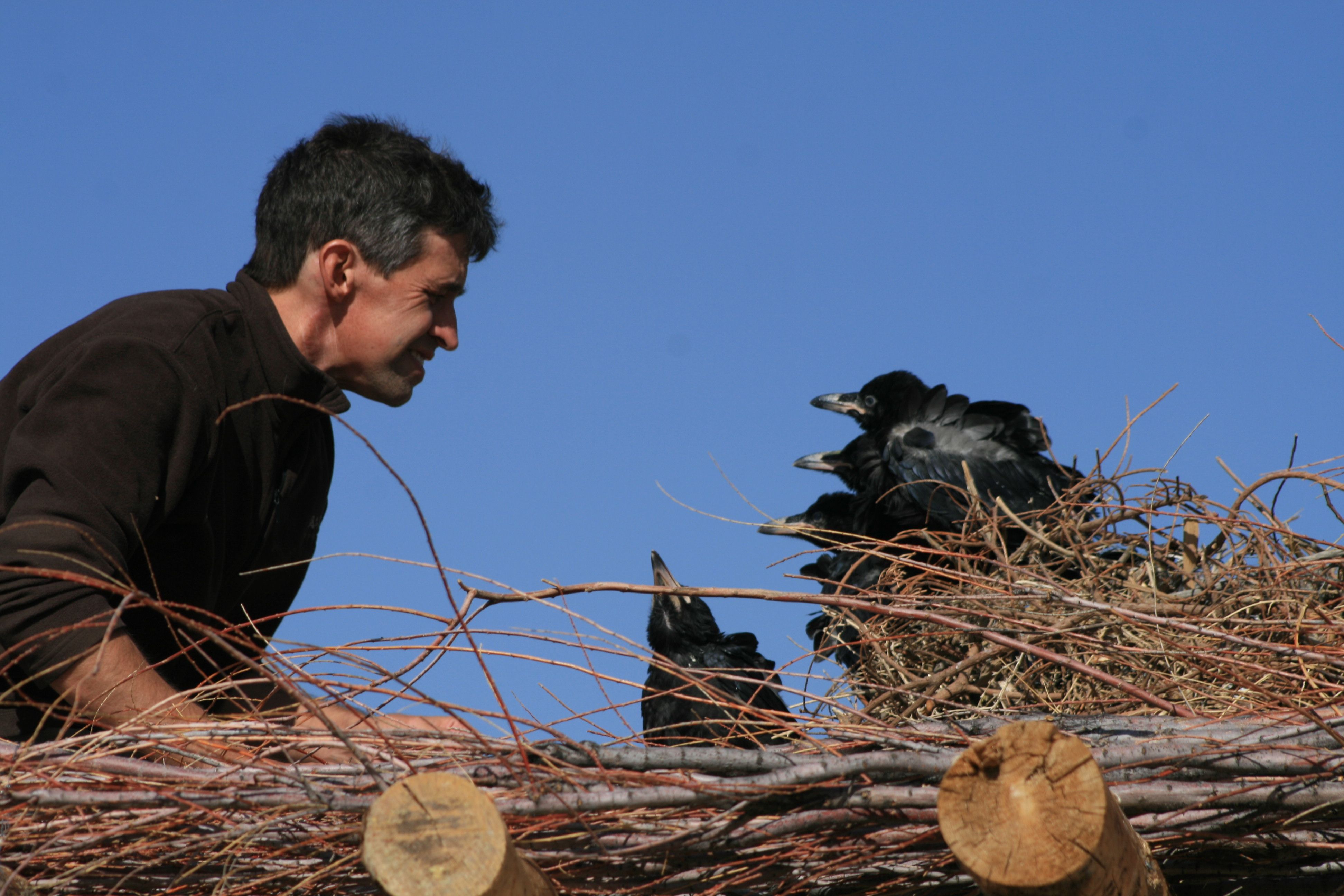
Never thought to what that word means – never could really understand what that words means until I had to keep fed a pack of starving ravens.  At dawn, their call is deafening.  I climb atop the ramada and they practically throw themselves at me to get their morning allotment of milk sodden bread and elk meat.  Once they’re sated, I climb down.  An hour later their calls are deafening.

This morning the parents fly over and call loudly when I begin feeding.  I don’t know if the fledglings cry had changed to a distress call or if the parents simply saw me.  They circle and call excitedly, but don’t appear defensive.

I’m sure they recognize that I’m feeding their young.  Are they expressing curiousity?  Or gratitude?  Or perhaps summoning the fledgelings to flight?

Last night I took the dogs to the wash roost.  What I took to be the health care parents and the wash parents were perched in the tree, looking north toward our house.  I gave my customary raven cries.  Both sets of parents circled and accompanied me nearly the entire walk back to the house.

I prefer their company to that of people.  And in that way they’re feeding me, keeping my hunger at bay.

Choices

Bernd Heinrich is right.  If you have a choice, choose the ravens over attending a meeting.

These birds have derailed my life for a week now.  Life is that stuff that happens when you’re supposed to be doing something else.

Now comes the hard part.  To the best of my abilities I have to starve them so that they’ll call out for their parents.  And as further incentive I load the ramada with dead carcasses.  A flattened rabbit from the road.  A pair of rotting rattle snakes killed by Health Care.  Some elk meat from my friend Kerry.

No luck. We leave to Flagstaff for the weekend, leaving the birds to their own devices with no people around.  When we return they’re famished.  And no signs of the parents.

Each morning they caw loudly, looking skyward.  By late morning I relent and give them food.  They recognize my voice now.  Nice for me.  Not good for the ravens.

But I love them.  And I’m glad they’re in our lives.  They’re perhaps the only things keeping me sane at the moment.

Feeding time

Nesting Instincts

They can’t live in a box forever.

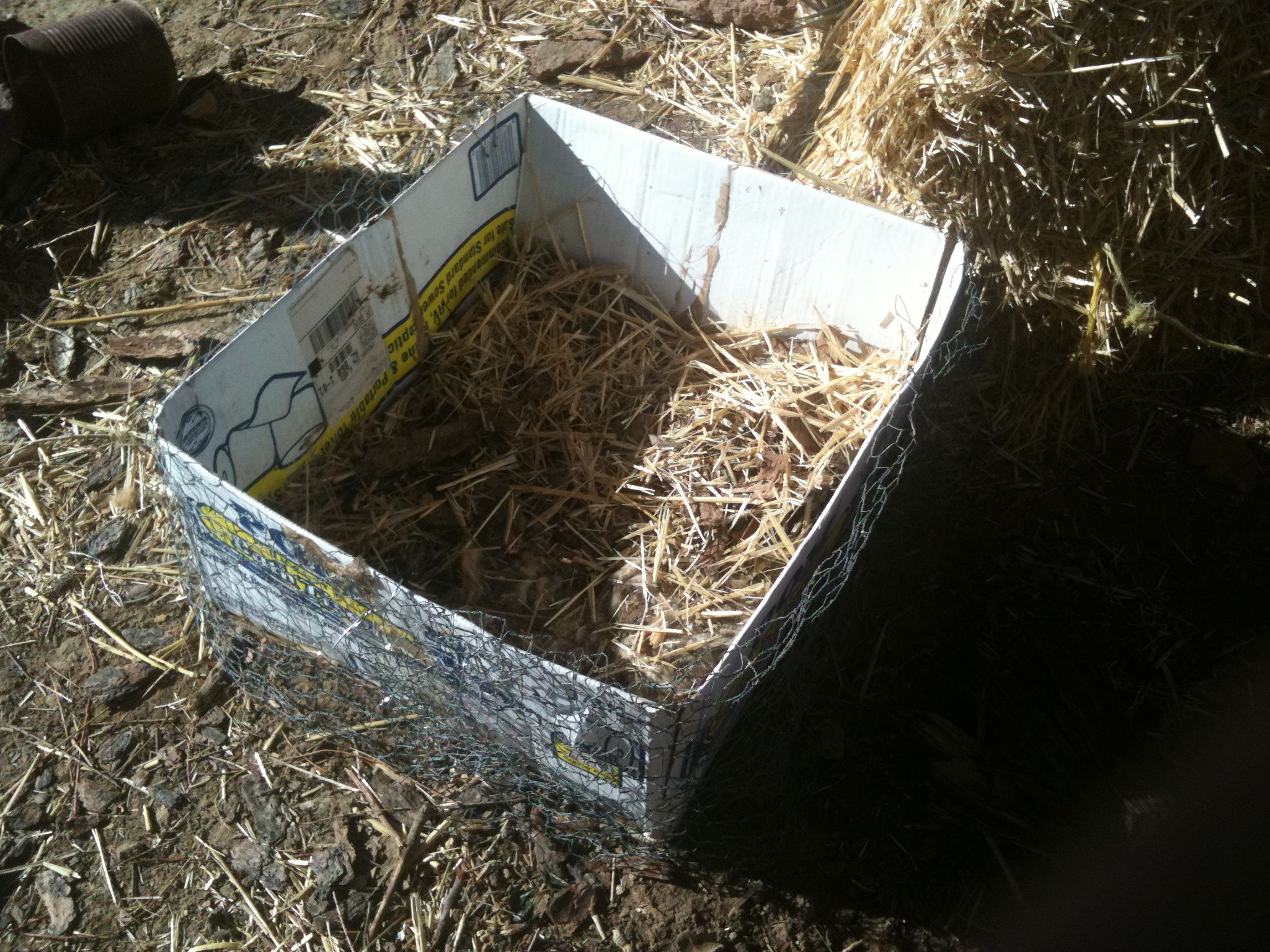
But how do you build a raven’s nest?  I don’t speak raven, so I can’t ask them.  I start with their homely toilet paper box.  I wrap it in chicken wire.  One of our chickens checks it out and gives her approval.

raven box

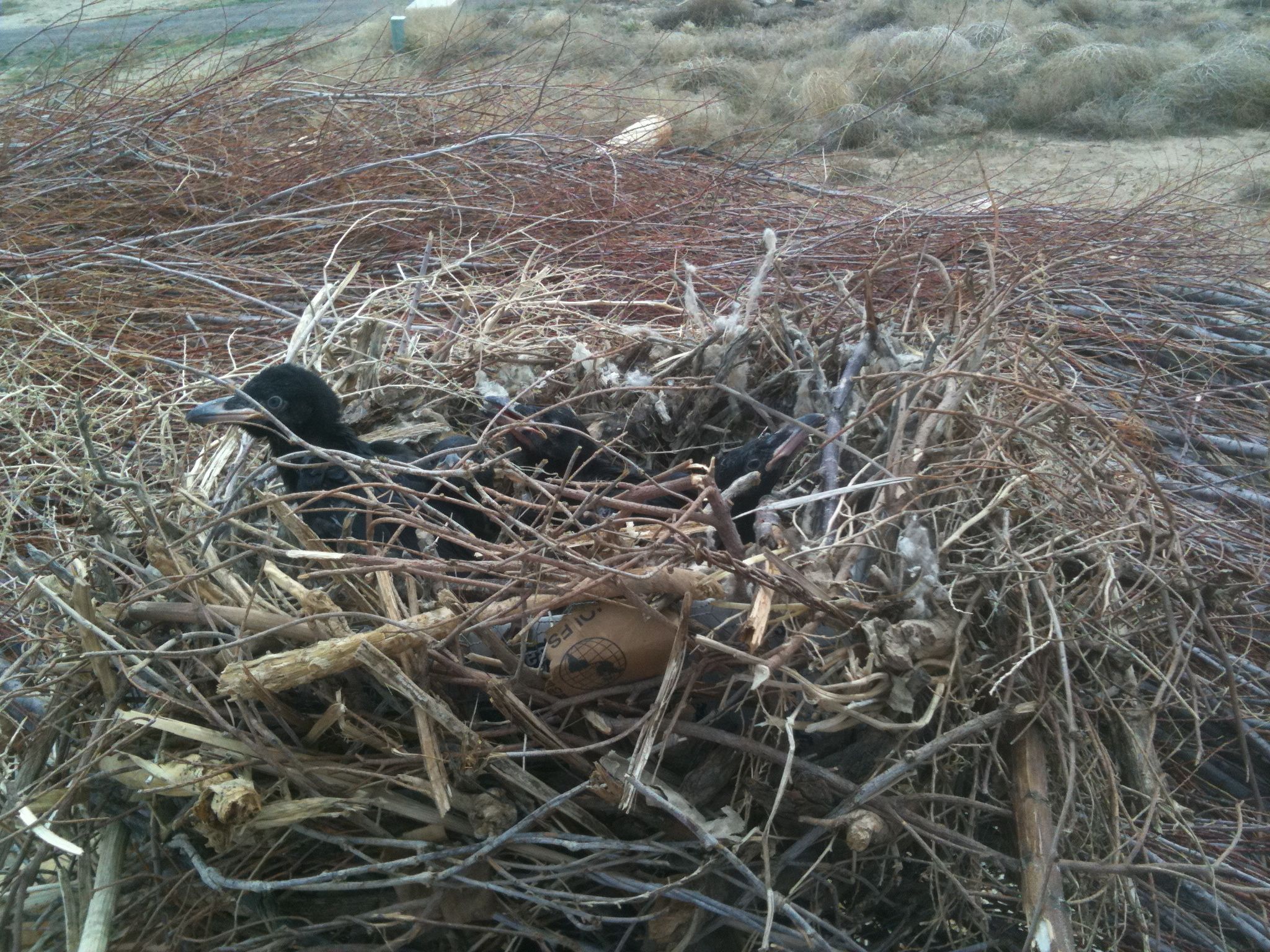
I walk to the wash and retrieve the remaining nesting material that had been discarded there.  The whole mass of twigs and matter smells musky and wild.  It feels true to what the raven is and should be.

One of the nesting pairs out that way follows me all the way back to housing, alighting on the ground every few feet.  I assume it’s the male.  And I assume he recognizes raven nest stuff.  And I assume he’s wondering what the heck I’m going to do with it.  He stays with me, long after we’ve passed the brood he’s protecting.

At home, I gather additional twigs and matter from the yard.  I now have to think like a raven. What stuff is pliable?  What is warm?  What is too long or too short?  Those are some of my criteria, but I have two hands, ten digits, clippers, and chicken wire.  The raven has his beak.  What does he consider?

Even with all of my tools, assembling the nest takes the better part of the day.  And I’m left in awe of my feathered friends.  All of their twigs are of near uniform length and diameter and woven together into a complex tight mass.  I have no idea how they do it.  Where we live, there is a severe housing shortage and half built homes litter the landscape.  People want houses built for them.  The damn ravens just do it themselves and their construction requires monumental effort.

Their nesting material is packed with dog hair, human hair, couch stuffing.  I recognize some of it.  A lot of it, actually.  When we clean our house we empty the vacuum cleaner in the compost pile.  And the ravens have raided it to insulate their nest.  The hair is my hair.  The fur belongs to our dog, Mango.

I’ve positioned the nest on the far edge of the ramada, as far from the house as possible.  As I weave in the last few twigs, parental instincts kick in.  This place may appear safer to the ravens, but in fact it’s not safe.  Not at all.  It’s perched adjacent to the service road.  My poor estimation of people surfaces.  Some farmer will come and kill them.  Or a Health Safety Office will deem them a hazard and remove them.  Or a housing manager will give orders to destroy the nest.

I reluctantly reassemble the nest back toward the center of the ramada, away from the road and out of line site from all the windows of the house.   The babies need protection.

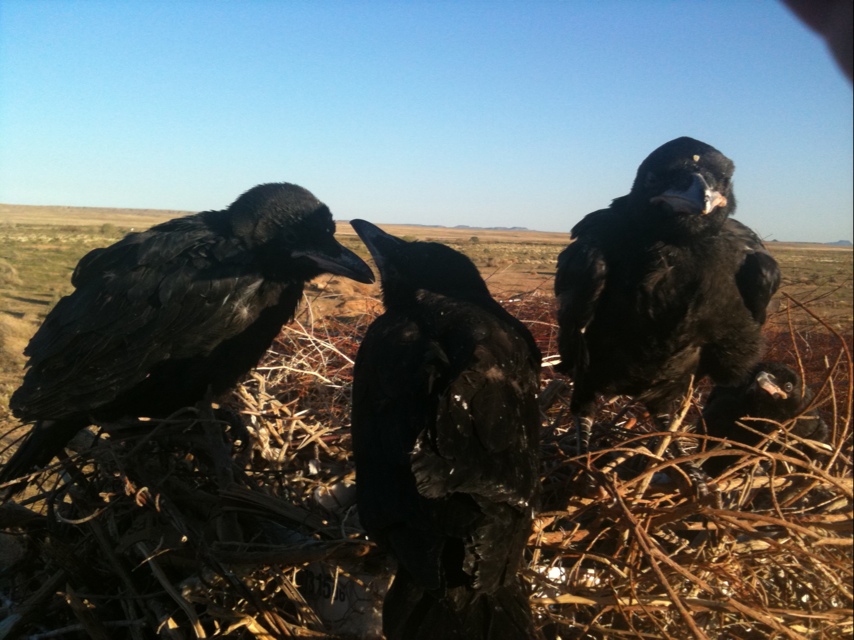
Mid afternoon, I place them in their new home.  They calm down at the familiar appearance and texture.  They know this matted material.  The caked shit holding everything together is theirs.

Home.  They perch on the lip.  They appear happy.

Ravens on ramada

Reunion

Bad weather sets in so the ravens remain housebound for a day or two.  On the first clear dawn, however, I set them out on the ramada.  Out front a mating pair eyes me from a distant light pole.  A third peers surreptitiously over a parapet.  All three call to one another and take flight toward Health Care.  A half hour later a pair flies low overhead and call out wildly to the fledgelings who call back excitedly in return.

I believe they’ve been found.

Later that morning a friend comes over and climbs the ladder to take a peek.  As she gets closer, the babies call out in panic and immediately an adult pair flies over from Health Care and light upon the ramada in a defensive posture before again taking off.

But that’s it.  Later they spy me feeding the babies and circle.  And since then they’ve kept their distance.

Wild Things

What do you do with a clutch of ravens?  First order was to keep them alive.  We left a message with Bernd Heinrich in Vermont.  We called Raven Rescue only to discover that they’re a rafting company and have nothing to do with ravens.  They promised to send t-shirts.  We looked at Raven FAQ’s  online.

Folks had all sorts of questions.  Can I teach my raven to speak if I slit it’s tongue?  Can I train it?

We just wanted to know what they eat.  We settled on a mash of yeast bread and milk which they took to eagerly.  They immediately took to us as feeders.  And of course we gave them names.  Distinct personalities warrant names.  Poe is the most aloof, always sitting apart from the other three.  More is the most hungry, thrusting out his narrow head and beak long after the others have stopped feeding.  For is heavy set.  Ever is the last one left.

But it’s all nonsense.  We’re their temporary caretakers, not their parents.  Their parents are out there somewhere, undoubtedly looking for them, wondering what sort of strange alien abduction has taken place.

They’re wild.  And back to the world they must go.

Health Safety Hazards

It took a few hours to figure it out.  Why were the ravens there, at that exact spot in the desert?  They were at the end of a dirt road that began at the hospital.  So we put out a late night call to one of the facility workers.  What exactly did he know about a clutch of ravens abandoned in the wash?  He abashedly explained that they had been roosting at the entrance of the hospital.  The Health Safety Officer had deemed them a Health Safety Hazard and asked for them to be removed.  Maintenance had at first resisted, but eventually caved in.

Health Safety Hazard?  Each morning young mothers trudge past that nest, their young toddlers in tow sucking on supersize bottles of soda and someone considers the ravens a health risk?  Who’s out there tackling those young hominid mothers and dragging them out to the wash?

My misanthropy ratchets up a notch.

Ravens mate for life.  They raise their young for upwards of two years.  They possess a complex language and a fierce intelligence.  They have strong social networks and can recognize individual humans and distinguish the friendly from the hostile.  They can share this information with other ravens.

They’re beautiful.

Scared young things

Mystery

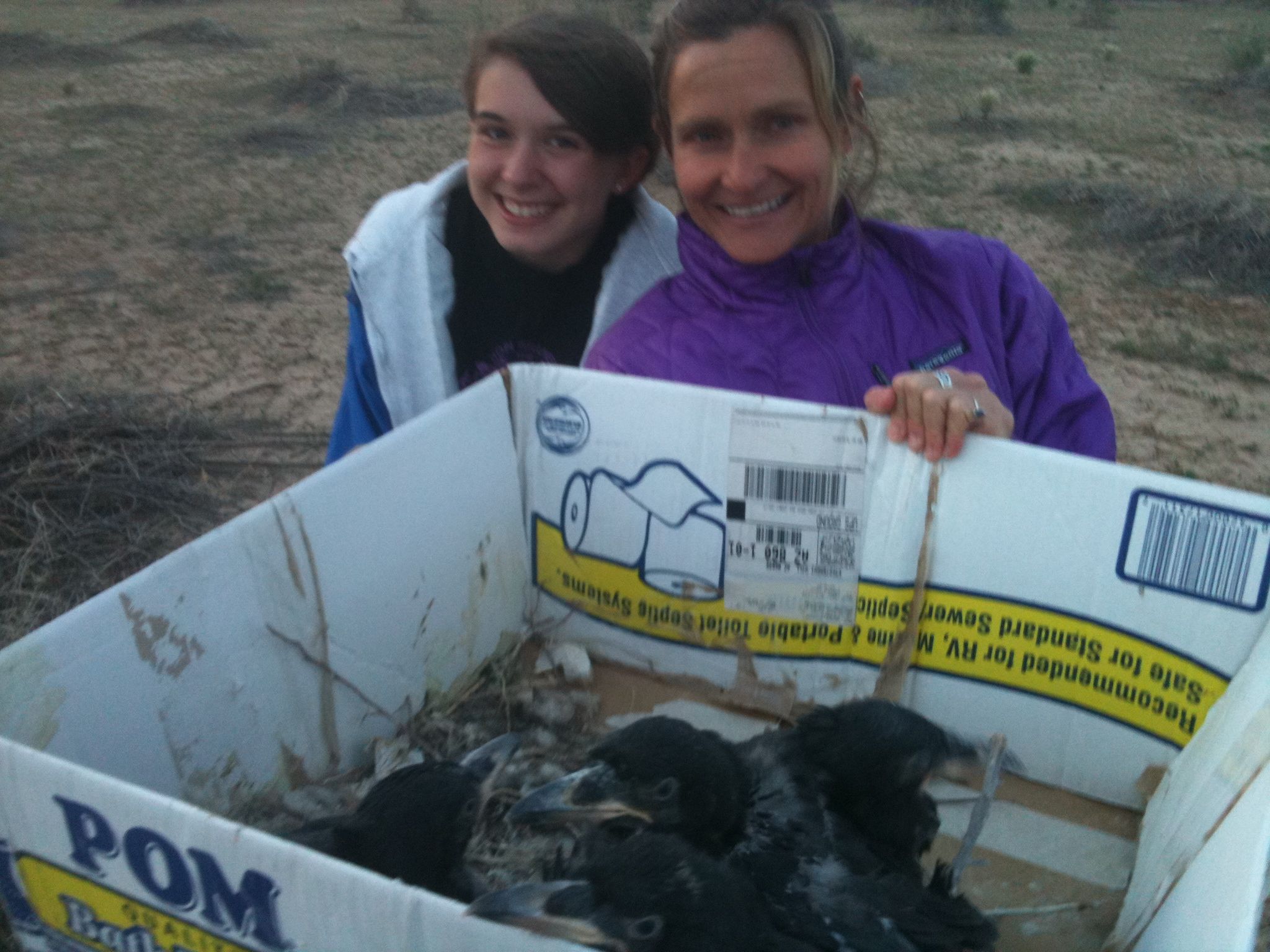
Pearish discovered them in the wash on Monday.  Four fledglings. Jet black, musty, cawing loudly.  Abandoned in an old toilet paper box with an armful of nesting materials.  We considered the possibilities.

Had they blown out of a nest?  Had a farmer collected them to remove from their fields?  Someone else who wanted the feathers?   A do-gooder trying to save them?  We found a line of ATV tracks in the wash, but no footprints from the tracks to the box.

The sun was setting and we had to move quickly or else the babies would become coyote chow.  We raced to a roost in the wash.  It appeared to have been broken.  We set up a ladder and climbed the tree, but lo, the nest was intact and already filled with four fledglings no less.

Anna recalled another roost somewhere in the wash, but if they had blown out, how had they ended up in the toilet paper box?  And it couldn’t have been a farmer. He would have dispensed with all niceties and simply killed them. And someone collecting feathers wouldn’t have left them in the wash.

Sun setting.  The babies were destined to be eaten.  And so home they come.

Ravens discovered

Is This the Way the World Ends

I’m in Hotevilla when the call comes.  There’s a propane leak at Hopi Health Care and they’ve evacuated the facility and the adjacent housing complex.  They’re afraid the whole thing is going to blow.

I drive back to First Mesa.  The hospital and housing entrances are blocked by a phalanx of squad cars.  Two fire trucks wait on the side of the road about a mile distant.  I drive past, hook a right on the airport road and park on the cracked asphalt adjacent to the air strip.  I secretly cut across the wash and desert to the rear of our house and hop the fence.

Inside, I settle down with a ham sandwich.  The neighborhood feels ghostly and empty. What do I take? I wonder. I finish my sandwich and grab my laptop and Mazie’s violin.  I load a duffle with some meat from the cow we slaughtered.  A half bottle of Hornitos.  I shoot a quick video of each room of our house (for insurance purposes).

The first editions of Stephen’s journals, the signed first editions of Cormac McCarthy books, my signed Turrells, the Heriz, my journals and family heirlooms – it’s all destined for flames, I decide.

I plop my Mennonite hat on my head and wrap my scarf around my neck.  I move the chicks outside.  I open the gate and our dog Mango steps out with me.  We’re joined by the stray pit that everyone dislikes and together – the dogs and me, violin and duffle in hand, set off across the desert. A sand storm kicks up, sending tumbleweeds skittering past.  A thunderstorm approaches.

Perhaps this is how it ends.  Behind me I’ll hear an explosion and feel the heat of an enormous fire ball.  Anna’s work and all of our worldly possessions will have blown up.  And then we’ll climb in the car with Mazie and drive west.

And that’s it.  We’ll be done with it.

Black Wind.

Blowing again.  Wind chimes newly hung have been ripped to the ground.  The one remaining from Arcosanti peals all night like a ball-peen on the skull.  The wind brings moisture but sooted with a thick cloud of orange dust.  The dust settles on everything inside, outside; it lodges in your teeth, your hair.

I’ve loved this wind because it chastens.  If it were just the wind, that alone would be enough.  But what when the whole world brings you to bow?

Last night I asked my friend Al how life was.

Full, he said.  100%.

Really? I asked.

Yeah, he said.  I mean it’s always 50-50.  Is it half empty or half full?  But when you add it all up it equals 100%.  So there you go.  Full.

Way full.

Best Friends

Morning coffee and croissant off of Grant street. The city awakening. I’m feeling sad, though. Sad at excess. A little sad at wherever I am in my life.

I look down at the pavement. And I think of the guy.
—-

Last month my friend Patrick was walking to work in San Francisco and he passed some commotion and an area cordoned off with police tape. A little bit earlier a guy had jumped from a building and his body was lying on the pavement.

He had committed the irrevocable act.

He had arrived at a moment where he felt sad / devalued / alone / ill – enough so that he no longer wanted to be alive.

Since arriving in San Francisco I’ve considered him most days. I never knew him. But by killing himself he’s given me a costly gift. Even worse, it probably pales to what he gave the world when he was alive.

What would he think to know that after his death, a complete stranger would continue to carry his shadow forward into life? And by implication, what of me is carried by him?

Sometimes we can count even a stranger as a friend.

20110503-101119.jpg

San Francisco Spring

Union Square, San Francisco

Yesterday I had my string of checkup appointments marking the two year anniversary of my initial diagnosis and recommendation.

Rounds of hugs with the receptionists as I checked in with each doctor.  Diane and Misty and Rosa have become good friends and shepherds along the way.  And embraces with my docs as well.  Dr. Eisele and Quivey and Orloff are as wonderful people as you will ever find.

And it all checked out.  The incision has healed wonderfully.  The remaining salivary glands are intact.  There’s nothing funny growing in there.  I should be cleaning my teeth more frequently.  I’ll start as soon as I get home.

So now, in whatever way, it’s time to say goodbye to it.  I still have my appointments every year or so.  Some regular imaging.  But for now I can let go of that part of my life.

It makes me a little sad.  Dr. Quivey is retiring in July.  And my trips to San Francisco have been a staple for two years.  It feels a little like graduating college or leaving home.

It should be a wonderful San Francisco morning and I hope to enjoy it as such.  And then get the hell out of here.

I won’t miss the experience.  Only some of what it summons.

Butchers

I’m sorry.  I just have to say it.

The taking of any life should not be cause to gloat.

The headline of the Chron yesterday read:  “The Butcher of 9/11 Dead.”  But what made him a butcher and us any less so?

Was it that he launched an attack against the US? He essentially was a military commander using the means available to him to achieve his military and political ends. By that measure, we are butchers.

Was it that the attack was launched at a civilian target?  In our retaliations in the Middle East, since 9/11 we have taken far more civilian lives.  We call this “collateral damage.” But by the same measure, we are butchers.

Perhaps the taking of human life amounts to butchery only when it happens to us.  That makes us narcissists.

This may be a defining moment in Obama’s presidency.  But I would hope not.  There are better things to be remembered for.  It was a necessary moment.  But not a proud one.

bin Laden’s death may diminish the chance of future attacks.  But probably not.  It certainly won’t bring back all those we’ve already lost.

Lets model good behavior and not the behavior of those we vilify.

Let it rest.

The Miller’s Tale

In Brueghel’s Procession to Calvary, the Mill perches on an implausibly high and incongruous rock in the flemish countryside. Or perhaps it’s not flemish, but the middle east, imagined by a man who could only conceive of that land as the only land he knew, Flanders.

What is the Mill and who is the Miller? The mill takes the grain, the life essence and grinds it into matter that will be transformed into bread, the holy host, the body of Christ. It takes the essence of god and renders it into the material world so that the ineffable can be partaken of by men. In the consuming of the Host, the ineffable, the Christ, becomes carnate within us.

And between the Mill (the agent of his conception) and the Cross (the instrument of his demise) dances the entire pageant of the human experience, all our sins, all our folly both venal and mortal, inattentive to the turning blades and the waiting pine.

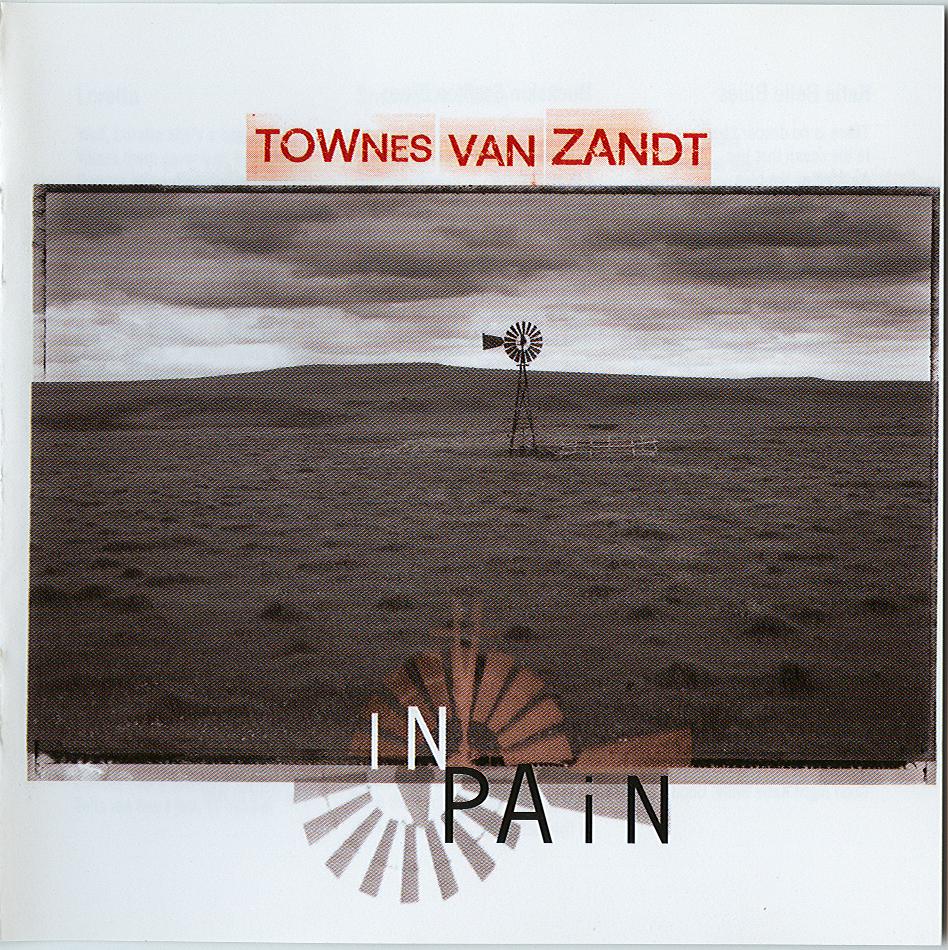
Which of course, inevitably brings us to Townes Van Zandt.

His suffering was more than any men, let alone single man should live to bear. And either because of his suffering, or because of the breadth of genius that preceded it, what remained in the end burned white hot.

Today I’ve been listening to recordings he did in his last European tour, when he was near at the end. Some of the words are so searing, they brought me to a standstill. I stood on the corner in the Mission and could do nothing but listen.

And I can’t help but think. The fruit be damned. You. The Miller. The one who would ever bestow this upon a man:

You ain’t no friend of mine.