Killing Prejudice


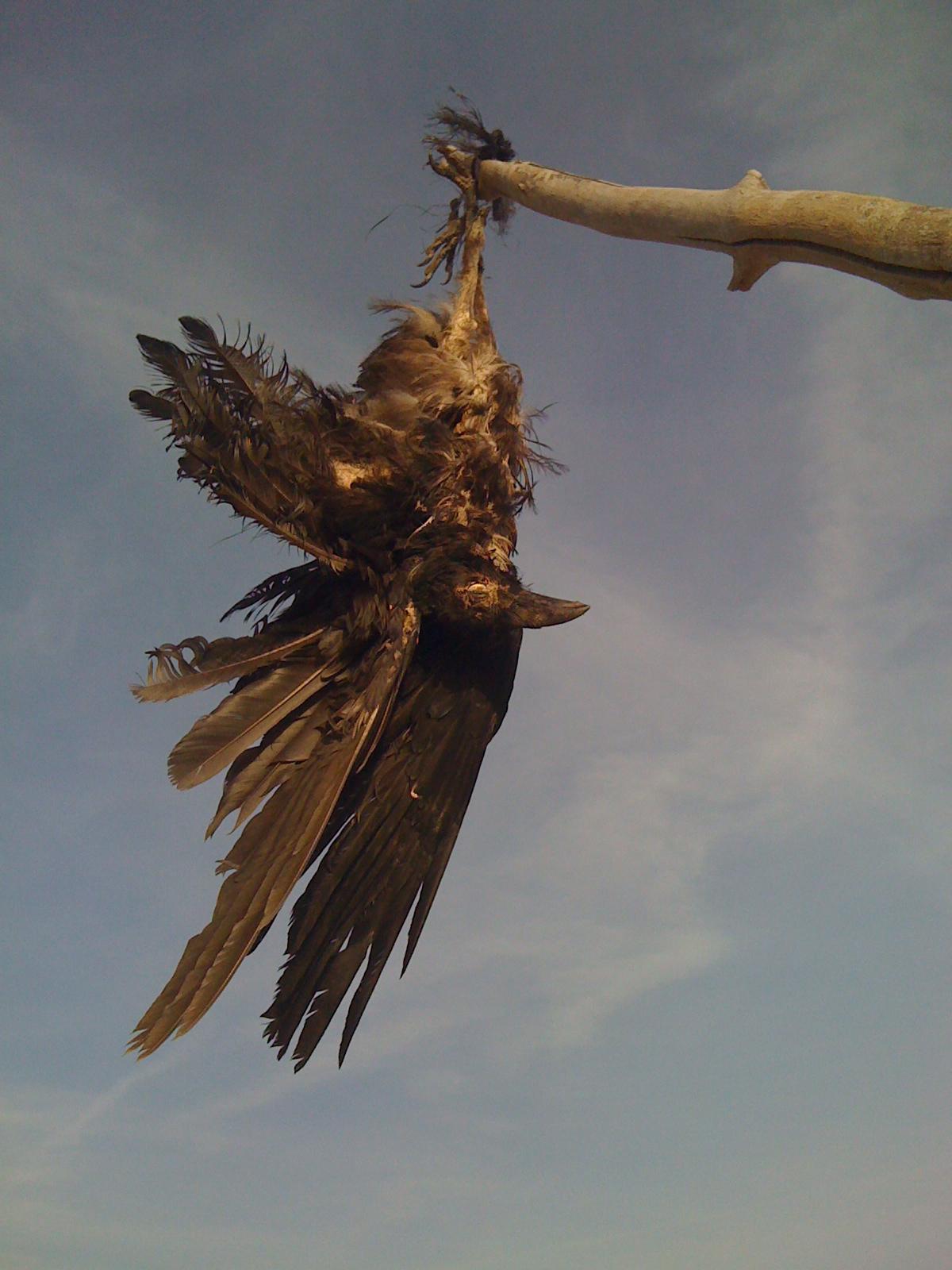
Hanging © Andrew Lewis

I think I’ve had it.  Forget this abortion we call civilization.

A few days ago our house sitter called all in a panic.  The vibe in the neighborhood was getting bad, she said.  The neighbor was upset because the birds were going to get his corn.  And they were loud.  Another was upset because they were flying to his house and shitting in his yard.  Another complained that one of the birds was calling outside her son’s window in a threatening way.

They’re birds.  Simply birds.  And they’re beautiful.  Beautiful when they squawk.  Beautiful when they fly.

They care for one another.  They don’t sell meth. They don’t kill their spouses or their young.  They don’t watch TV.  How many ways can I count my love for thee?

The following evening our neighbor returned one of the ravens to us.  It was threatening his corn, he said.  Never mind that his corn is only a couple inches high and that the birds don’t yet feed themselves.  

The bird was injured.  He wouldn’t take food and he couldn’t move his wings.  By the next morning he was dead.  Our house sitter buried him in the desert.

Every Hopi who’s heard of our raven adventure has expressed aversion.  Not just surprise, but something close to downright disgust.  They’re ugly black birds.  And they eat the corn.  I might as well tell folks that I’m raising rats.  

Last fall I found a bag of shotgun shells and a bottle of soda beneath the wash nest.  A farmer had perched on the bank and set to taking pot shots at the infants.  In talking to farmers here, they here don’t distinguish between the young and the adults.  They don’t even distinguish between the ravens and the crows.  How can they set to killing them? 

A farmer once told me that he crucified the “crows” in his field because, he said, “Crows are like Navajo. They’re afraid of their own dead.”

Funny.  True on some counts, but not on others.  First off, the things hanging in his field are ravens and not crows.  Secondly, I’m sure the ravens can recognize their dead.  And they probably know to steer clear.  But isn’t that a sign of a higher intelligence?  And shouldn’t intelligence of any sort be respected?  And then there’s the likening to Navajos. In contemporary Hopi culture, they’re seen as raiders and thieves.  I can’t speak for the Navajo, but the ravens out there are as much a part of the ecosystem.  And though Hopi trump all other human occupation on the plateau,  the ravens were here long before the Hopi.

But in some ways I get it.  Crucify the bird.  Set an example.  But do it with prudence.  And attention.  And thoughtful care.

I transplanted vegetable starts last week.  Within an hour the chickens had decimated them.  Chickens and children willfully trample our gardens.  But our first instinct isn’t to haphazardly kill them and hang them in a corn field.  

And christ, if you’re going to kill it, at least know whom it is you’re killing.  Know it by it’s name.  

No.  Our first option should be to figure it out.  In the garden incident, I erected a small chicken wire barrier around the vegetables.  In another, I might discuss the matter with the child. 

Isn’t it our responsibility to protect without killing?  If not, what are we then, but beasts?
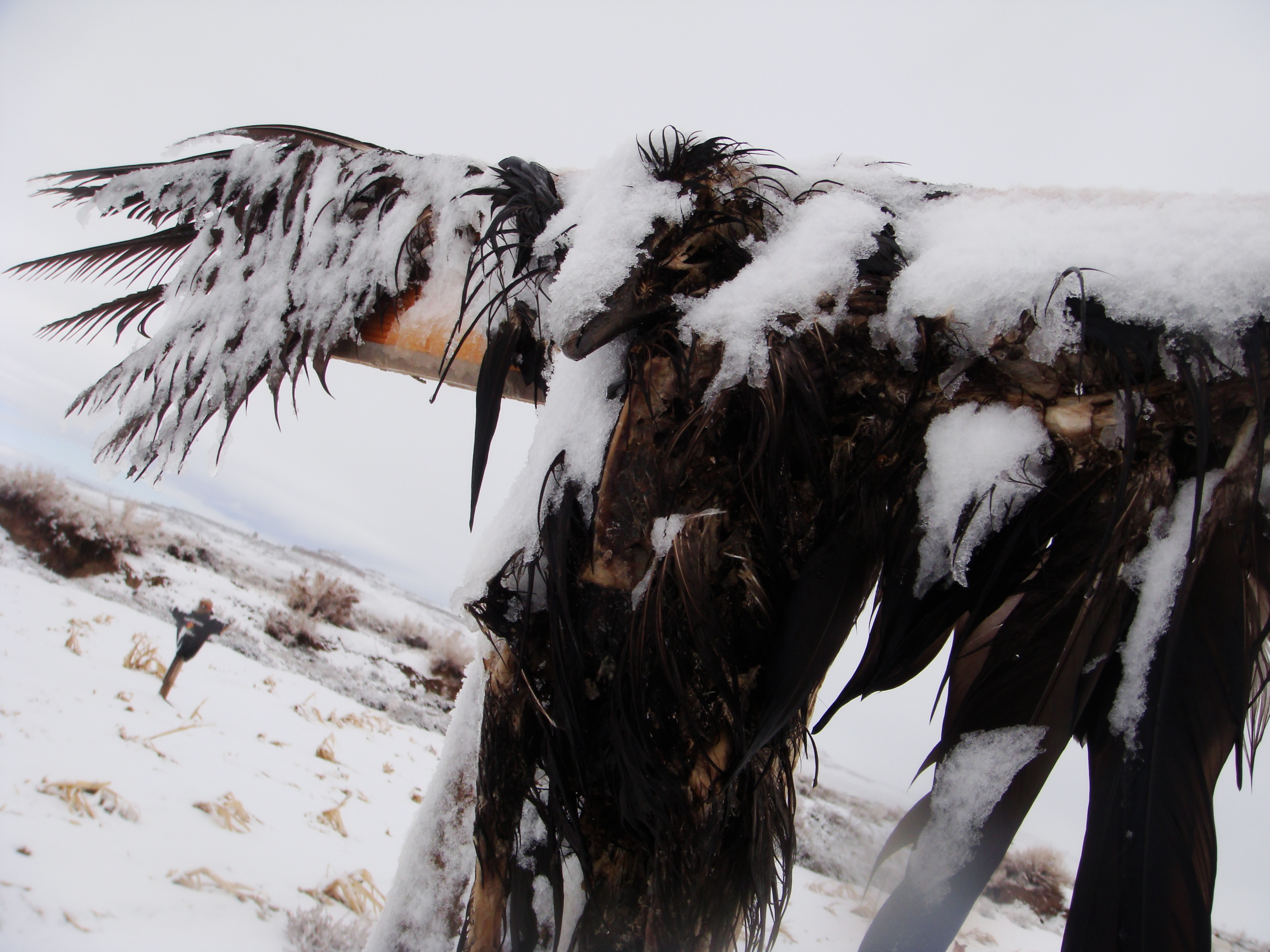
Crucifixion © Andrew Lewis
Learning is Fun

Three ravens came down from the ramada today.  One takes to drinking water from the bird bowl. The others pick and pull at cardboard, straw, bread scraps in the yard.  They peck at loose material with their beaks, feeling their way through the world, learning about different materials. 

We learn through play and exploration.  We take flight, not because it’s time to feed ourselves and wing flapping will help us do so.  Sometimes we fly out of fear like Poe did yesterday.  But mostly we take flight just because it’s fun.  We learn through play.  We also learn from our peers.    One raven left up top, calls out yet to the others, afraid to make the leap.  Their presence down below goads him. I can’t help but think that they’re also observing the other birds and picking up something of how to fly.  Self-feeding is learned behavior.  I wonder too about flying. In the absence of true parents, how quickly will they learn what to do?

They will be left to learn only through play.  Feral, without society and species context, what new world will they discover and invent?

Self Feeding © Kerry Hardy


First Flight

© Kerry Hardy

Raven Heir © Kerry Hardy

Richard from the radio station and Tony Dukepoo over to see the birds.  We see Poe in the distance walking out in the desert.  We approach him, and though he’s fine with me alone, the three large mammals unnerve him.  He struts away quickly, stretches his wings and soars low over the scrub and then high into the air, alighting on the neighbor’s house.  He did it.  His body knew exactly what to do. 

The next day the hospital pair and the wash pair appear to circle above the ramada.  But no!  It more likely seems to be the adolescents, the four children of the wash pair, flying and exploring.  They soar at a distance, mount on the light posts, and look this way.  They call out to our young ones. who fail to respond.

—-

On Saturday afternoon the winds pick up.  The four wash fledgelings fly confidently now.  They circle above, leaving our ravens look out at them.  I wonder if they feel longing or curiosity.  I fear they may not see themselves as like those birds that can take to the air.

Later the parents sit right outside the fence.  When I step outside, they quickly take loft and circle over the young ones, calling.  Take flight, they seem to say.  Please take flight.

The next day at dawn, only two birds remain in the nest.  Poe and More are gone.  Later I find them atop a house across the street.  They watch me plant in the yard and weakly soar back, still learning to use those wings.  I reserve my greatest affection for Poe.  He stands apart, aloof or independent.  He doesn’t ask for much.  He leads the way, the first to explore and learn to use his beak.

I’m so proud of them all though. They’re so prehistoric.  They were dinosaurs once and the big rock hit and most of the other’s died, but these ones, they survived.  They figured it out. They are emissaries from the past, from that horrible day that took out most life on this planet.  But it did not take them.  Their ancestors took flight, and disappeared into and became one with that black smoky apocalyptic night.


Trust

Our neighbor worries that the ravens are eating his corn.  We try to ease his concerns.  The ravens are too young yet.  They can’t feed themselves.  They’re carnivores.  They don’t give a rip about his corn just coming up.

But preconceptions and prejudices are hard to break.  

Hopi don’t like black looking birds because they supposedly destroy their crops.  There’s a simple solution, however.  The best Hopi farmers plant extra for the rodents and birds.  In a resource rich environment predators cease to be a problem. 

In which case perhaps we need to unlearn our distrust.  Trust and distrust, afterall, are also learned responses.  Ideally we first learn trust.  When we come into the world our mothers and fathers greet us with love and caring, food and nurture. 

But if a harsh world greets us, we can just as easily  learn distrust.  A scary dog chases the chickens and they learn to fear dogs.  A farmer shoots ravens and they learn to steer clear of the farmers.  

More comes down yesterday on the other side of the fence.  Chester, the stray pit, ambles up and nuzzles him.  He’s already shown something like affection toward the birds.  I note the variety of species running and flitting about the yard and getting along.  Two varieties of chickens, hummingbirds, doves, cats, dogs, wild birds, ravens, humans.  We all largely mind our own business.  We’ve all learned that this is a resource abundant, safe environment and we respond accordingly.  Introduce hunger though, and hunger will breed desire, desire begets aggression and soon we’ll all be going at each other.

The ravens sit on the fence and I talk to them. They listen and respond with their murmurs.

My heart goes out to Heinrich, and I appreciate (just a bit) the difficulty of observing and being with something that is supposed to exist in the wild.  Even our remote presence or insertion of a variable disrupts the process.  At this point, we don’t have wild fledgelings; their behavior may in fact be some weird hybrid of raven, people and chicken.  What ill-equipped monsters are we creating?

This is a terrible thing.

I still can’t help but talk to the ravens though.  They can trust me, I tell them.  They can trust Pearish and Kerry and the others that feed them.  We won’t hurt them.  But they can’t trust anyone else.  They can’t trust the world, I tell them. The world will hurt them.  Most other humans will hurt them.  I feel a sudden sadness in this recognition.  That’s what we are as a species:  the ones that hurt others.  We will eat anything in sight.  We disdain a creature just because it shits in a plot we consider our yard.  We will kill other living things just for the sport of it.  Sometimes we gain pleasure in hurting.  We’re sick.

Emancipation comes in honoring another life over your own.  Curbing your own appetite so that another may live.

I want the ravens to stay with us.  I want them as friends.  But that’s my selfish desire and I can’t impose it on them.  The day may come when I will have scare the bejesus out of them.  They may have to become terrified of us.  Just so that they may live.

© Kerry Hardy


Cages

A recent visitor asked what sort of cage he would need to keep a pet raven.  What to say?    Except that we can’t own another living thing.  No animal.  No plant.  Not even our children.  I was about to say “our own children.”   They are autonomous forces moving freely through the world.  A raven was born to fly.  Humans were born to walk.  Not live in cages.  Not stay at home forever.  Would we consider caging our own children?  How then could we do that to a raven?

Let’s be honest though.  How is our raven experiment truly any different?  The ravens stay at our house even though they’re not caged. They may end up staying because we feed them. Or because they sense this a safe place.  Or worse yet, because they are learning to be with humans and not their own kind.  In which case we will have erected a far worse cage – the one that exists in their own mind.

By extension, what cages have we erected about ourselves they keep us from doing things?  The should’ves.  The have to’s.  The “it’s easier”.  Or more comfortable.  Or we don’t know any different.  Or “it’s what everybody else does.”  Or it’s always been that way.  Or the huh – I don’t know.  Never thought about it.  Or I’m scared.  Or the I don’t know how to.  Or my own kind vs. their own kind.  Or my ideas.  My own mind.  Your own mind.  Us.  Them.

Categories are learned behavior.  Other learning would result in other categories.  We often pass learned behavior off as knowledge.  But this knowledge doesn’t exist a priori as an absolute truth.  It’s the framing of the universe through the senses and experience and information available to us.  Other species with other sense organs or physical experiences may perceive it entirely differently.  A raven raised in a yard only knows the yard.  The ravens in the wash, why they’re wash ravens.  Their neural pathways, if only slightly, will evolve differently.  If even in that a wash raven doesn’t trust us.  And the yard ravens do.

I’m scared.  We need to make them go.

© Kerry Hardy

Food

We continue to teach them to feed.  In medieval Europe they foretold death. They would recognize approaching armies and flocks would fly ahead in anticipation of the carnage. 

In the times to come, these birds may be our harbingers and beacons.  Watch carefully and they may serve as guides.  In payment they will dine on our flesh.  And pick out our eyes.

They need to learn to feed. On other things and then one day on us and then we will see again and our bodies will soar.

© Kerry Hardy

Feeding

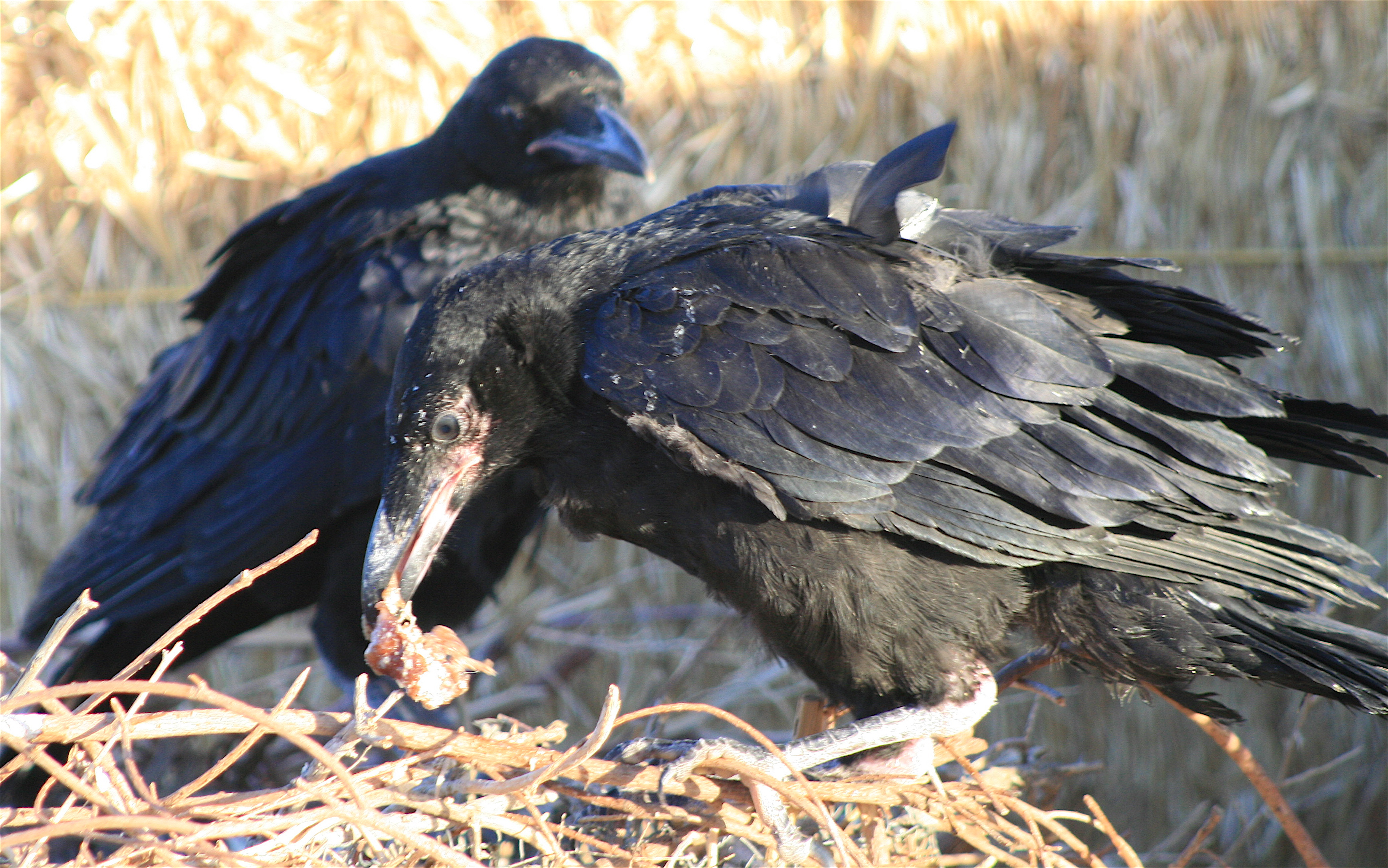
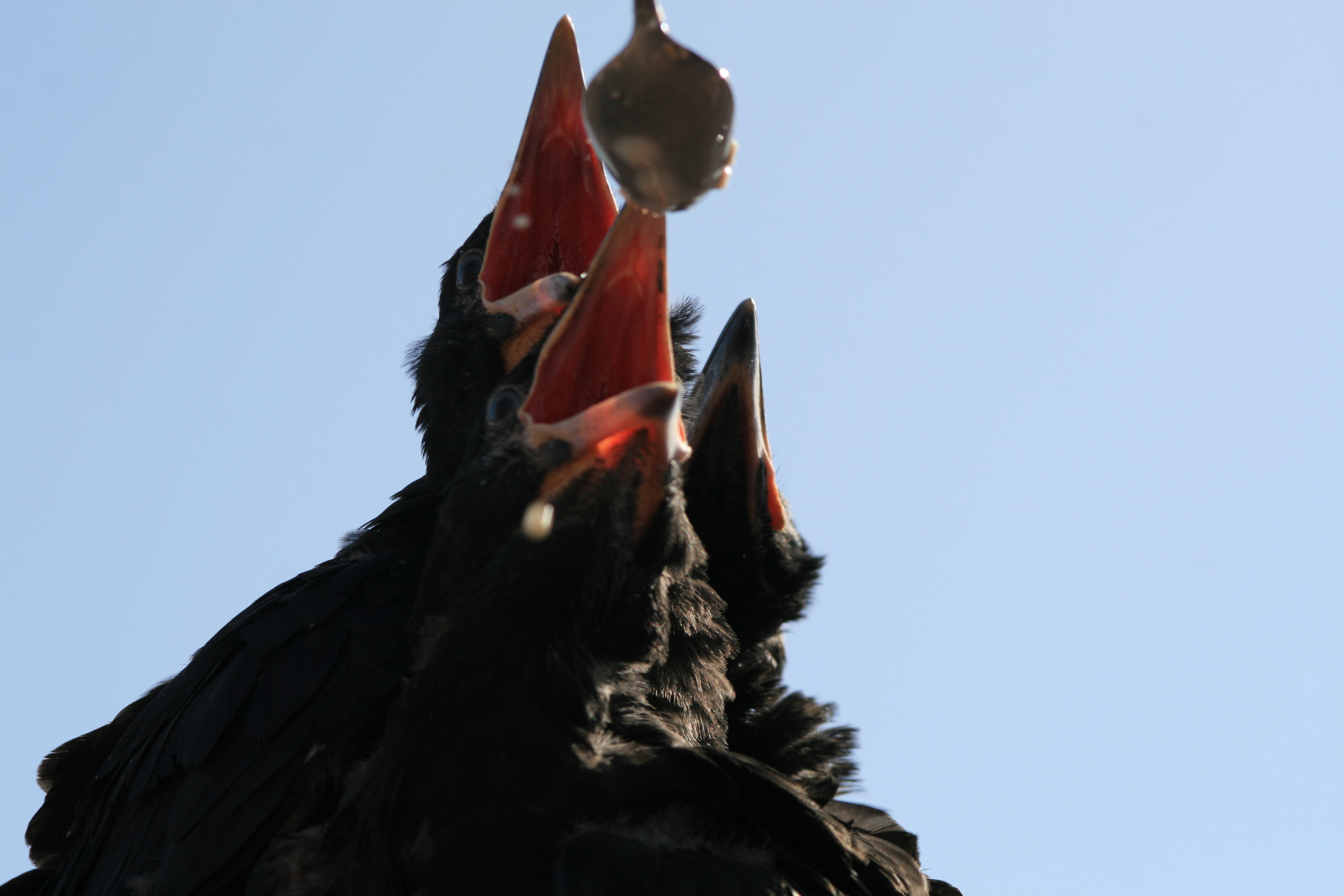
The ravens are learning to feed themselves.  Kind of.  You would think that feeding would come naturally to any living thing.  But with these birdies, perhaps most birdies, it’s different.  As young fledgelings, they call, you drop food in their gaping gullets and they’re happy.  You put food down in front of them, however, and they don’t get it.  They don’t pick at it, they don’t look at it, they walk on it, walk past it, do just about anything but recognize it as food.

Kerry thinks it’s a cognitive thing.  Food is something that is dropped in your mouth, it’s not something lying about.

So now the new method.  Dangle the meat in their mouths and slowly lead their beaks down to the nest and drape the food on the branches.  Hopefully they get the idea and pick it up themselves.  After a few tries, they mostly get it.

Poe, oddly enough, seems to have the most difficulty.  He’s the first to take flight.  Most mornings he’s perched on the fence or the roof or the hammock, or across the street on someone’s car.  He’s figuring out the wing thing pretty quickly, but when it comes to food, he can be starving, but won’t approach to grab the meat. You have to go to him.  And he has a heck of a time positioning himself properly, in some cases twisting himself into an avian pretzel.

But you have to have faith. Earlier I’d watched one of the chickens eye the bird feeder hungrily.  After some consideration, he followed the example of the finches and hopped to the top of the fence and commenced to feed with them.  Fortunately for us and for chickens, if hungry enough, even a dinosaur can learn to fly.

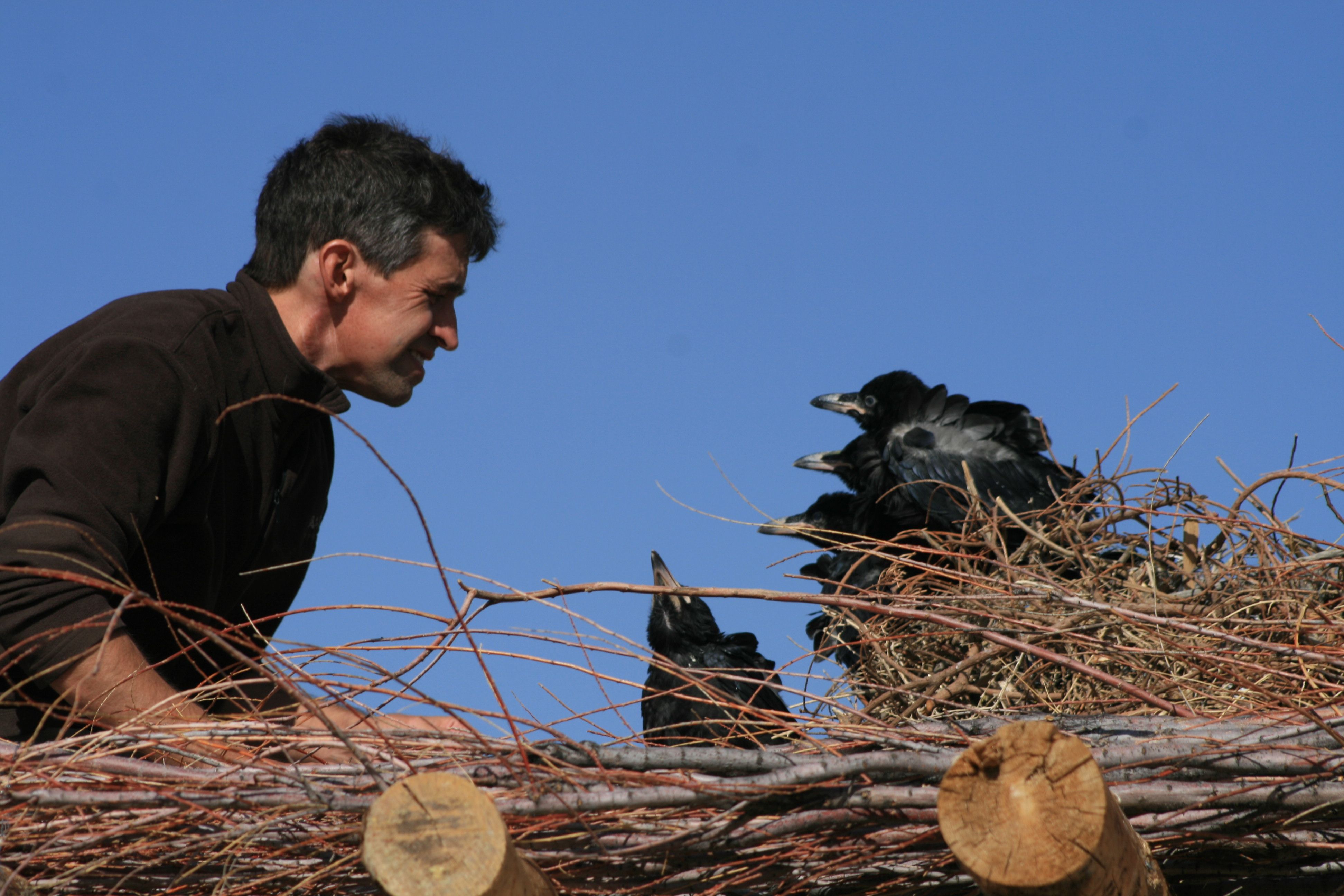
Later from below I watch Kerry dangle a strip of flesh above a waiting beak.  Who’s training who?  I see us doing this day after day.  In this sparse environment,  I suddenly understand how invention leads to habit. Habit becomes ritual.  Ritual, ceremony.  And ceremony becomes religion.  Each spring, legions of our descendants will ritually feed a captive raven in the spring.  It will symbolize stewardship and love for all creatures.  We will have forgotten how it all began in the first place.

Feeding © Kerry Hardy

What I Told Them

That in some ways the world that greeted us when we first came here no longer is. And in other ways it hasn’t changed. That both make me feel equally sad.

That they will remain. That they need to look after the farmers and after the fields. That I attended the junior high promotion and felt these little lives moving into small and uncertain futures. That a boy who liked Mazie didn’t even finish the eighth grade.

How can spring feel so autumnal? I will miss this sky. This air. The landscape of people who have been part of our lives. But many of them have already gone on and I’ve mistakened my memory of them for their actual being.

But these ravens for now actually are. And I want to hang on to that.

They sat quietly. And they listened.

20110525-074224.jpg

Choices

Bernd Heinrich is right.  If you have a choice, choose the ravens over attending a meeting.

These birds have derailed my life for a week now.  Life is that stuff that happens when you’re supposed to be doing something else.

Now comes the hard part.  To the best of my abilities I have to starve them so that they’ll call out for their parents.  And as further incentive I load the ramada with dead carcasses.  A flattened rabbit from the road.  A pair of rotting rattle snakes killed by Health Care.  Some elk meat from my friend Kerry.

No luck. We leave to Flagstaff for the weekend, leaving the birds to their own devices with no people around.  When we return they’re famished.  And no signs of the parents.

Each morning they caw loudly, looking skyward.  By late morning I relent and give them food.  They recognize my voice now.  Nice for me.  Not good for the ravens.

But I love them.  And I’m glad they’re in our lives.  They’re perhaps the only things keeping me sane at the moment.

Feeding time

Nesting Instincts

They can’t live in a box forever.

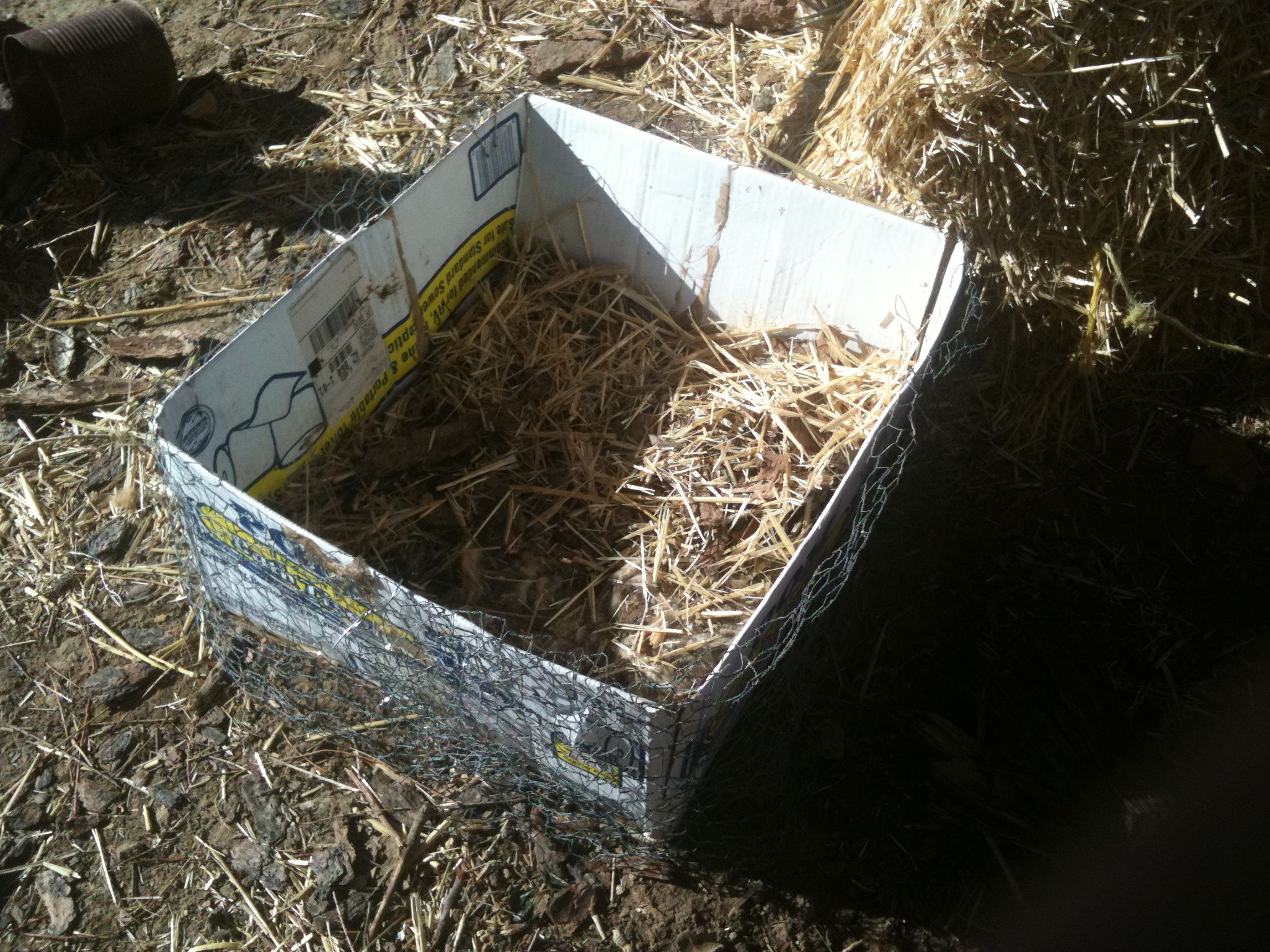
But how do you build a raven’s nest?  I don’t speak raven, so I can’t ask them.  I start with their homely toilet paper box.  I wrap it in chicken wire.  One of our chickens checks it out and gives her approval.

raven box

I walk to the wash and retrieve the remaining nesting material that had been discarded there.  The whole mass of twigs and matter smells musky and wild.  It feels true to what the raven is and should be.

One of the nesting pairs out that way follows me all the way back to housing, alighting on the ground every few feet.  I assume it’s the male.  And I assume he recognizes raven nest stuff.  And I assume he’s wondering what the heck I’m going to do with it.  He stays with me, long after we’ve passed the brood he’s protecting.

At home, I gather additional twigs and matter from the yard.  I now have to think like a raven. What stuff is pliable?  What is warm?  What is too long or too short?  Those are some of my criteria, but I have two hands, ten digits, clippers, and chicken wire.  The raven has his beak.  What does he consider?

Even with all of my tools, assembling the nest takes the better part of the day.  And I’m left in awe of my feathered friends.  All of their twigs are of near uniform length and diameter and woven together into a complex tight mass.  I have no idea how they do it.  Where we live, there is a severe housing shortage and half built homes litter the landscape.  People want houses built for them.  The damn ravens just do it themselves and their construction requires monumental effort.

Their nesting material is packed with dog hair, human hair, couch stuffing.  I recognize some of it.  A lot of it, actually.  When we clean our house we empty the vacuum cleaner in the compost pile.  And the ravens have raided it to insulate their nest.  The hair is my hair.  The fur belongs to our dog, Mango.

I’ve positioned the nest on the far edge of the ramada, as far from the house as possible.  As I weave in the last few twigs, parental instincts kick in.  This place may appear safer to the ravens, but in fact it’s not safe.  Not at all.  It’s perched adjacent to the service road.  My poor estimation of people surfaces.  Some farmer will come and kill them.  Or a Health Safety Office will deem them a hazard and remove them.  Or a housing manager will give orders to destroy the nest.

I reluctantly reassemble the nest back toward the center of the ramada, away from the road and out of line site from all the windows of the house.   The babies need protection.

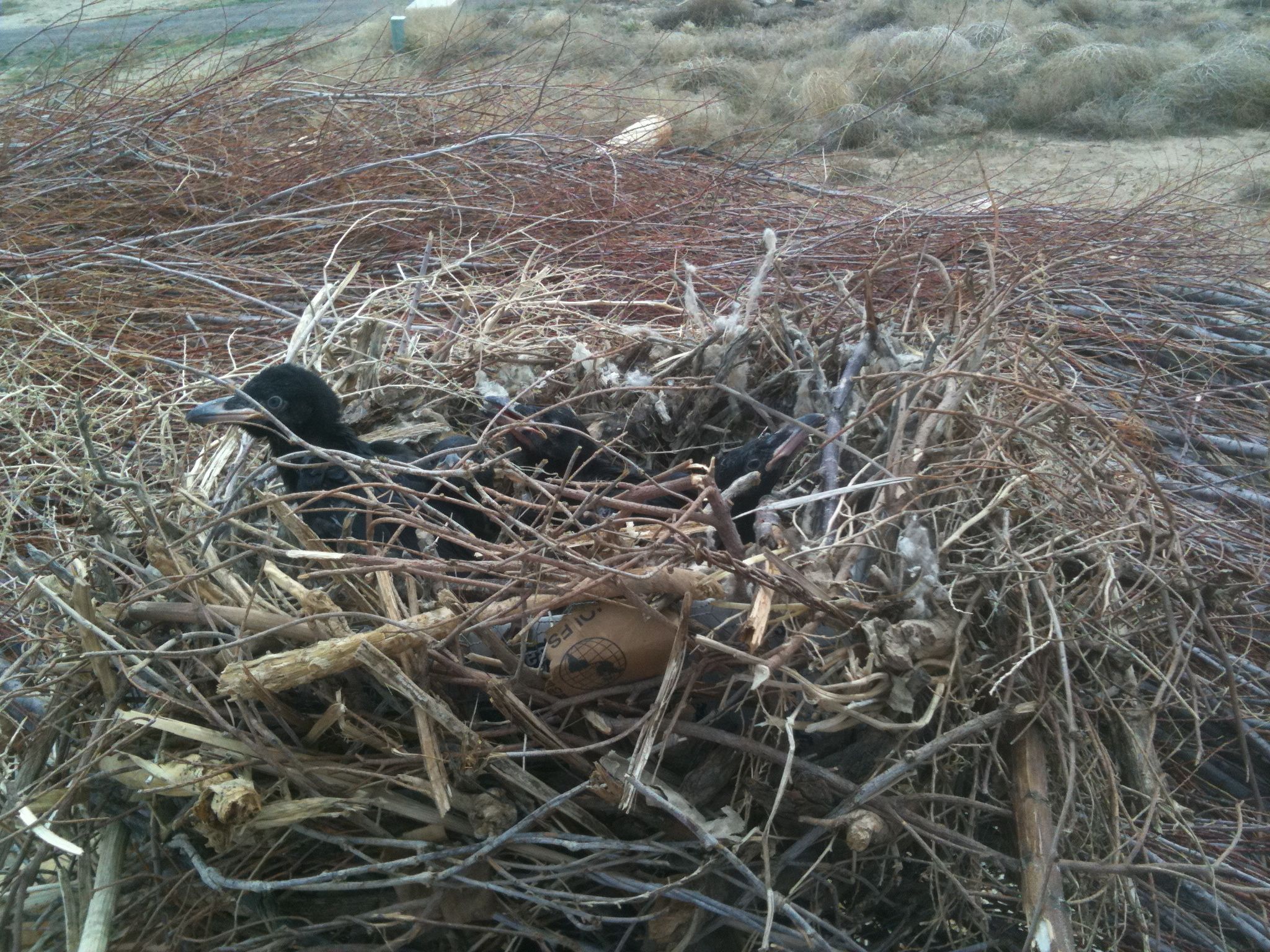
Mid afternoon, I place them in their new home.  They calm down at the familiar appearance and texture.  They know this matted material.  The caked shit holding everything together is theirs.

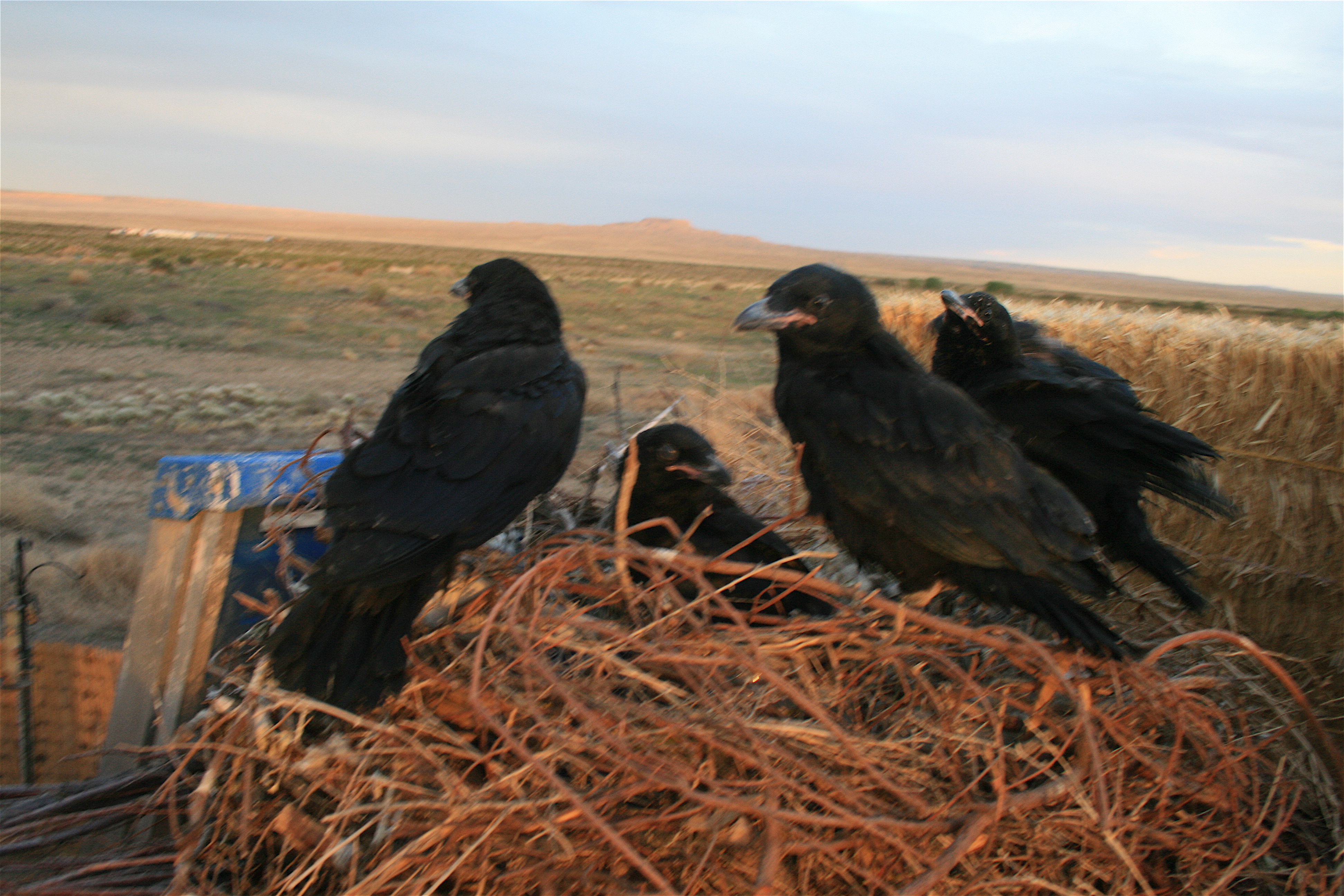
Home.  They perch on the lip.  They appear happy.

Ravens on ramada

Reunion

Bad weather sets in so the ravens remain housebound for a day or two.  On the first clear dawn, however, I set them out on the ramada.  Out front a mating pair eyes me from a distant light pole.  A third peers surreptitiously over a parapet.  All three call to one another and take flight toward Health Care.  A half hour later a pair flies low overhead and call out wildly to the fledgelings who call back excitedly in return.

I believe they’ve been found.

Later that morning a friend comes over and climbs the ladder to take a peek.  As she gets closer, the babies call out in panic and immediately an adult pair flies over from Health Care and light upon the ramada in a defensive posture before again taking off.

But that’s it.  Later they spy me feeding the babies and circle.  And since then they’ve kept their distance.

Wild Things

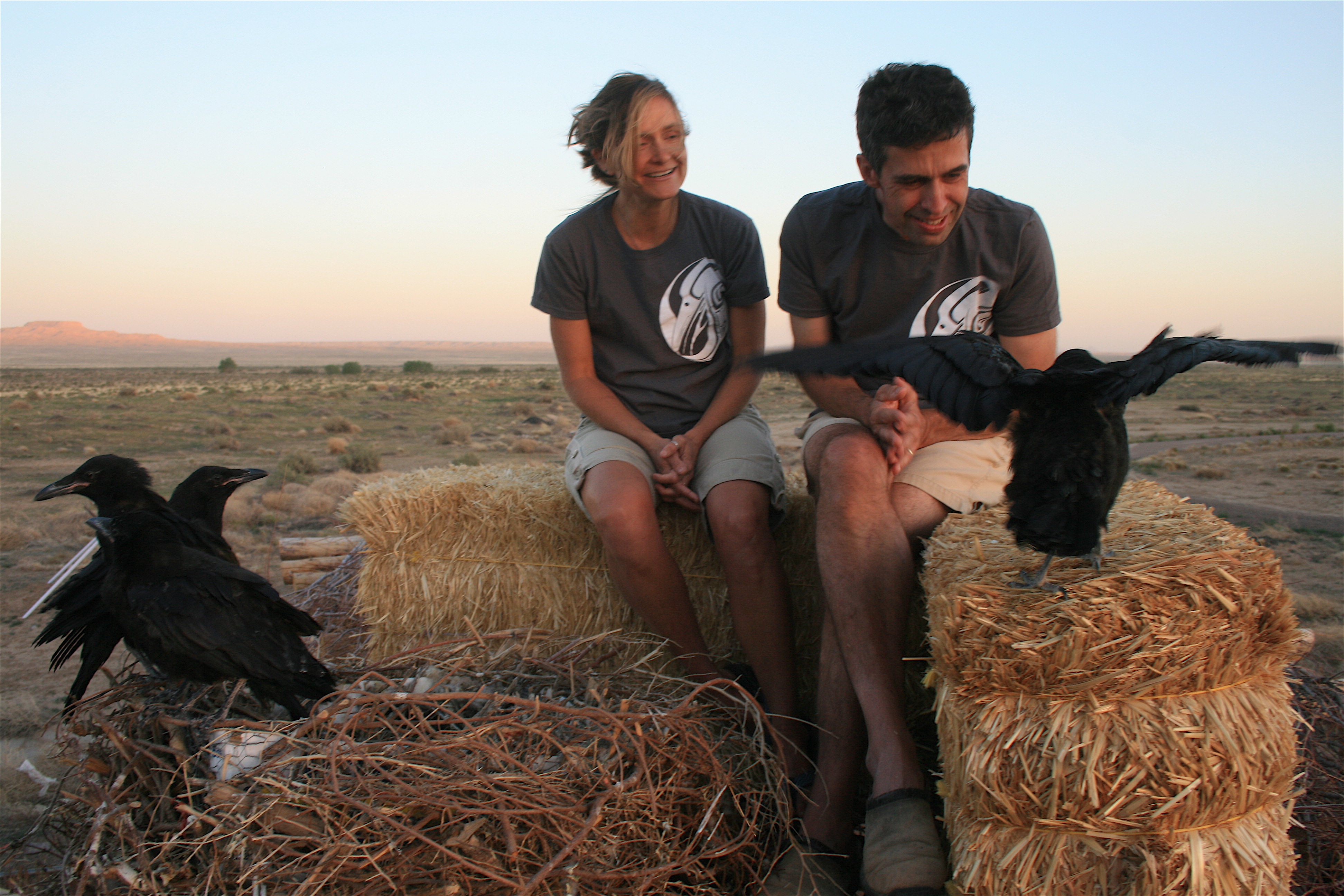
What do you do with a clutch of ravens?  First order was to keep them alive.  We left a message with Bernd Heinrich in Vermont.  We called Raven Rescue only to discover that they’re a rafting company and have nothing to do with ravens.  They promised to send t-shirts.  We looked at Raven FAQ’s  online.

Folks had all sorts of questions.  Can I teach my raven to speak if I slit it’s tongue?  Can I train it?

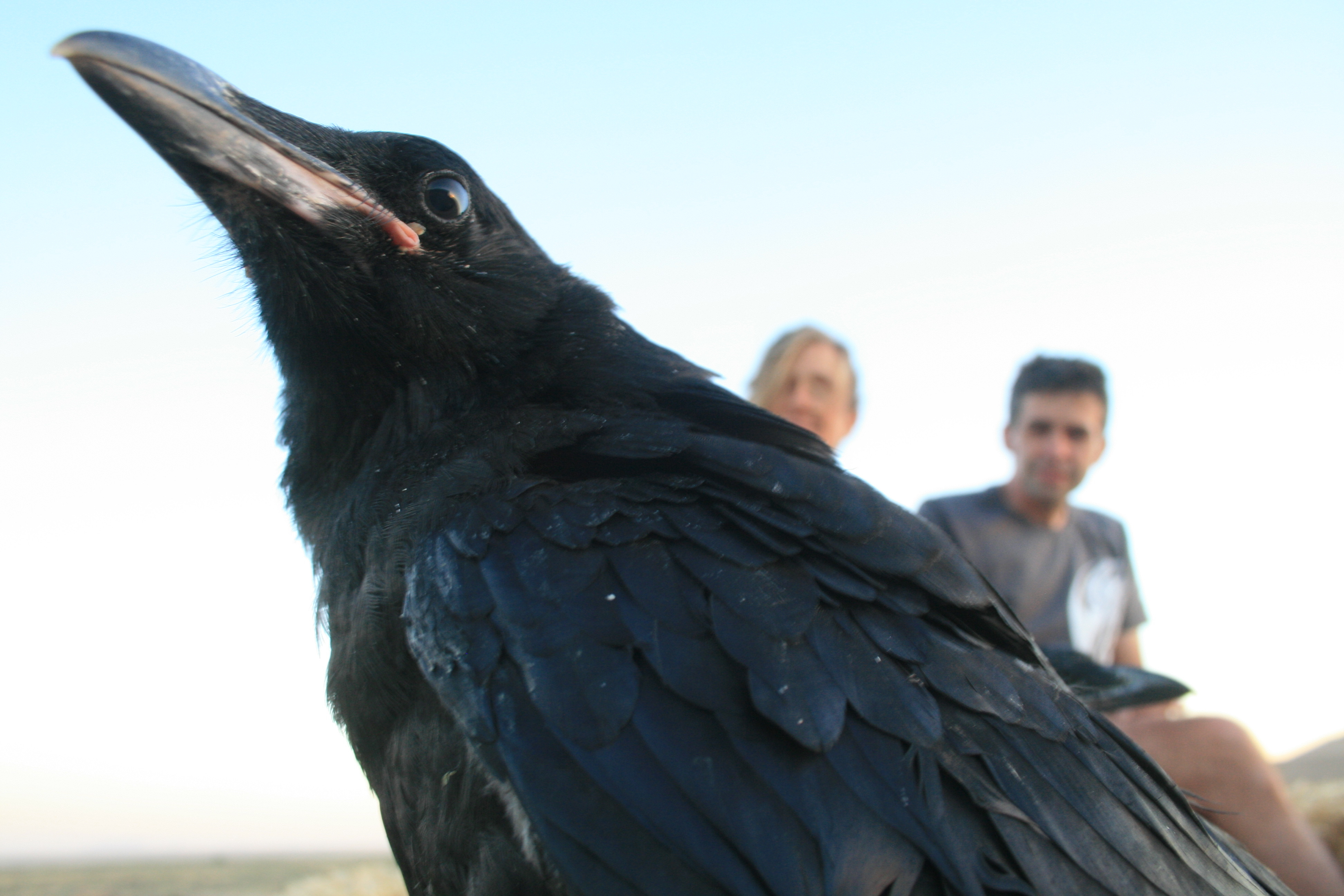
We just wanted to know what they eat.  We settled on a mash of yeast bread and milk which they took to eagerly.  They immediately took to us as feeders.  And of course we gave them names.  Distinct personalities warrant names.  Poe is the most aloof, always sitting apart from the other three.  More is the most hungry, thrusting out his narrow head and beak long after the others have stopped feeding.  For is heavy set.  Ever is the last one left.

But it’s all nonsense.  We’re their temporary caretakers, not their parents.  Their parents are out there somewhere, undoubtedly looking for them, wondering what sort of strange alien abduction has taken place.

They’re wild.  And back to the world they must go.

Mystery

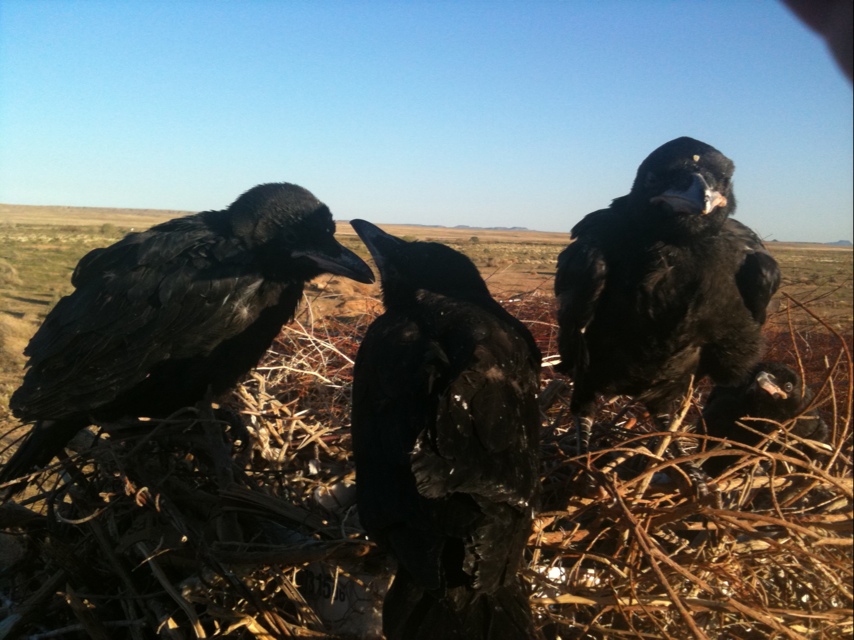
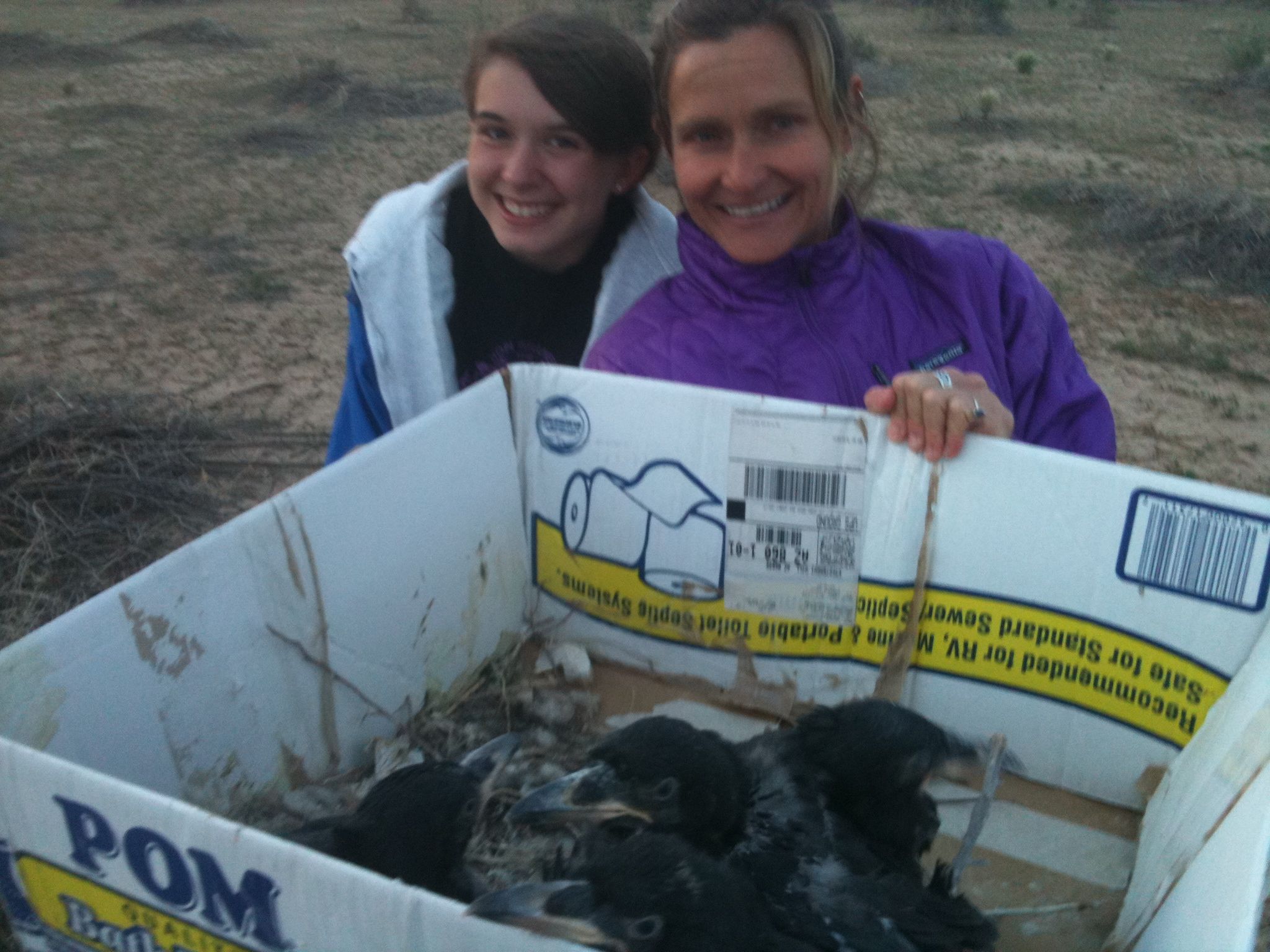
Pearish discovered them in the wash on Monday.  Four fledglings. Jet black, musty, cawing loudly.  Abandoned in an old toilet paper box with an armful of nesting materials.  We considered the possibilities.

Had they blown out of a nest?  Had a farmer collected them to remove from their fields?  Someone else who wanted the feathers?   A do-gooder trying to save them?  We found a line of ATV tracks in the wash, but no footprints from the tracks to the box.

The sun was setting and we had to move quickly or else the babies would become coyote chow.  We raced to a roost in the wash.  It appeared to have been broken.  We set up a ladder and climbed the tree, but lo, the nest was intact and already filled with four fledglings no less.

Anna recalled another roost somewhere in the wash, but if they had blown out, how had they ended up in the toilet paper box?  And it couldn’t have been a farmer. He would have dispensed with all niceties and simply killed them. And someone collecting feathers wouldn’t have left them in the wash.

Sun setting.  The babies were destined to be eaten.  And so home they come.

Ravens discovered

Is This the Way the World Ends

I’m in Hotevilla when the call comes.  There’s a propane leak at Hopi Health Care and they’ve evacuated the facility and the adjacent housing complex.  They’re afraid the whole thing is going to blow.

I drive back to First Mesa.  The hospital and housing entrances are blocked by a phalanx of squad cars.  Two fire trucks wait on the side of the road about a mile distant.  I drive past, hook a right on the airport road and park on the cracked asphalt adjacent to the air strip.  I secretly cut across the wash and desert to the rear of our house and hop the fence.

Inside, I settle down with a ham sandwich.  The neighborhood feels ghostly and empty. What do I take? I wonder. I finish my sandwich and grab my laptop and Mazie’s violin.  I load a duffle with some meat from the cow we slaughtered.  A half bottle of Hornitos.  I shoot a quick video of each room of our house (for insurance purposes).

The first editions of Stephen’s journals, the signed first editions of Cormac McCarthy books, my signed Turrells, the Heriz, my journals and family heirlooms – it’s all destined for flames, I decide.

I plop my Mennonite hat on my head and wrap my scarf around my neck.  I move the chicks outside.  I open the gate and our dog Mango steps out with me.  We’re joined by the stray pit that everyone dislikes and together – the dogs and me, violin and duffle in hand, set off across the desert. A sand storm kicks up, sending tumbleweeds skittering past.  A thunderstorm approaches.

Perhaps this is how it ends.  Behind me I’ll hear an explosion and feel the heat of an enormous fire ball.  Anna’s work and all of our worldly possessions will have blown up.  And then we’ll climb in the car with Mazie and drive west.

And that’s it.  We’ll be done with it.

Black Wind.

Blowing again.  Wind chimes newly hung have been ripped to the ground.  The one remaining from Arcosanti peals all night like a ball-peen on the skull.  The wind brings moisture but sooted with a thick cloud of orange dust.  The dust settles on everything inside, outside; it lodges in your teeth, your hair.

I’ve loved this wind because it chastens.  If it were just the wind, that alone would be enough.  But what when the whole world brings you to bow?

Last night I asked my friend Al how life was.

Full, he said.  100%.

Really? I asked.

Yeah, he said.  I mean it’s always 50-50.  Is it half empty or half full?  But when you add it all up it equals 100%.  So there you go.  Full.

Way full.

Fault line 2009-10-28: Foot. Snow. Earth.

I ran this morning toward the new fields that Philip has plowed. An inch of snow blanketed the ground. Out by his field area I noticed a cottonwood structure – not quite a ramada – that had been erected at some point. It may have been there for three years or a thousand or since yesterday. I only just noticed it. The dogs and I cut down across the wash, across the snow blanketed runnels along the bench and up to the plowed fields on the other side. The structure had no apparent use. And no apparent past or future. Much like many of the discoveries here, it seems to exist apart from time.

Philip had a good year. The monsoons did not come this summer which pretty much did in most of the farmers. But not Philip. His vast field sported dense head high corn. But here is the secret. He had water. But it did not come this year. The rain actually fell in August, 2008. And it sat on top of the dense clay, creating a swamp of his field. He got nothing that year. And it took three months for the rain to perc into the ground. And then the ground froze. And when it thawed, the dense clay would not give up the moisture. Philip planted late and the corn was slow to start, but when the roots finally hit that year old moisture it took off.

Philip watered his field one year in advance. And now he is plowing and preparing fields further up the wash that may not be planted for another two years. And may not produce for three.

If any foundation or philanthropic people are reading this, take note. Not all environments operate on a 1 year funding cycle. Here a full cycle of rain and drought may take 10 to 30 years. A single planting cycle here may span three to five years. Time slows down. Life proceeds as it should. Not as we want it to. We must learn to let life proceed as it should. Problems arise from forcing it.

We must accommodate ourselves to it. We must slow our pulse.

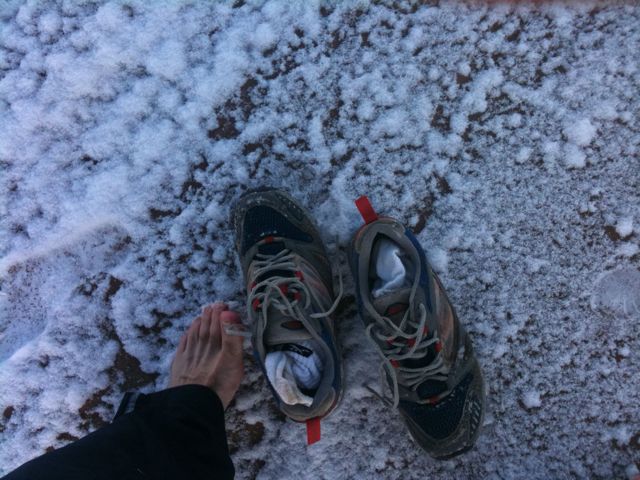
On my run, I notice footprints in the snow, the print of a human foot, complete with heel and arch and toes. I consider two possibilities. The first: at dawn a person ran before me wearing skins on their feet. The second and even more compelling: A person in fact ran barefoot in the snow.

I ponder and decide to explore the more compelling of the two. I strip off my shoes and socks. I stand on the frozen mud. I set off running barefoot across the whitened desert.

The cold instantly hardens my feet to most sensation. I feel a gentle burning pain overridden by a lightness of step. I run fast. I feel a slight bump on my heel that feels uncomfortable. I stop and find a goat head lodged in my foot up to the hilt. I cannot feel it. I pull it out and continue on for close to half a mile. Not much. Certainly not as much as some. My distant ancestors would most certainly have been ashamed.

But we do what we can. If only to feel the cold.

Food on a Sunny Day

The day broke with sunlight this morning.  And warmth even.  Eating on the porch looking out over the Headlands, I actually felt pretty good.  If I chew on the left side of my mouth, Cowgirl cottage cheese tasted like cottage cheese.  A bit of tamale tasted tamale-like.  I can drink Pellegrino water (I wonder if the carbonation pushes it toward alkaline and so boosts the pH in my mouth…).

I ate piki.  I could taste that deep old corn taste.  The piki came from  Shungopovi.  I thought of a woman making the thin batter and of her prayers.  I thought of the man who grew the corn and the other man who burnt the salt bush to make the ash.  I thought of the saltbush and the corn and the springs.  I thought of the rock and the fire beneath the rock and the wood that fed the fire and the woman’s hand moving deftly across it.  I thought of layer after layer after layer of infinitely thin batter being spread, lifted and folded.  We call this food.

Afterwards I brushed and cleansed my mouth and still no mucusitis.  I’m tired, but I’m still without sores or sore throat and I don’t know whom or what to thank for that.  Perhaps the salt and bicarbonate of soda.  Or perhaps the piki.  Or perhaps all of you.

I think of all those things, sentient and otherwise, that create food, that create a community of health.

piki