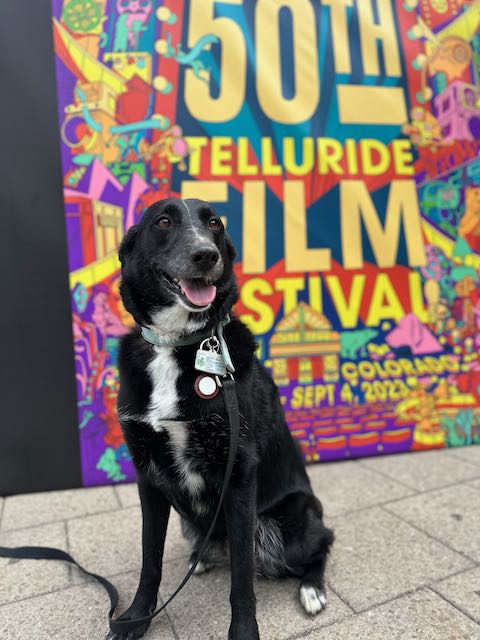
50th Telluride Film Festival

For fifteen years now I’ve been lucky to work at the Telluride Film Festival each Labor Day weekend.  It’s all a bit strange.  A little bit Sesame Street, whizzing around town on a pink townie bike checked out from the library, running into friends from over the years.  A little bit of Same Time Next Year as thousands of people (guests and staff alike) reconvene to share the changes in their lives and bask together in immersive stories inside darkened theaters.  A little bit of glam – lots of chance encounters and conversations in line for coffee. A little exhausting (15-20 films in 5ish days).  And a lot dreamlike – you’re at altitude already feeling a little wonky and all those stories bleed into one another.

For those interested, here are some recommendations.  My most favorite were the small ensemble films with just a few characters.  And good news: as we are driven more towards our home screens and hand held devices, a good number of these take great advantage of the large screen and the power of communal viewing.

I’m happy for those in LA, Seattle, New York, and other places that have strong art house theaters.  You all should be able to see most of these. 

Tehachapi: French artist JR enters Tehachapi prison in California to work with inmates to create large scale portraits of them in the prison yard, their eyes turned skyward. Crushing images from inside the facility (typically you can’t even enter those places with a pen or paper or even wallet, let alone with a film crew.  Ultimately about the redemptive value in treating others as human.

Daddio: A conversation between a cabbie (Sean Penn) and his passenger (Dakota Johnson) in a 45 minute cab ride from JFK to midtown.  Filmed entirely inside the cab.  Despite it’s miniature premise, it blows up on big screen with the intense chemistry between the two characters.  Lots of the story told simply through the looks in Penn and Johnson’s eyes as reflected in the rearview mirror.  The screenwriter called it her love poem to New York.  It moved me to tears. 

All of Us Strangers:  A ghost story with a twist at the end.  Lonesome gay man in empty London apartment building begins to visit his long dead parents.  Fearless performance from Paul Mescal, lovely appearance of Jamie Bell (Billy Eliot) and Claire Foy as the parents.  Mournful throughout, and deeply sad in the end.

Taste of Things: This was a sneak not listed in the program.  From Trân Anh Hùng, the director of Scent of Green Papaya, a mouthwatering intersection of the sensuality of food intertwined with the sensuality and love between people.  About the love between a kitchen cook and the gourmet chef with whom she works.  Long, patient sequences in the kitchen of the preparation of intricate meals from scratch.  A textbook on how to eat and how to live.  I saw it the first time standing in the Pierre theatre.  I wanted to leave after the first ten minutes because it was so gorgeous that I couldn’t bear seeing it without Anna.  But I couldn’t walk out because I was standing next to the director.  

Zone of Interest:  In its quietude, one of my hands down favorites.  Apparently the director Jonathan Glazer was so traumatized by the poor reception of his film Under the Skin at Telluride ten years ago, that he vowed never to come back.  I was, I regret to say, one of those who savaged that picture.  After seeing this, I want to go back and revisit.  The Mill Valley Film Festival I believe wrongly describes this Auschwitz film as portraying “the tragedy through the blinkered perspective of the monsters who orchestrated it.”  I resist descriptions of Auschwitz as “evil” and the perpetrators as “monsters”.  Once we remove lived historical events from our understanding of normalcy and relegate the participants to non-human status, we necessarily suggest that bad unthinkable things are only perpetrated by non-humans, or beings not like us.  It falsely privileges us with “goodness” and by extension removes us from moral culpability.

The sad truth may be, that not unlike the architects of the concentration camp system, we go about our daily lives blithely engaging in or actively contributing to all sorts of acts of death and destruction (factory farm systems, petrol economies leading to civilization destroying global warming, exploitative labor practices, or willful assassination of civilians based on the color of their skin).  Like us, many of the perpetrators actually believed that they were doing good, until some of them may have dimly realized that they were not.   The film focuses on the foreground — dinners, playing with children, trying on clothes — while the true story occurs in the background — odd smoke in the air, a cough, a crying baby, screams somewhere in the distance.   Like with Daddio best seen in a theater with a big screen and a superior sound system. 

Wildcat: Ensemble performance directed by Ethan Hawke and starring his daughter Maya and Laura Linney as a young Flannery O’Connor and her mother.  Hawke and Linney seamlessly move between portraying the O’Connors and characters in O’Connor’s stories as they begin to emerge within Flannery’s consciousness.  95% of the dialogue is drawn from O’Connor’s stories and her prayer journal. A meditation on creation and faith.

Anselm:  Wim Wender’s stunning documentary about the post-war German artist Anselm Kiefer.  A very small number of you will have access to the 3D version.  If so, I urge you to go, and for those who don’t, it’s still worth seeing on the big screen.  Kiefer’s work is of such scale, or in such places that few of us will ever have the chance to view them firsthand.  Over the course of the film, as we descend into the vast labyrinth of his studio outside of Paris, and eventually the 200 acre Barjac site that houses much of his work, we feel as if we are winding our way through the fiber of Kiefer’s consciousness itself.  

Kiefer’s work is a vast and single-minded exploration of the consequences of the things depicted in Zones of Interest.  How can you paint a landscape that has been shattered with lead and sown with the bones of the dead?   And how and into what can we transmute the those experiences so that we can live again?  His life’s work is an attempt to answer those questions.   

Others

Poor Things:  Brave performance by Emma Stone. Frankenstein meets A Room of One’s Own and garbed in steam punk. Vaguely reminiscent of Paul Bowles haunting short story “Here to Learn.”

Perfect Days:  Did not see. But rave reviews for Wim Wender’s second film at the festival.

Holdovers:  I loved seeing Paul Giamatti (I love him in just about anything) as a priggish Ancient History teacher at an elite New England prep school in the 1970’s.  Giamatti, the son of former Yale University president Bart Giamatti, channels the rarified academic family he came from. The grainy wintry period piece feel from Alexander Payne uncovered certain perennial aches in my soul.

El Conde: Bunuel kind of absurdity with Pinochet and Margaret Thatcher as vampires. Now streaming on Netflix.

Food Inc 2. Another necessary polemic against the gravely immoral commodification of life that is foundational to the immoral factory farm system that most of us tacitly and blithely get much of our food from.

NYAD:  I love Jimmy Chin’s documentaries, but less so his first dramatic feature.  Annette Benning plays well the severely unlikable  Diane Nyad, but despite their great talents as actresses, I found Benning and Jody Foster’s performances and the story overall to be cartoonish.  

The Royal Hotel:  This is one room you definitely want to get out of. Especially for those of us who have young daughters.  Two young travelers end up getting jobs at a bar in the middle of the Outback and slowly realize they are in far deeper than they bargained for.  I feel sorry for Julia Garner.  What must it be like to know that any time your agent calls, you are going to have to do something really bad, or something really bad is about to happen to you?  I would call this a great uncomfortable movie that made me never want to go to Australia ever again. 

SaltburnThe Talented Mr. Ripley meets the British class system and Oxford.  The first 20 minutes gave me a big fat stomach ache as I remembered my first few weeks at Yale. And it ends up not being the movie that you think you are watching at the beginning.

The Monk and the Gun:  Bhutan learning how to have a democracy.  How do we make morally pure choices in times of societal inflection?  Delightful to be in another, more slow, perhaps more innocent world.  If only for just a few minutes or hours.

Teacher’s Lounge: I would strongly recommend that all teachers see it.  And I would not recommend that any teachers see it.   Well meaning new teacher in Germany accuses a Turkish student of thievery. Severely discomfiting picture about how sometimes we are wrong when we think we are so right.  That by doing right you can do wrong.  And sometimes those who do wrong are right.  Those who are coexisting in the Teacher’s Lounge are in a pretty yucky mess as the screws in this film tighten.
Aningaaq

Video

For all you Gravity fans out there, here is the accompanying Cuaron short that aired at Telluride. As Sandra Bullock curls up in a Soyuz, turns down the oxygen and prepares for her own death, she sends out a distress call to Houston that never arrives.

She reaches a terrestrial stranger. This is what happens on the other end. As lovely and gripping a counterpoint as there could ever be.

Telluride Picks and Unpicks: Part I

Some reflections on a subset of this year’s slate.  Telluride once again flexes it’s high altitude muscle. With 27 features films as opposed to Toronto’s 400, it’s much easier for the cream to rise to the top.

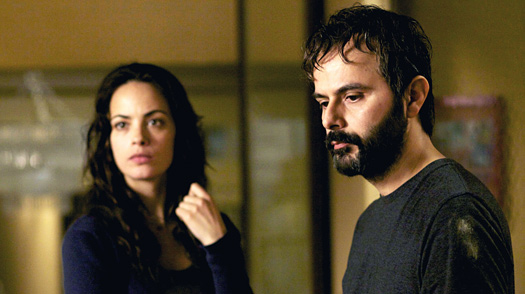
le-passeThe Past (Le Passe).  Even a cursory plot summary of this movie would amount to a spoiler – the story is not just about what unfolds, but what you feel in the unfolding.  By Iranian Director Asgar Farhadi (A Separation), it begins as a story of an Iranian man who returns to Paris to finalize a divorce from his ex-wife.  As the narrative steps forward, new details are revealed such that moment to moment it becomes a different movie from the one you thought you were watching.  The protagonist who initially appears to be callous and irritable, discloses maturity and prescience as a disrupted family situation and blistering reality comes into focus. Don’t be surprised to see it as an Oscar foreign film contender.  US release date in December.

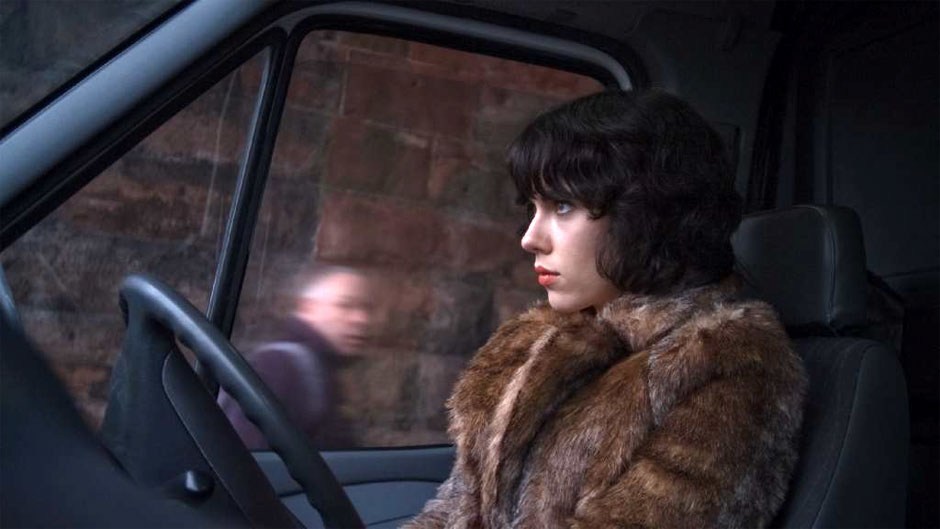
under-the-skinUnder the Skin:  Pygmalion. Bride of Frankenstein. Seventeen years in development before it received the green light.  Never have I seen Scarlett Johanssen so naked and cared so little.  Other people naked. I want my two hours back. Ducks performing Othello. Voice dub by Mel Blanc. Will play well in Venice. But not at the Palm. In Scottish. Like Macbeth. Except it needs subtitles. Do they even speak English? I don’t mind working. Alien. But not for so little. Tarkovsky. No. Scratch that. He had deep Russian monologues. Fast motorcycles. Tin Man seeks a heart.  Except in the Wiz you had Dorothy.  A family drowns. Dystopian. Never Let Me Go. No. That was engaging. This: black succubus. The Horror!  The Horror!   Like that sex addict movie. But more excruciating. And dull. I like the scene after the soccer match.

The worst cowboy movie I’ve ever seen.

Vespucci Studios lives. But now they have a budget.

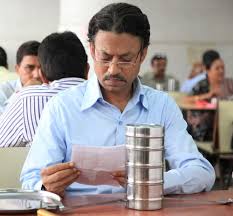
the-lunchboxThe Lunchbox (Dabba):  In Mumbai a network of more than 5000 dabbawallahs deliver home cooked lunches from Indian housewives to their husband’s offices, and then later return the lunch boxes back to the appropriate home. The lunch boxes change hands many times as they travel by bike and train and porter to the warren of office buildings that lace Mumbai. Largely illiterate, the dabbawallahs rely on a complex language of colors and symbols to ensure the lunch pails arrive on time at the appointed place. A team from the Harvard Business School found the system to be highly efficient – only one in eight million lunch boxes arrive at the wrong location.

This story is about one lunchbox that get’s misdelivered. Instead of arriving at the desk of her inattentive husband, Ila’s sumptuous meal is delivered to the desk of Sajaan, a lonely widower. Food is consumed, notes are delivered, and a surreptitious love affair blossoms.

Throughout, the ebb and flow of relationship is governed by the pulsing roar of the Mumbai transportation system, the frayed edges of an evolving city drowning in it’s own growth and decay. The loneliness and alienation of it’s inhabitants are mirrored by the uncountable lunch pails carried blindly through the maze of streets and alleys. What are the chances of intersecting with the right person and finding true love? And perhaps the wrong train that will deliver us to the right station.

As visually sumptuous as Ila’s cooking, the story remains emotionally restrained as Sajaan’s guarded expressions. But as the narrative builds, we see both characters relax into themselves and find the emotions they’ve long since buried. Without the polished arc of Monsoon Wedding or neat ending of Slumdogs, this story hovers a little closer to the grit and mud on the ground, and the very real messiness of our life choices. And it affords a chance to be a voyeur on the streets of Mumbai to boot. Delightfully sad and a crowd pleaser.  Look for it’s North American release on September 20th.

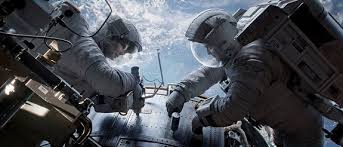
gravityGravity:  Although it will be hitting the theatres in wide release on October 4, the movie gave the TFF folks a chance to put the new Werner Herzog theatre sound system and 3D projection through it’s paces.  And how was it?  The Zog, assembled in the town park ice rink, blows away the competition.

From the first moment we delight in watching an extended sequence of George Clooney and Sandra Bullock floating in space as they complete repairs on the Hubble Space telescope.  When disaster hits, Bullock and Clooney (looking ever more like Buzz Lightyear) are left floating in space like a bit of cosmic debris.  Against all odds they must find their way home.

You’re only a few minutes into the movie before you suddenly wonder, how in God’s name did they film this?   For 91 minutes astronauts float about in zero g’s.  And it feels real, perhaps the best tribute to the film’s greatnessIn Gravity, director Alberto Cuaron (Y Tu Mama Tambien) veers away from his terrestrial and more character driven stories into an extraterrestrial minimalism.  He and his team labored for more than four years to develop the technology needed to recreate the clear light of space and what appears to be a zero gravity environment. And it does what movies are supposed to do – bumps the pulse and make you feel wonder.

Cuaron casts a vision of human experience that includes the exosphere of our planet.   We feel the oblique loneliness that our descendants will carry as they chart a course ever deeper into the terra incognita of space, and away from terra firma.  And you realize that yes, indeed, we at last are living in the 21st century.

Here Be Dragons:  I mention because it’s classic Telluride Backlot fare.  Shot with a flip cam for less than $3000, filmmaker Mark Cousins presents a film essay chronicling a trip to Albania to consult on the preservation of the Albanian film archive. Living under wraps for fifty years, the Balkan headlands of Albania may be the last place on earth for which we have few visuals.   Cousins now supplies them.  And his associative mind lends meaning to the starkness.

Nebraska film stillNebraska:  This one turned out to be the biggest show stopper this weekend.  Following his success with The Descendants, Alexander Payne has committed to becoming a regular at Telluride.  His delicate and human touch make him a nice fit.  When Woody Grant (Bruce Dern) receives a letter in the mail informing him that he may have won a million dollar sweepstakes, he sets off to Nebraska to claim it. His youngest son aids and abets him and a family locked in its dysfunctional dynamic is splayed open.

Grant returns home, he connects with his old friends, and his life time of low grade trauma is replayed for him as relatives and friends are revealed for who they are.  In this, he and his son find their own redemption.

When Bona Fide productions received the screenplay from first time writer, Bob Nelson, they asked Payne to step in as executive producer, but he said he wanted to direct instead.  Payne, himself a Nebraska resident, relied on open casting to give these midwestern characters a some flesh. These are understated people eking out livings in an understated world.

Another Oscar contender.  At the tail end of his career, Bruce Dern should be up for a nomination.  A moving must see when it’s released later this year.

12 years a sliave12 Years a Slave:  The LA Times gave five reasons to see McQueen’s latest.  Without knowing theirs, mine might include Fassbender’s performance.  Brad Pitt taking a moral high ground.  Paul Giamatti doing anything in the 19th century.  And the 19th century articulated sentence structure.  Beyond that, I’m an outlier amidst the rave response to 12 Years.  What more does it add to the slave narrative, other than the slight nuance of an educated free black man being abducted and placed in chains in the deep South?  Not much in the way of character development, beyond the protagonist shifting his forthright voice and gaze to one of subservience, leaving the affair somewhat cartoonish. And don’t we already know about the depravity, the ways in which slavery dehumanized all participants, and the ongoing effects of the lash?

Which raises a difficult aspect.  The graphic violence, I assume, is intended to galvanize  audience emotion.  Except that in today’s cinema graphic violence comes easy.  For me it amounted to a cheap thrill not dissimilar to the cheap (and very different) thrill that the slave owner gained by whipping his property.  Rife with great performance, the film depicts brutality, but not much more than that.

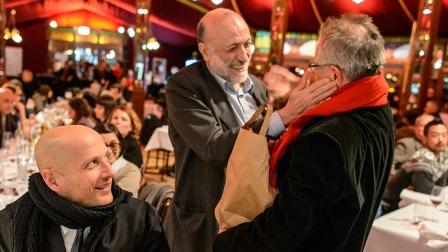
slow-food-storySlow Food Story:  If you’re a foodie, I’d give it a must see.  A fresh addition to the heavy morass of many foodie documentaries (e.g. Food Inc.)  Filmed almost exclusively in Bra and Northern Italy, the playful flick lays out the origins of the Slow Food movement and it’s joyful, extroverted founder, Carlo Petrini, considered by some to be one of the most transformative persons on the planet. You can’t help but love this man who dreamt big as a young man, got involved in Italian leftist politics, infused his work with the social goof of the Italian street theatre, and realized that the politics of the mind would have a far lesser effect than politics of the stomach.  Before we had ideas manifestos, we broke bread.  The film transects this new world we’re creating of urban gardens, and White House gardens, and food once again sourced from the ground on which we walk.

First time director Stefano Sardo does a delightful job of creating something uniquely italian – part cartoon, part street grotesque, but vivacious and animated.  This is not so much about a movement, but about life itself.

40 Years of Film in Telluride

IMG_2951Tuesday morning, things are wrapping up, the crowds heading home.  And the Telluride Film Festival, now in it’s fortieth year, still stands as the reigning queen of festivals.  After five days of immersion in films and conversations and ideas, your head spins and you feel the need for some time to process.

The Festival is unjuried (no prizes given), is not a market festival (no sales or seeking distribution), the content unannounced (people come in from around the world not knowing what will be served up until the first day), no paparazzi or red carpet (this is about the craft and the story with a bit of buzz, so real conversation between filmmakers is possible), has a tradition of sneaking films (they don’t list some items in the program, allowing them to show films freshly canistered and scoop Venice and Toronto, showcasing movies before they’ve officially premiered) contains a healthy dose of film hauled from the vaults (you come here to see stuff you will never have a chance to see anywhere else), and it’s in Telluride (everything within a gondola ride or a couple block walk).

All this makes for Telluride to be a movie love fest.

What are these things we call films?  At one point I found myself lying on the floor of the Sheridan Opera House, surrounded by images and ephemera from the last forty years.  I listened to Werner Herzog’s solemn intonation and Andre Gregory expounding.  I overheard another person explain how she’s been visiting for a few years and TFF feels so intense and even emotionally transformative that she can’t stop coming.  It’s not so much a film festival as a body of people immersing themselves in collective dreams, then surfacing and recounting their experience.

TFF was once known for it’s informality and rough edges. This began as a festival about movies and about the love and communication between people.  As guest director last year, Alice Waters curated the Fanny Trilogy by Marcel Pagnol – the stories that long ago inspired her to start Chez Panisse, creating a space that would become a vessel for food and pleasure and love shared.  This year she was honored during a screening of a documentary about Carlo Petrini, the founder of Slow Food.  Through her cooking and her involvement over four decades, Waters has been instrumental in growing and nurturing the Telluride gathering.  In the Sheridan Opera House on Saturday morning, she described the Festival as an international family reunion in which the artists and creators whom we love most gather each year to revel in each other’s company.  The festival counts as one of her many homes.

And It’s no wonder that many pass holders return year after year.

Back in the day, films projected in the quonset hut community center would be drowned out by rain pelting against the tin roof.  And in 1984 the rough informality allowed for a baseball game between team Paris,Texas and team Stranger than Paradise  in which Wim Wenders caught a flyball in the outfield and then left the game so he could go out on top.

Here viewers are willing to receive images in the purest, most trusting way.  And owing to the outstanding programming of the festival directors along with their collective willingness to take risk, the Telluride films have had a streak of Oscar runs (Slumdog Millionaire, The Kings Speech, The Descendents).  And Telluride has also had it’s share of delightful bombs.  Which is wonderful. The last thing we want to do is discourage people from taking risk.  Only in risk can a new world be created.

We don’t know the ultimate effect of Telluride’s market making power.  This year, the Coen Brothers, Alexander Payne, and JC Chandor pulled their films from Toronto so they could premiere at Telluride.  The buzz on Nebraska overshadowed the Silver Medallion Tribute to the Iranian filmmaker Mohammad Rasoulof.  (Manuscripts don’t Burn).  But the spirit is still there.

Let’s hope that the crew out of Berkeley and the town itself will succeed in remembering who they are and from whence they come, and will continue to honor the power of the moving image.

IMG_2936

Perfect Telluride Film Fest Moment

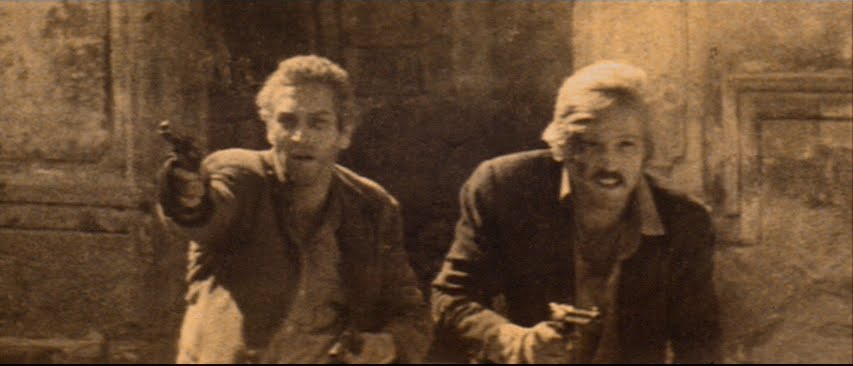
Riding my pink townie down Colorado Ave at ten at night. I hear Spanish, I see the glint of celluloid, and right then catch the tail end of Butch Cassidy and the Sundance Kid playing outdoors at the Abel Gance in Elks Park. Paul Newman and Robert Redford pinned down in a Bolivian plaza, they stand and bolt out, frozen in time, guns blazing.

I cruise down the darkened street and roll right past the former of site of the San Miguel Bank. On June 24, 1889, a young Butch Cassidy walked into the building with his two partners in crime. That morning he robbed his very first bank.

A fine place to honor this years honoree.

Butch End