8. The Sylph and the Goldfish

Rain sweeps in from the ocean and drenches coastal California. The Penguin Dinghy, however, rests safe and dry in the Room of Requirement.

With the rain and all, we go to Los Angeles  It is Persian New Year.

—-

Once upon a time there was a wisp girl who lived in the city of Los Angeles.  One evening she leapt from her bed and in doing so she ripped a toenail off. The little girl was far closer to the beginning premise of her life than we may be to our own demise. Hardly seven years old, her materiality was still fresh and barely set, hardly removed from that time in which she didn’t exist at all. What did she remember, if anything, from that world that preceded her? Maybe for this reason she couldn’t distinguish a wound from a fatal wound. Any injury might be a summons from death. She sat on the floor, cradled her toe and considered her own mortality. Baba, she wept. I don’t want to die. I am too young. I don’t want to die.

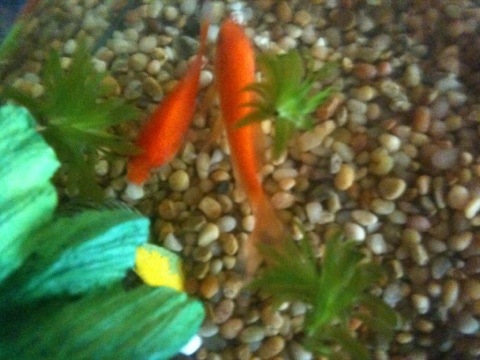
20120318-102427.jpgOnce upon a time on a living room table in Pasadena, the Nowruz goldfish swam in their small bowl. They had been brought into the house as a harbinger of the New Year. But did they know why they swam in the bowl? Or even that they were they and that they swam in a bowl at all? Did they know they had meaning? That they were living fire in a globe of water and the embodiment of spring?

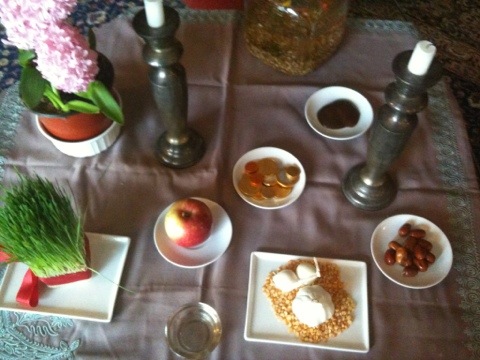
20120318-102506.jpgOnce upon a time we drove to a shabby boulevard in Westwood in a heavy downpour to purchase saffron, halwa, flat bread, jordan almonds, pistachios, whole fish and tea. The rain was so heavy that the freeway traffic on the I-10 slowed to a crawl and it was as if the world had become cemented with water and we had returned to our amphibious selves.

Razieh

Razieh

Once upon a time there was a little girl in Tehran who so badly wanted a goldfish for Nowruz that she schemed with her brother and pestered her mother until the woman finally relented and handed over a 500 toman note. The little girl journeyed to the market and lost her money twice and was scared and sad and elated. She met snake charmers and merchants and a soldier who offered to help. The girl, trapped yet in her childhood felt for the first time a glimmer of the predation of men and of a looming world beyond.

But the girl never existed. And yet when the poor thing sat on the curb outside the market, staring through the sewer grate at her banknote just out of reach, future violations even further beyond her consciousness, she hardly thought to  consider our existence. In her world, none of us witnesses and sylphs existed as even a consideration. We were nothing at all.

7. The story of the third forest

Yerba Buena Harbor, 1853

Patience yet.  In due time we’ll get to the Boat.  We still need to finish with the forests.

The story of the third forest

Once upon a time, through a series of ecosystem successions, great hardwood forests emerged on the eastern seaboard. The first Europeans to experience the woods were astonished at the almost park-like feel – the result of centuries of thinning and burning of the understory by the native inhabitants who each spring would clear the woods to make it easier to track and follow game. The Europeans experienced grassy glades shaded by maples and conifers, their trunks an easy ten feet in diameter.

We all know what happened, of course. Within a couple hundred years all of New England was timbered out – by the 1800’s 98% of Vermont had been deforested and the land turned over to sheep and dairy. A chunk of that wood made its way down to the McKay Shipyards in Boston and Kennard & Williamson in Baltimore where it was refashioned into clipper ships, vessels so strongly masted and engineered that they could cut around Cape Horn with record speed.

These were the ships that carried the miners to San Francisco after 1849.  When they set port in San Francisco Bay, their crews jumped ship by the droves and headed up into the mountains to work the gold fields. With no one left to sail the ships back, and the investors and owners left holding the bag, that forest of masted clippers and schooners floated idly amouldering in Yerba Buena Harbor, a nation of hardwood that was gradually dismembered and refashioned into the parlor houses, cribs, gin joints, and Victorian filagreed domiciles that graced the city.

That was until 5:12 a.m. on Wednesday, April 18th, 1906, when the ground shook so fiercely that the city of San Francisco collapsed and the gas lines burst into flames.  Within days the Great Fire had consumed over 25,000 buildings.

In a strange arc, those wonderful ancient forests tended by the Algonquin and Abenaki, and tendered by hundreds of years Atlantic nor’easters, as well as vast stands rounding Seattle rooted in tons of salmon flesh, came to be consumed in a holocaust at the gateway to San Francisco Bay.

But not all of the wood burned.

Regardless of what forest or what ocean she came from, some of that wood fashioned of steelhead and moutain fiber made it’s way to a spot of land newly parceled out from the Blucher Rancheria in newly incorporated town of Sebastopol in Sonoma County.  The boards were stacked on the open meadow on the knoll at the crest of our ridge.

One morning in 1901 or 1902 a few sawyers and carpenters arrived and, through their hands, the Room of Requirement wrought as ocean, and then as wood, in all cases ferrying whatever was into Safe Harbor, entered it’s Third Incarnation.

6. The Story of the Wawona

The Wawona docked in Seattle

Why was timber being shipped all the way from Seattle to San Francisco?  Why not bring down wood from the Sierra Nevada which geographically was much closer?  The answer suggests what the Age of Carbon has robbed from us.

People couldn’t bring the wood from the Sierras because at the time there was no easy way to do it.  The railroad hadn’t been built yet.  Hauling timber down from the mountains by ox or cart wasn’t feasible.  And so, as it had been for thousands of years prior, the maritime ruled supreme.  For most of human time, river ways were in fact road ways.  You could cut vast territory quickly and efficiently by plying the rivers.  In the 1800’s the only way to move wood out of the Great North Woods was to float it, eventually to the mills and lumberyards of Chicago.  And in the 1850’s it was far easier to ship timber by schooner than muscle it down from the Sierras.  Even in the early years of the Gold Rush, timber was barqued 13,000 miles around Cape Horn from New England.

Which tells us something else.  You can’t cut big timber without a mill.  A mill requires blades.  And gear trains and  steam or water driven engines.  Little of that could be easily had on the West Coast of North America in the 1840’s.  So the first west coast mill built in Bodega Bay in 1843 by Stephen Smith was a big deal.  It meant that boards could be easily had.

Within a few decades nearly 800 mills lined the coast from the Bay up through the Pacific Northwest.  Their sole purpose in the early years was to mill the giant coastal timber stands and ship the cut wood to San Francisco.  Originally it was done by square riggers, but by the 1860’s special lumber vessels were being constructed, many coming out of the Bendixsen shipyard in Humboldt Bay.  The ships had simple rigging and deck arrangements to facilitate the loading of lumber.  Much like with modern container ships, the board cargo was all deck stored.

The three masted 165 foot Wawona came out of the Bendixsen yard in 1897 and ferried timber from Gray’s Harbor down to California for nearly 16 years, after which she was deployed as a cod fishing vessel in the Bering Sea.

The Wawona herself was built of Douglas Fir, fashioned from material that had once been matter parceled from the sea. So for the breadth of her lifetime, from 1897 to 1947, sea energy harvested sea energy to be consumed by humans, or bore sea energy across the ocean, so that it could be cut and planed and hammered and fastened and battened into gingerbread Victorian homes, carapaces for up and coming merchants and gold boom urbanites.  In this way ocean was borne onto the land once again.

After the Wawona retired in 1964, she took harbor in Seattle’s Lake Union where she was slated for restoration at the Center for Wooden Boats.  For years it was possible to visit and walk aboard her masted carcass.  A couple years ago, though, restoration efforts were halted, she was towed to dry dock in 2009, and she was dismantled.

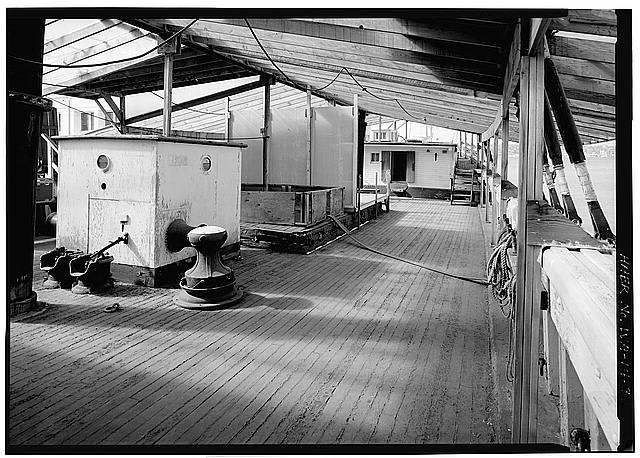
The Deck of the Wawona

If you’re reading this, you will never in this lifetime or any other have the chance to walk aboard the deck of Wawona.  

But picture this:  The new millennium, 1900,  and the Wawona bucks and canters in heavy surf, her hull tethered to a doghole chute.  The sharp knock of called lines and pulleys against spars and mast on a gray afternoon and more to go of an already  long day as sailors wire sweet redwood and fir onto the sheltered deck.  The winter air reeks of sea lichen, and bladderwort, and the must and rusted pine tar oakum that caulks the decking.  Picture the moist grunge, that sludgy wort that grows in the nether space between land and water, crumbling chinked mortar between port cobbles and brick, the living grease of taupe and ambergris mold that slickens the surfaces of skid rows and harbors.   It’s 1991 and the spring maritime has wet and chilled the night streets of Pioneer Square and inside the OK Hotel, mud honey, floors sticky with beer and air with sweat and smoke stink and Novoselic and Grohl and Cobain – he’s just a boy yet – drive out Smells Like Teen Spirit.


5. The Room of Requirement: The Second Incarnation

Stumptown

The Room of Requirement was built of wood, not water.  How did that come to be?

The story of the first forest

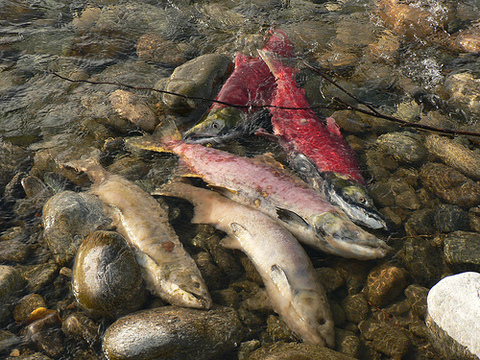
The Russian River opens out to the Pacific at Bodega Bay just northwest of here. From there it winds easterly and northerly through Monte Rio and Guerneville.  It’s fed by many small tributaries, including one, Salmon Creek, that has it’s origins near the small town of Occidental.  For thousands of years, The Chinook would run up the Russian River much as they still do today, depositing themselves in the pools and on the sandbars to spawn and to die. Bear and other predators once ate their carcasses, leaving much of the fish on the forest floor.  The fish provided nearly a quarter of the nitrogen taken up by the riparian forest.  The ocean became fish.  And the fish became trees.

The wood for the Room of Requirement could have been milled near around here in the heavy first generation forest that once layered much of West County.  The first sawmill was built in Guerneville by John Heald, William Willits, George Guerne, and John Bagley.  The first three of the men would go on to establish towns of their own.  Who knows what went south with the fourth?  Nonetheless, they worked with such intent felling the giant redwoods, that the surrounding area eventually came to be known as Stumptown.  Other mills sprung up:  six in Occidental, one in Freestone, many of them supplying timbers for the nascent narrow gauge railroads that were extending their tendrils north.  And once the railroads were in place, the wood could be shipped to the still infant metropolises to the south.  By 1901, however, that area of the Russian River watershed had been largely deforested and many of the mills shut down.  Thirty years prior, so many old growth redwood grew here that the region may have had the densest biomass on the entire earth.

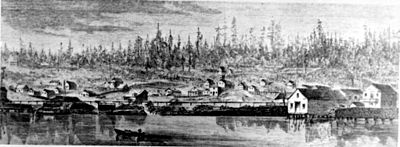
Seattle deforested

The story of the second forest

Or the wood for the Room of Requirement could have come down from the timber stands near Seattle.  Seattle was a late comer in the Anglo settlement of North America. The Denny Party didn’t land in the Puget Sound until September, 1851, but in short order, some members of the pioneer group set the saw blades spinning.  At that time the entire Sound was blanketed in 2000 year old fir standing 400 feet high.  Nothing like that exists in the world today.  Here too, the stands of trees were seasoned and nourished by the vast flow of nutrients that each year swam seasonally up from the Pacific.  Near uncountable number of Steelhead, Coho, and King had over the millennia born a treasure of maritime wealth in their bodies, coursed it up rock and rapid to lay it rest in the woods of the Pacific Northwest.  Functionally the fish were a way to transport potential energy from the ocean upstream in the system and back onto land.  Eventually much of that energy stored in timber mass, through human agency, would find it’s way back to the ocean and to new distant shores where it would one day be released in a conflagration.

Initially the wood was harvested up on the ridge lines of Capitol and Beacon Hill and then slid down on skids (in order for the logs to slide smoothly, the skids were greased by the original grease monkeys, a well-equipped and perhaps racially-tainted slur) to Henry Yesler’s harbor side mill at the base of the slope. There the logs were cut, loaded onto large timber ships that ferried the wood to San Francisco where it was devoured up by the Gold Rush building boom. The muddy timber camp, most likely the first skid row, was a sloppy mess of a place lined with bars and piled with rowdy lumbermen, windfall buckers (those logging mercenaries hired out to buck the worst of fallen trees), sailors and drunks.  Subsequent generations civilized the area into Pioneer Square, but it never really shed it’s cantankerous bearing. A hundred and forty years later on a cold spring Seattle night, Kurt Cobain stood up in a sweaty bar room in the OK Hotel in Pioneer Square and sang for the first time, Smells Like Teen Spirit.  The band was originally called Skid Row. A few years and name changes later, they had become Nirvana.

Grunge music, of course, leads us inevitably to the Story of the Wawona.


4. The Room of Requirement: The First Incarnation

Salmon spawn

Courtesy of J. K. Rowling, is that place where you hide your fears and fashion your dreams.  It’s that place that’s exactly what you need at exactly that moment.

The house we bought in Sebastopol, it turns out, is endlessly extensible.  It even came with it’s own Room of Requirement.  In it’s first incarnation, the room was the sea.

The First Incarnation:  the story of the sea

After the flood, clam and oyster and shellfish took up calcium and salts from the ocean and from these stores the engines of their DNA fashioned shell and carapace.  Plankton and algae harvested sunlight and carbon dioxide, and in one of life’s most supreme acts created green breathing matter.  The matter was consumed by other fish, krill and invertebrates who in turn were consumed by a diminutive carnivore from the family Salmonidae.  These mighty fish hatched nearly on land, kept safe by the barest sheen of water.  They grew and molted and shimmered down the tributaries to the open sea.  Those that survived ranged the cold Pacific waters as far north as Alaska.  Much of their lives to this day remain a mystery.  What little we do know, however, concerns the laying of their spawn, and their tortured journeys back up stream in which they shed themselves of everything save the desire to reproduce.  Forsaking even their own appetite, they cast themselves repeatedly against the current, battling against the gravitational and tidal pull of the rest of nature solely so that they may live.  Once they reach gravel shoals, they lay and fertilize their own spawn.  Spent, they survive only a short while longer.  Their job is done.  And in their consequent death they return once again to join us on land.

The salmon are required to do this.  Life, their life, all life in the Pacific Northwest has pulsed for ten millennia with their return journey.  It is why, in it’s second incarnation, the Room came to be a forest.

3. Tale of the Boat

The Boat

Why, we go to sea.

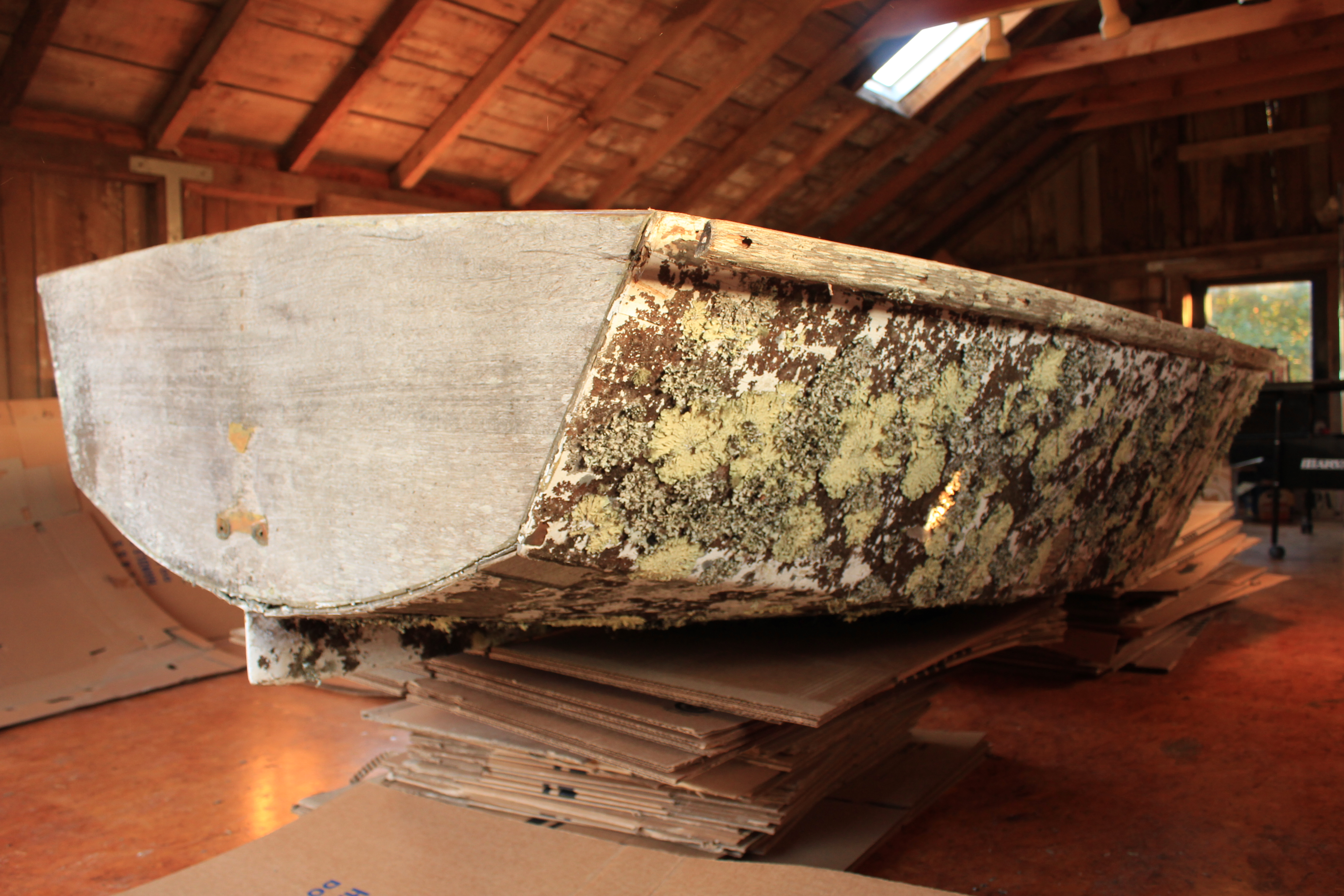
The Boat arrived here in the Fall, towed up onto the property on an unplated trailer by 80 year old Jack in his one ton truck.  Brett and I pulled it by hand the last hundred feet to the  Room of Requirement.  Opening both french doors wide we ferried her in.  And for a few months now she has slumbered.  The nights long, the air chill.  The cats climbed on her and sometimes we checked in.  But mostly she just slept.  Jack has visited a few times and on each occasion he’s asked if he could visit her, just to see, just to lay his hands.

Walking about in the Room of Requirement, he’d gaze at her and touch her and he was pleased.

She’s just a Penguin Dinghy, if that.  She was built for placid eastern waters and can hardly withstand the gusts on San Francisco Bay.  On top of that what’s left of her is covered in lichen.  Her stern has been plowed with gashes.  What to say?  She may be more hole than anything else, but can any absences stoved in upon her negate her right to existence?

All the while Brett has been away out with the wind.  He restored a barn in Bolinas, and served at a Vipassana retreat and painted a mural and went to a movement workshop at Tamalpa.  He got a girlfriend and got a plan which shifted into another.  All good stuff.

The days have started to grow longer.  The daffodils and narcissus have come up, the locust is in full bloom along with the magnolias.  Spring appears at last to be here.  And now Brett has returned home.

Time has come for the restoration of the Boat.  The boat that came from Arlo Guthrie’s house.  The boat that rotted in Jack’s yard in Marshall for thirteen years.  The boat that harkens to an ancient childhood memory that belongs not to me.

Why do you assume any task?  Why do you refurbish or refashion anything?  Why with all the things yet to be done – rooms still to unpack, months of bookkeeping, gardens to be planted, work work work to be done, have we taken on this project?

But we don’t have an answer.  There is no why.  We do it because it’s there to be done.

And a faint trust in the belief that beauty near always arises from the foolish act.

2. O

Odysseus

Tell me, O muse, of that ingenious hero who travelled far and wide after he had sacked the famous town of Troy….

What is it with that Homeric ‘O’?  It’s all at once the hallowed ‘O’ summoning a god, the plaintive ‘O’ asking to receive the story, and the demanding ‘O’ calling for a passerby to listen, to listen now because there is something vital that must be said.  The first is filled with hubris, as if we’re even worthy to make the call.  The last, more akin to faith, underscores the belief that the story can and will be told to it’s full fruition.

I feel it most, though, as the aching cry, the lament – the Oh Christ, or the child curled in the fetal position, moaning to himself, oh…oh…oh, feeling the score of the wound behind, or the weight of the task ahead, yet unable to get the words out.

But we are not children.  And we do have allies. When resolve is lacking, we have cohorts ready to bind us to the mast so that we may stare ahead resolutely, deaf to the call of sirens.  Time to get with it.

Where do we go this morning as that once great Greece stumbles along in shambles?

1. Scheherezade

20120308-161415.jpg

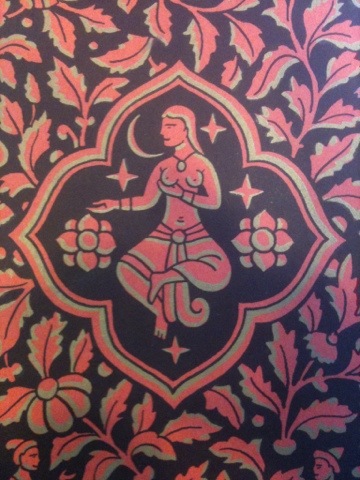
Upon the betrayal of King Shahryar by his Queen and wife, the Sultan had her beheaded and vowed that, henceforth, he would each day take a new wife, he would sleep with her, and at the following dawn slay her to secure her honor as he would slay a thousand women and forever subvert the guile and perfidy of women, even though in this way lay madness.

He nonetheless set forth and the consequent wreak and ruin descended upon the Caliphate, mothers mourning, parents in flight with daughters until not a maiden fit for carnality could be had. That is until the daughter of the Sultan’s Wizir pleaded with her father to allow herself to be taken as the Sultan’s wife and, that if she were allowed to do so, she herself would end the slaughter of women and save all the virgin daughters of Islam. Unable to withstand his daughter’s will, the Wizir agreed. He delivered Scheherezade to the Sultan Shahryar, and he slept with her and he took her maidenhead, and as the dawn approached not yet making itself present, she asked the King if he would entertain a story. With that she began the tale of the Trader and the Jinni.

We know, of course, that she could not finish the tale.  The Sultan spared her life for one more night and yet another.  The stories continued on for a near infinite number of nights.

Therein lay the beauty of Scherehezade. As long as she breathed a story, she knew at least that she would breathe. For her, the story became a high wire act on which her very life or death depended. Night after night she slept with the Sultan after which she seduced him with her stories until the two acts became equated. In the end, the story became the more powerful seduction. Whole worlds and worlds within worlds were born, leaving the story as the generative act.

And it’s story telling at it’s most basic. A fairy tale and a lullaby. The story that provides solace. The story that nurses us into sleep.

Vaccines

At a recent gathering I stepped into a dispute about the efficacy of vaccinations for children.  I haven’t been paying too close attention, but I guess there’s been a growing backlash against vaccinations.  Anti-vaccine adherents have cited studies showing a causal tie between vaccines and autism (the data which was later shown to have been falsified), or are driven by a general distrust of Big Pharma. Some believe that vaccines may actually compromise our immune systems, by making them “more dependent on outside drugs” and less robust.

Well, here’s one.  In a widely cited study of measles and pertussis vaccinations and outbreaks in Colorado, CDC researcher Daniel Feikin discovered that children who went unvaccinated were 22 times more likely to contract measles than vaccinated children.  That’s perhaps to be expected.

The interesting kicker is that the unvaccinated children were actually vectors for measles outbreaks among children who had been vaccinated.  Schools with pertussis outbreaks had three times as many exemptors. The chances of there being an outbreak in a county basically increased with the number of vaccine exemptors.  Believing that they had the right to tend to their own bodies how they saw fit, anti-vaccination proponents put the larger community at risk.

As Dr. Feikin noted, “A single unvaccinated child in a community of vaccinated children holds a strategically opportunistic high ground, protected from risk of disease by herd immunity while avoiding risk of exceedingly rare adverse events associated with vaccination. Yet, when too many parents want their child to be that child, the entire community is affected.”

The final grace note?  My wife is a doctor within Kaiser.  Where do the greatest number of unvaccinated children in the Kaiser California system reside?

Marin County.

One of the most affluent community in California chooses not to vaccinate their children.  They’ve never seen the effects of measles or polio.  What risks can those diseases possibly pose?  So they opt out, thinking it won’t affect the larger community.

A national study shows that unvaccinated children come from well-educated, upper income, predominantly white families.  And in Colorado?  It’s San Miguel County, home to the wealthy and largely liberal San Juan ski towns.

Take that cake and eat it.

Frenchie

Mid-day I went down to visit Frenchie, our neighbor next door who had come home to die.  Her daughter called because Frenchie needed to be moved and the daughter wasn’t strong enough to do it.

Frenchie is 88, a feisty Quebecois.  Her husband, now gone, was from Montreal.  Over half a century ago they had bought their cottage in Sebastopol as a weekend retreat and eventually moved up here.  She was a devoted gardener who waged perennial war on the gophers.  She held dominion over this area as residents came and went and the old Gravenstein apple farmers grew old and went on.  In later years she filled her home with stuffed animals to keep her company.  Her menagerie, she called it.

Frenchie lay on a bed in the living room, hooked to an oxygen tank.  She still had fire in her, and when prompted she could eke out a yes or a no and a fierce yet gentle smile. You could feel the shimmering though, the giving way:  her struggle was palpable. I stayed for a bit, and told her she was beautiful and strong.  She was a lovely lovely woman.

It was a beautiful California day that felt to me strangely gray.

That evening Anna and I went to hear Jolie Holland at the Hopmonk. A founding member of  The Be Good Tanyas, Holland came out of the Gulf Coast and her musical heritage has broad Acadian roots.   I told Anna I felt so fragile, that I could feel Frenchie slipping such that any loss, even the closing of the damn record store in Sebastopol, felt like a sharp abrasion.  It just felt so sad.  Holland’s voice was sublime and provided some measure of relief, but nonetheless Anna and I were tired and we got in one of those kinds of fights that leave one drained and aching.

I fell asleep at home and awoke at 3 and couldn’t sleep.  My chest compressed with that feeling of blank dread. I went downstairs and lay on the couch in the darkness, waiting and observing.  I dreamt that I was on my way to Telluride but a snow began to fall and impeded my progress.  The ache slowly dissipated.  At some point I felt a release and opening up somehow and I fell into a thick slumber.  At daybreak the dogs went mad with barking and raced to the windows.

Later Anna came and pulled me from my stupor.  We should go see Frenchie, she said.  I threw some clothes on and we walked down the road.  Her son Louie stood in the dewy yard by the fence.  She died this morning he told us.  It’s funny, the others had all been dying lately.  One 88 year old neighbor just last week.  Frenchie was the last to go.

I later explained to Mazie that it’s like we’re a fabric, each person a knot of sentience in an immense dense weave.  And as any one creature starts to go, unravel, whatever, the area of fabric around the knot shifts and shimmers and vibrates as that knot is unraveled into the nothingness.  The description is of course not quite right, but perhaps close enough.

I lit a candle for Frenchie and let it burn for most of the morning.  What is a flame, but the release of matter over time as light and heat and disintered material?  A flame, be it life or fire, is again a verb, less a noun than a process.  And when the time came, my breath pressed against the flame struggling to hold purchase on the wick.  But the energy of the process couldn’t withstand the prevailing force which always is and it gave way and eventually extinguished.  How does a flame go out?  First there is the sequence of when it waves and bucks and bows. Followed by a brief flare before disappearing.  The ember tip of the wick remains for another moment, burning yet before it too goes black.  Then the long trail of whisping smoke that unfurls into space tracing designs and patterns until quite suddenly that too is gone.   We are left with the dissipated carbon dioxide to be absorbed by plants and in quick cycle returned to life.  And the inert stick of wax awaiting the next spark.

This Life We Were Born Into

I just got off a crackly broken phone conversation with my friend, Bill Scheffer.  It seems that more often than not that’s how they are these days.  He was taking his lunch break from his work in planned giving for Planned Parenthood.  He was somewhere amidst the cacophony of midtown, walking between work and Chipotle’s searching for a salad.

I was sitting in the sun on our back porch in Sebastopol looking out toward the oaks and overgrown garden beds.

I thought to myself that Bill should move to California and do development and planned giving work for Spirit Rock, a Marin mediation center that may be mid-stream in a large capital campaign.  But I shied away from suggesting it to Bill, thinking to myself that “that’s not the life he was born into.”

And it’s not.  At least I’m not sure it is.  For Bill, family and friends are very important.  And for several generations his family has been deeply steeped in Manhattan.  He has lived there, and he’s grown up there.  His rich network of friends and his spiritual life are centered in New York.  Most of the lines tethering him to this world are anchored there.  Moreover, like many of us, his parents are near old yet and it’s more important than ever to remain close at hand.  That larger body needs him.  It doesn’t matter how nice the job is:  I might as well suggest that Bill move to Mars.

What then of the rest of us?  I once dreamt of entering the foreign service. Or something like that.  I studied Russian.  But it was never going to happen.  I wasn’t well enough equipped coming out of the starting gate.  I didn’t have the temperament or the know how.  No matter how much I wanted to escape, I had my own wrecked family tying me to California.  I had my own past tying me to my own brand of dysfunction.

My classmate Fareed Zakaria was born to be Fareed Zakaria.  I can safely say that I was not.

Which begs the question as to what life I was born into.  And to that, I unfortunately don’t have much of an answer.  An array of weird experiences and encounters that if not culminating in, have at least deposited me here on this sunny morning in California, not knowing even which way is up. Which is a strange state of being for 47.

It begs a larger question:  For all of us, that disparate and manifold and brilliant sparks of sentience that we are, what is this larger life that we all more or less were simultaneously born into?  What hope that we ever truly will divine the texture?

Birthdays

When I was thirteen or fourteen my mom told me she would kill herself on my eighteenth birthday.

Which she did.  More or less.  Except the matter is a mess more complicated than that. So much so that I’ve spent a lifetime cracking and shying away from it’s telling.

And so today I’m sad.  Today is a lovely California morning.  The one we all were born to live for.

Streets of San Francisco

A few nights ago my family and I raced through Chinatown on a Chinese New Year Treasure Hunt.  Amidst pandemonium, explosions, dancing dragons, strip clubs, smoke and disaster, we cut through the crowds and down darkened alleys trying to decipher small clues on historical placards and scrawled on concrete walls.  It’s the hottest ticket in town.

What I liked?  It twists your sense of geography as you gyrate up and down the streets from angles. It keeps telescoping your attention from the macro (what street do we go to?) to the micro (a tiny date on a sticker posted on a mirror in a small stairwell leading up to Grant Street.  It’s one of the ever fewer activities in this world that renders our devices largely useless.  It’s all about pun and metaphor and the deciphering of a physical environment that is best done by humans.  It leaves you racing against a surreal dragon.  And best of all it makes you feel like Karl Malden running through Chinatown trying to catch a kidnapper or short circuit a bomb plot.

A rare gift to even have the chance to pretend to be heroic.

Beings

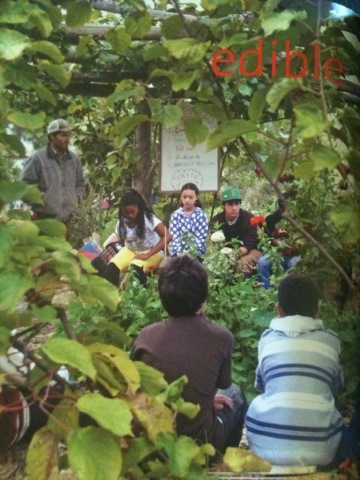
This picture was taken at the Edible Schoolyard at the Martin Luther King School in Oakland. It’s the sort of place I would love for my daughter to go. In the picture you can see a handful of young human beings sitting in a garden surrounded by young plant beings. Vines curl their tendrils around the beams of the ramada, flowers break open their blossoms, canes send forth their berry.

Both the children and the plants are at school together. They are all learning. They are all peers.

The young human beings nurture the young plant beings. When it comes time for the children to eat, they take the body, the leaf, the fruit, the seed, the progeny from the plant beings and ingest it. Their own beings use the energy from the plant beings to grow and emerge.

Ideally, their own waste – the carbon dioxide they exhale and perhaps even their own shit – one day may become food for the plant beings.

That whole process is what we call life. It’s a verb: to be.

Quite tragic and beautiful, really.

20120213-130400.jpg

The 30th Anniversary Party

A few weeks ago I was reading the book commemorating the 40th anniversary of Chez Panisse.  It’s a beautiful compendium of photographs and memories from the Chez Panisse family, illustrating the force of that restaurant and Alice Waters and the tremendous effect they both have had on what we eat and how we do so.  I think I’ve loved alice since she first entered my frame.  But now I think I’ve fallen absolutely in love with her.  As well as with her fantastical mercurial impossible visions that again and again have become her and our reality.

And I especially love the delightfully sour entry by her former general manager describing his experience at the 30th anniversary celebration at Berkeley back in 2001.  A small meal for 150 became a feast for 600 chefs and patrons and filmmakers and artists – a soft leisurely afternoon beneath the Berkeley campanile that would evoke the spirit of the Pagnol films that long ago had inspired Waters. In the planning phase, Gilbert Pilgram, the former general manager of the restaurant (and eventual owner of Zuni) kept asking how they would manage the clean up and Alice repeated with ever more irritation that “it was taken care of.”  After the big fête, everyone else had retired to the after party and Pilgram was left largely alone with a handful of Tibetans and sullen teenagers to clean up the mess.  Very little had been taken care of.  And so they toiled away exhausted and alone until the sun rose the next morning.

We may not be able to have a decent life without Alice.  But we can’t have life at all without Gilbert Pilgram.

80%

A few weeks back, Dr. Daniel Feikin and I sat on our porch and he asked what I would have done if I had learned that a McMansion was slated to go up in the orchard property next door.  Would I still have purchased our house?

It was a good question.  I still believe that the optimal situation would have been for us to have owned the now gone orchard.  And at the time that we lost it, I felt despair and longing and fear of what was to come.

But what did come?  If we saw this house for the first time today, we would see a delightful meadow next door slated to become a vineyard.  Lovely and quaint.  We would not have hesitated to buy this house.

Less than perfect would still be good enough.

But what about the hypothetical McMansion that would have sullied our privacy and views?  This house on its own is all that we need and wanted.  If something lousy was happening next door, we could have balked and held out and searched for something else.  We could have camped out in an apartment for two years.  We could have continued to live an unsettled life well into Mazie’s high school years.  Our time would have been given over to searching and exhausting real estate drives and questioning and perseverating over manifold possibilities.  And whatever we found would have been compromised in different ways.  Interest rates would start to rise.  The houses would need work. The land would be too big or too small or too wooded.  They would have been too expensive or too far from Mazie’s school or the roads too busy.  There’s always something.

Years ago I worked for a plastic surgeon in San Diego.  I was editing some promotional materials for him and taking forever to do it.  I couldn’t stand how sloppy his old stuff was and I wanted it to be perfect.  He finally sat me down over dinner at some place in La Jolla.

Andy, do you know why my facelifts come out better than  those done by my partner? he asked.  Because he aims for perfection, he said.  He goes in there and spends too much time trying to get everything right and he bruises too much of the tissue.  He makes a mess of it.  Do you understand what I’m telling you?

I shook my head.

80% is good enough, he said.  Nature will take care of the rest.

Not something you necessarily want to hear from your plastic surgeon.  But now twenty-five years, a million miles and a dozen lives later I can see Dr. Manchester was spot on.

Adaptation and survival favor imperfection.

80% of something far exceeds 100% of nothing.  Sometimes even less than good is good enough.

A New Year

Bolinas Alter

The end of one story.  The beginning of another.

On the first day of the new year, Anna and I awoke before dawn and took Poe’s remains to Bolinas.  We drove through the Sonoma and Marin darkness, past the unseen dairy and cattle hills, toward and eventually into the San Andreas fault zone.  As the sky lightened we dropped into the narrow crack that separates the North American Plate from the Pacific Plate and we crossed over to that new continent that moment by moment is shedding itself northward and away from our world.

We left Poe at the maritime shrine on the main street along with a photograph of his younger self.  Afterwards we ran on the rocky beach against the roar of the receding surf, watching the flyovers of the resident ravens and hawks.

We left Bolinas later that morning.  Driving out of town, I looked to my right.  An open meadow.  And across stretched a line of 22 fenceposts.  And on each sat a solitary raven, all warily eyeing the world.  Eyeing perhaps even our own departure.

Ravens in Bolinas

Chickens

Have we talked about chickens?

Let’s talk about them.

20111230-183057.jpg

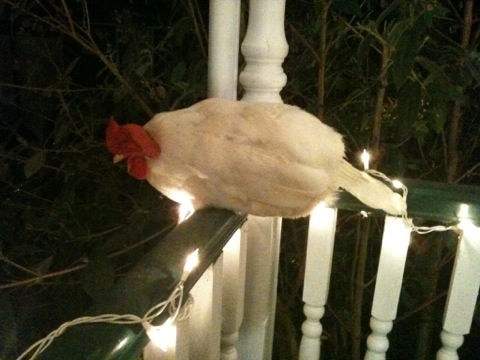
This is little white chicken. We don’t really have a name for her, so that’s what we call her. She’s also the sole survivor.

She started in a brood of five. All of her siblings were taken out by other animals. She was joined by a black Austrolope who was taken out as well. And then later we added three Bardrocks, all gone. She’s basically an Auschwitz survivor.

I’m writing about her because four weeks ago she took to roosting on the front porch. Up until then she was totally happy roosting in her coop. For two years, at dusk each night she’s gone in there and put herself to bed. It was fine. But four weeks ago her last sister was taken out by a dog right next to the coop. Ever since then, she’s been afraid to go to sleep in her customary home. So instead, at dusk, she goes up on the porch and puts herself to bed on the railing where it’s much more safe.

Let’s think this one through. She’s a chicken. But she prefers this to that. Even more fundamental, she can discern this from that. That means she has discernment. And she has preferences. Preferences and discernment define sentience. She is aware.

Furthermore, she doesn’t go near her old home because she associates it with the death of her sister (she was besides herself the morning it happened). She had an emotional response. A bunch of neurochemicals kicked off inside her. It doesn’t matter whether those neurochemicals expressed fear or sadness or anxiety. She felt something and associated that feeling with an event. She has chosen to sleep somewhere else because she will be safer. She feels and she is self-aware.

On Tuesday morning, I heard her going nuts in her coop.  I looked out the window and saw the two dogs that killed her sister running about maybe 600 feet distant. They were hardly visible, let alone a threat.  But she appeared to remember.

Each day she goes over to play with the chickens next door. She prefers this. Then she comes back with them to have a little party at our house. They eat and scratch through the compost pile. She prefers to be with other chickens. She craves the social interaction. She is a social animal who finds pleasure or safety or satisfaction in being with another living creature similar to herself.

In the evening the chickens return to their respective homes and put themselves to bed. And it begins all over again the next day.

Granted, she would have a hard time building a rocket ship. But then again, so would most human beings.

When can we stop privileging ourselves over others?


The Boat

As far as this story goes, the boat’s journey began on the back porch of Arlo Guthrie’s farmhouse in Massachusetts. It had sat there for a lot of years. I don’t know how Arlo came to have it or what his plans were. Apparently he doesn’t really like the water.

His friend Jack, though, loved boats. He once took the thing out on Arlo’s pond that was hardly bigger than a small room. And I guess Arlo said Jack could have it.

So Jack drove the thing from Massachusetts to Colorado on a flatbed trailer and the boat pretty much sat upside down on someone’s property for a lot of years and then it was driven down to Palm Springs where it sat upside down for a lot more years. Jack may have floated it in a swimming pool just to see what it was like.

Eventually the boat came to Tomales Bay where it weathered untended to for more than a decade. The gunnels rotted out as well some of the sidings. It had once been a lovely Penguin Dinghy much like a boat that Jack had once owned that had been swept away in the great New York hurricane of 1953.

Just before Thanksgiving my boat building friend Brett was driving down the 1 toward Bolinas when he spied a prickly pear cactus adorned with fruit. He pulled over, got his tongs and gloves and set to gleaning a bag of fruit. He was interrupted, though, by a winsome woman, a complete stranger, who seemed to have materialized out of nowhere.

We need help, she said. We need to save Jack’s boat. She suggested that it was in some sort of imminent danger and that she needed assistance.

Well, I’ve worked on boats, Brett offered. He looked around at the neighboring docks on the bay. Where is it? he asked. I can come over and see what I can do.

The woman looked at him incredulously. The boat’s not here, she said. It’s in Sausalito.

Okay, Brett said. Give me Jack’s phone number and I can call him and I can see what I can do.

The woman became very unnerved. You can’t call Jack! she exclaimed. Everyone wants to talk with Jack. Jack calls you!

So she took Brett’s number and told him to wait ten minutes and the call would arrive.

Which it did. And by the next day Brett was in a Sausalito boat yard listening to a day full of boat yarns and traveling history and loading the boat onto a trailer hitch and towing it to Bolinas. And a few days later he was at our house standing outside the chicken house with a sack of apples in each hand, staring in reverie, wondering what our plans were for the chicken house.

Our friend Evan Nichols the writer had christened it the Room of Requirement. Everyone who stepped inside was possessed by a different overpowering vision. For Mazie, it was the ping pong hang out room. I saw a cider pressing and cheesemaking facility. Evan saw a writers retreat room. His wife Amy saw a yoga room. Anne Harley envisioned a singing studio. The vultures have found it quite useful as a dinner plate.

And Brett saw a boat restoration house.

The room is one and all of these things.

And that’s how last Monday Jack pulled up in his three quarter ton truck pulling the boat. And that’s how Arlo Guthrie’s penguin dinghy came to sit inside our chicken house. And why I will spend a better part of my winter sanding and planing and painting wood.

Because if you do things right, all of this, every bit, is required.

The First Feeding

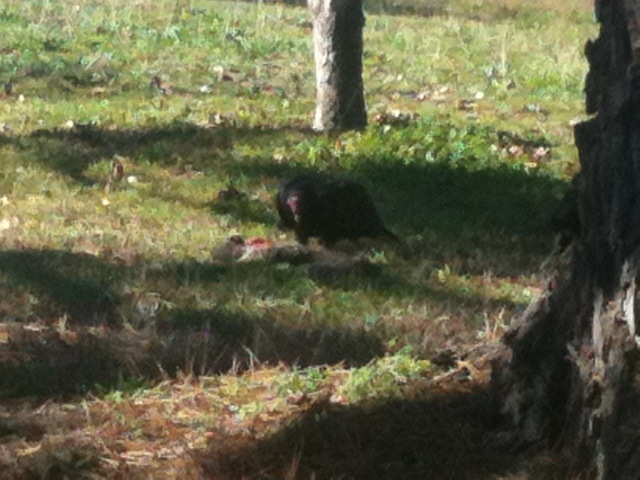
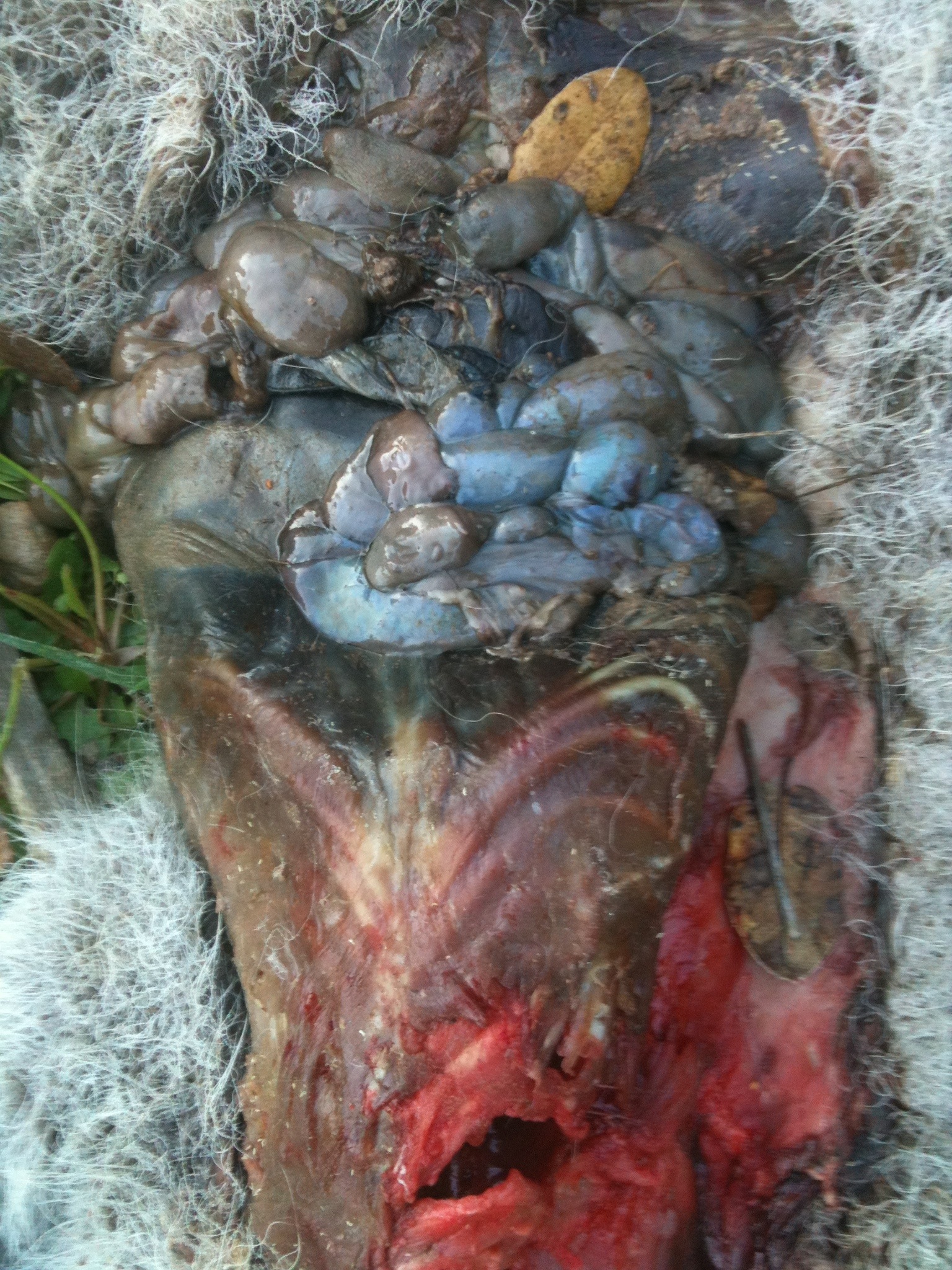
20111222-124051.jpgThe turkey vultures have come to feast.

It took three days. But they’re here now in full force. And it’s been quite the party. They circle low and Mango loves chasing them. Even the horse down in the corral down the way became excited. Our neighbor came over and was wondering what had gotten under his skin – he was prancing and snorting, his tail held high. The vultures, however, had been circling and feeding for much of the morning. In addition to the impression of their tremendous mass, what feelings do they incite in other species? The horse was clearly unnerved.

What other conjecture do the birds summon?

  1. They are patient, keen observers. The splayed open body of the raccoon rested on the roof of the chicken house for two days before I noticed the first flyover. It was near dusk and two vultures flew slowly over the chicken house, circled once and continued on their way. They waited another two days before they began to work the body. I wonder how much they observed before they decided it was safe to eat? And do they use the close flyovers to test the animal to see if it’s still alive? Living creatures tend to run and bolt at the flyovers.
  2. They have at least some semblance of cognition and work their food. They didn’t feed on the roof. Instead one of the birds lifted the raccoon corpse off the roof and moved it 7 feet to a spot on the ground where they could easily circle and rest while picking at the flesh. They ate the first side of the raccoon on the first evening. The next morning they rotated his body a full 180 degrees to more easily get at his other side. Later I moved the remains and hanging entrails to the tree outside our house. Within hours they had removed the body from the tree and once again were working it on the ground just outside our dining room window. Do they have a set routine in how they will dismember and eat an animal?
  3. They may be highly social animals that work collaboratively. So far I’ve seen a primary pair that are sometimes accompanied by a third. Only one bird eats at a time. The other two either perch in the tree, on the backs of the garden furniture, or sit on the ground. In all instances they face outward toward the open meadow, watching it seems for any advancing threats. This morning when the neighbors pit approached from the meadow, the feeding raven stopped and joined the other two gazing outward. As the pit advanced, the birds slowly took flight. Two of the birds seemed to have disappeared for the day, while one remained in the tree. When my friend Danny walked outside, the bird descended from the tree and circled the carrion raccoon as if protecting it. Was the bird guarding the food? Or was it taking flight in self-defense? How do they communicate? How are responsibilities divided among the group? Is their a pecking hierarchy?
  4. They may have an acute sense of hearing. I was watching the birds with binoculars from our dining room window. At some point my cellphone sitting on the far side of the room in the kitchen chirped when an email came in. The turkey vulture outside and 10 feet from the house started and looked up in my direction. I know for certain that I would not have been able to hear the phone from outside the house. How to test their audial and visual acuity?
  5. They can quickly discern friend from foe and react accordingly. The first few times I walked outside in their presence they were startled and flew away. They watched, however, when I retrieved the raccoon and relocated it. And they also watched a couple times as I walked in and out of the house without bothering them. It only took a couple passes before they became accustomed to my presence and ignored me. Mango with all his bark and scampering on the other hand, is another story.
  6. Their necks and beaks may have adapted to small prey. Watching the vulture pick flesh with it’s beak, I thought of the vultures on the Mara. The birds there have long extensible necks that they thrust deep into the chest cavities of the wildebeest, elephants, or whatever other megafauna they feed on. North America hasn’t had megafauna for at least 15,000 years and nothing on the scale of what was in Africa. Did different carrion birds evolve different beak and neck structures that would allow them to feed on different kinds of animals? Have carrion birds evolved different strategies for dismembering corpses? I would imagine that an adult vulture has a far keener understanding of raccoon anatomy than I do. They’ve undoubtedly feasted on dozens of roadkill.

There you have it. Twenty minutes of observation and six questions.

And I haven’t even planted the garden bulbs. Or assembled the apiary.


20111222-124114.jpg


20111222-124211.jpg

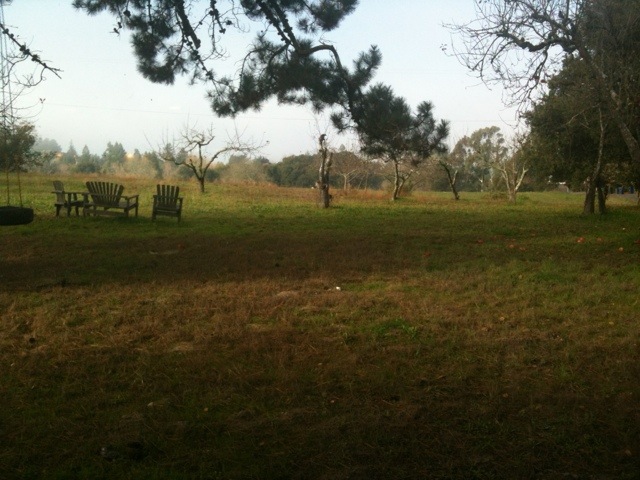
Where We At?

20111219-094009.jpg

In broad strokes:

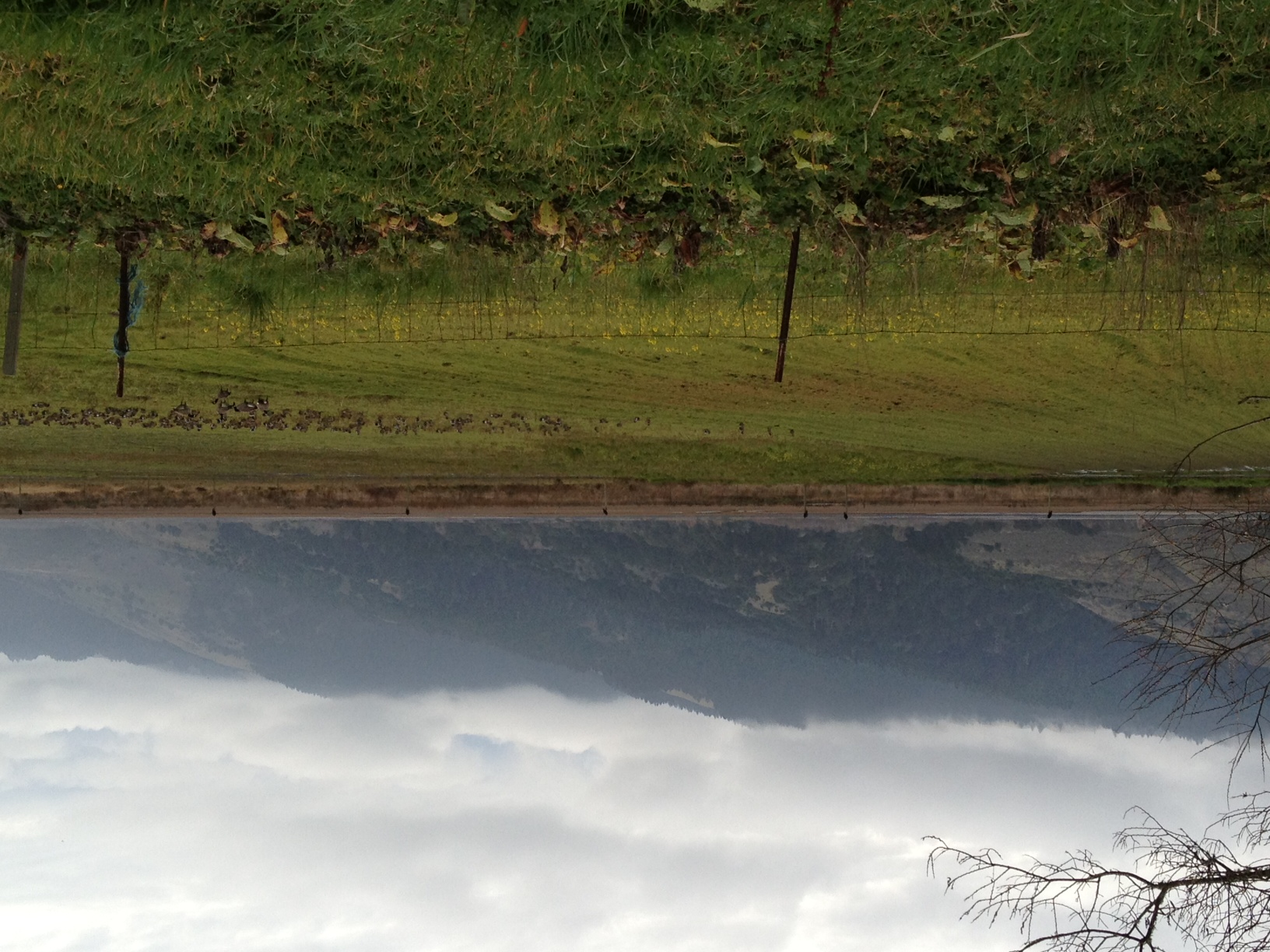
We’re set on a low ridge about 18 miles inland from the ocean. We’re high enough that the ridge holds back the maritime fog and moisture, yet close enough to the coast that we escape the summer heat of the valleys to the east. There’s lots of water.  Artesian springs seep out all along on this slope, while atmospheric moisture rides in as fog most mornings.

The San Andreas fault – that neat crack marking where the Pacific Plate abrades against and is peeling away from the North American Plate runs just to the west of us. Coming down off the ridge, you can actually see the gash in all it’s violent beauty. You can even drive into it. As you approach the coast, the rounded hills bunch up like crumpled tissue. As you push out you emerge into the narrow strait of Tomales Bay where the ocean has seeped into the San Andreas. Just across the water rests Point Reyes, slowly calving away from our continent at a pace at which we can actually feel it. I hid out there last month, and from the rocks at dawn I watched the tidal pull and stared back at that old land from which I was then receding.

By another designation we’re in the Green Valley sub designation of the Russian River appellation. We have soft sandy soils. The cool moisture and the more moderate temperatures make us good for Pinot and perhaps Chardonnay, though I don’t know much about that.

Just to the south the ridgeline gives way to a wide channel that draws the moisture inland from the Pacific toward Petaluma. That swath, buffeted by cold winds in the winter and summer, is marked by high undulating grassy hills best suited for dairy and grazing. In the spring it looks a bit like Ireland. That’s where you find loads of goat farms, Bill Niman’s beef, Straus milking cows, the Cowgirl Creamery and a wide range of artisinal cheese makers.

But where we are to the north it’s considered the banana belt – a perfect marrying of temperatures that near anything can grow here. Luther Burbank’s original farm sits about two miles to the north. There he developed hundreds of new varieties of apples, stone fruit, cacti, vegetables, ornamentals and what not. He supposedly thought it was the most perfect growing environment in the world. The land we sit on has grown cherries, prunes, plums, apples. It can support Meyer lemons and blood oranges. Figs and olives and grapes and walnuts. Peaches, nectarines, lettuces, winter brassicas. California oak acorns and redwoods. You name it.

And by yet another designation, the north of us is home to a vestigial group of Algonkian speakers – Yurok and Wiyot left over from the ancient middle incursion onto the continent. They most likely stayed put on the coast while their relatives pressed onward to the east, ultimately populating the entire eastern seaboard. The Algonkians are surrounded by a once heavy population of Athabascans – later arrivals from the third migration. They had come down from the Alaskan interior and the Arctic circle, having left their Inuit and Yupik cousins sometime way back. Resourceful opportunists they filled in the territory in north eastern California. Their De’na relatives pushed further, of course, down into Idaho, Colorado and the Southwest. To the south and east of us, it’s mostly Uto-Aztecan, the domain of the Paiute that ranged into the Sierras along with many of the central valley Sonoran tribes: Colorado indians, the Chemehuevi, Mojave. Some were Quechuan. But most, like the folk down south on the coast – the Kumeyaay, Diegueño, Cahuilla – are mostly cousins of the Puebloans – all folks left behind on the great historic primary migrations from the south.

As for us, we’re living on Pomo and Coastal Miwok land. Back in the day, winters were spent on this ridge line where we now live. In the summer, families and clans settled on the perimeter of what is now called the Laguna de Santa Rosa – the enormous seasonal estuary that extends from Petaluma and the Bay tidal marshes all the way up to the Russian River and Dry Creek Valley. The lagoon is the heart of this place. In the summer, the flat oak studded grasslands extend across the valley to the Mayacama mountains and the delightful hump of Mount St. Helena. In the winter, the tidal reach and flooding extends right up the valley, inundating the land near to the Gravenstein Highway. The lagoon is rich land. Our food comes from there. Literally. For the time being we get our veggies from Laguna Farm – a group of industrious folks who have intensively planted a small area on the edge of the lagoon. Right now we’re getting radishes, kales, chards, brussel sprouts, broccoli, an abundance of salad greens, carrots – most of it hauled out of those wetlands or the areas planted on a knoll adjacent to our house.

I was born in California. It’s my native land. And now after decades away we’ve returned as Californians. I explain to my daughter that this ultimately is the place which we are from. But we also return as guests of those residents that preceded along with all those energies still present.  In the morning after the fog burns, I look out the window.  The possibilities are manifold.  The world sparkles in all it’s glorious frission.
 

The Host and the Kill

20111219-091557.jpg

Time to get back with the program.

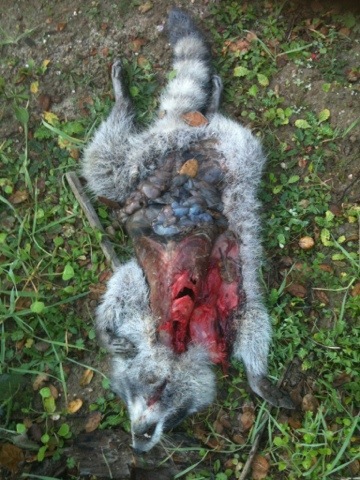
I found him in the morning while walking Mango. He lay on the side of the road at the other end of the 40 acres, his body fully intact. His chest cavity still had a trace of warmth, though rigor mortis had started to set in. Without any real clear intent, I picked him up, much to the chagrin of a waiting turkey vulture that immediately took flight.

I thought he was beautiful. He was heavy, heavier than one might think. Carrying his dead body, he felt something like a small dog. The pelt was thick, and the tail less pliable than it looks. His teeth and claws are predatory, ready to sink into any small vole – or wounded raven, perhaps – that he might happen across.

It all led to the basic question that ultimately faces everything: how best to send him on?

I could bury him, though that seemed respectful only in our world in which we seek to hide the look and stink of death. A waste of a perfectly good carcass, as Kerry Hardy would put it. I could gut him and do something with the luscious pelt, but I felt his native form was too beautiful to render into ornamentation. I could only screw it up. Kerry suggested eating him. Anna, of course, was worried about hydrophobia.

It took a good day for the answer to present itself.

This morning I drew a knife neatly down the middle of his chest and peeled back the pelt revealing the rose bloom of his chest. Lacking animus, his body now existed nearly exclusively as matter. But not quite. His matter still contains resident within a potency. We call it vitality. Enough that other creatures may seek to take it and draw it into their own.

We call this eating. On one side of the divide: sacrifice. On the other, rendered by consumption, it becomes the sacrament and the eater the sanctified.

Isn’t that ultimately what it meant in the transformation of the Host?

I took the body of that poor coon and splayed it on the roof of the old chicken barn out beyond our house. It’s within clear line of sight of our deck and bedroom windows. In a few days it will begin to stink.

If I’m lucky, the neighboring creatures will be hungry enough to overcome the fear of this place and of us. You all are welcome here I say to them. To the ravens. To the crows and vultures. To all the scavengers. I want them to come to this home and feed.

It really is time for me to get on with it. We have a wonderful home. And I’m back in it.

Here’s the invite. If you’re wild, I’ll feed you raccoon.

For the rest of you, I have a table to build. And things to grow. And kill. And render. It will be beautiful and delicious.

Come. You’re all welcome. It’s time to sate the hunger.


Leaving

We left Hopi because a small boy was run over and crushed by a truck.

Because a man killed his pregnant girlfriend and threw her off a cliff. Because a girl and her brother beat their mom to death with a barbell and burned her house to the ground. Because on the rez you can get away with murder. Because non-natives were dealing meth in the villages and no one seemed to care. And even if they did no one could do a thing about it.

Because every week acquaintances would drink themselves to death. Because a neighbor killed a raven. And poisoned an anthill. And beat a harmless bull snake to death with a hoe.

Because after eight years of digging the hard pan, the clay was still bone dry. Because I knew that after all I left, my work would remain undone.

Because our daughter needed to know what it was like to live off reservation. Because I couldn’t drive the 120 miles to flag one more time.

Because I spent my days composing telegrams from hell. Because most everyone we knew had already left. Because children were under served by their own families. Because I was tired of all that I knew. Because I was tired of the lies.  Lies told by my community.  Or by my own family.  Because we didn’t have much more left in us.

Because If you’re a sensate being you one day reach a point where you just can’t take it.

And then it’s time to go.

The Piano Store

I had one more trip to make.

There once was a little girl and her father slept with another woman, and her mother’s heart was so broken that she hung herself.  What can a father do, but compensate for love lost?  And so he bought his little girl a piano.

But the piano never came into the girl’s possession, but instead the stepmother’s.  And over the years the hammers and strings deadened and the ivory was picked from the keys by one child or another.

The piano had come from the ABC Piano Store on the corner of El Cajon and 30th.  The store belonged to Oleg Gladkoff, a White Russian from the Ukraine.  He was a young boy, and during the War he fled all on his own.  At the close of 1944, he picked his way across Russia and Germany, stealing uniforms from dead German soldiers.  He was once caught by the retreating army, and the apprehending soldiers were set to execute him.  Desperate to live, he told them what he could, he told them that he could play Schubert.  The soldiers laughed at him and they took him to the quarters of the ranking officer who had with him a piano.  Played, they told him.  Play your Schubert.  And Oleg all of 14 did just that.  He played for the German officer, so beautifully, he said, that they let him go.

Years later he came to the States as an aspiring pianist.  Once he even debuted in Carnegie Hall. But it wasn’t ever going to come to anything.  Call it a crisis of confidence.

Instead of becoming a world class pianist, he moved to San Diego and opened up a piano store and raised a family.  He would sit for days alone in the store, playing the piano just for himself.  And he sold pianos to families in the neighborhood, but after years, even that came to a stop, as pianos came in and he found himself unable to part with them.  So they accumulated around him, piling higher and higher until they formed a tomb of sorts and he buried himself with his best companions.

He had four sons, George, Andy, Michael and Nick.  His son Michael was my best friend growing up, and so I in turn I grew up with the family.

Just after we moved to Sebastopol, I called Nick.  Anna wanted to have her piano back at last.  Would he be able to help us move it?

That’s how I came to fly to San Diego, and rent a truck and load it with whatever remained of my family’s busted up furniture.  And how in the evening, Nick met me and some friends at a house, and as only a master could do, effortlessly slipped a thousand pounds of wood and wire onto a dolly, glided it up a ramp and through the house, outside and up to the waiting truck.  He ratcheted it down tight with tie straps.  And he shook my hand.

I thought of Oleg and the now empty store, and of everything that gets lost along the way, and of true service done well over years and of how guardians present themselves in the most common of men.

I drove that piano all night, up the five, along the backbone of California and deposited the broken heap in our very own home.

But except for one winter day in 1944, I don’t know if a piano has ever really made it any better.


Island of the Blue Dolphins

Mo was our cat, and at the last minute as Anna was leaving Hopi, he leapt out of the car.  Anna was tired, expectant and preoccupied.  She wanted to get that cat, but it wasn’t her priority and in the end she didn’t have it in her.  She was thinking of other things.  She camped by the culverts for a full six hours trying to lure him, but when all was said and done,  it was all she could give and so she got on her way.

The book always made me so sad when I was little. To think of the little girl marooned all alone by herself on that island.  Left to raise herself into an uncertain future.  Even then I wanted to reach out to her.  I wanted her to be safe.

Some would say it’s stupid to travel halfway across the country to rescue a scared and bewildered animal.  But such as it was.  Someone, someone in this wide world has to do it.  Otherwise, what really are we here for?

So I climbed into the car and drove 15 hours straight back to Arizona.  I spent 30 hours up at Hopi.  I found the life that we had built there completely dismembered and gone.   The ramada had been ripped to the ground, the gardens dug up, the fencing tore down.  There was nothing left of our life there.

I spent the weekend combing that empty neighborhood for the cat.  I crawled through mud and across tumbleweeds, caking my chest in bull heads, peering through both ends of filthy culverts.  I called out again and again for a white kitten.

And in the while, I learned a little about animal ways.  How when they get scared they hide and they dig in for dear life.  How we have favorite spots and they nurture us and give us comfort.  I found the culvert ends where he crouched in the soft mud leaving hieroglyphs of paw prints.  And where he would eat, and the puddles from which he would lap his water.  I found two dead birds at the stoop of Pearish’s porch.  He was still hunting, and he wanted to please, he wanted to remain connected with humans, with us, and show he was still present.

He was independent and well good enough to fend for himself.  Most creatures do.  For those of us still standing, it’s what’s allowed us to survive for near forever.

But he was so scared.  Too scared to even come out and face me and an uncertain future.  Too scared of retribution and fear of what may happen.

In the end we were saved by a Hopi security man.  He had spent weeks watching him on the hospital security cameras.  His watchful eyes are what saved us.

He was the one who saw him and alerted me to the fenced parking lot where Mo was sequestered.

I climbed the fence with a can of sardines.  Again and again he bolted from me.  So I lay on the hot pavement and I spoke to him.

I was so proud of him, I said.  He had survived for all this time nearly all on his own.  He was a mighty animal, fierce and independent, and smart enough to live.  But there were some things he did not know, I told him.  Winter was coming.  And his family was never coming back.  And if he stayed here, if he was too afraid to join us, then here he would die.

It was a long way to our new home.  I told him that it would not be easy.  That this journey would feel to him excruciating and endlessly long, but that Mango the dog and the other cats and the chickens and all of us had already made it.  It was just he alone that had stayed here.  And our life here was no more.  Most people had already left and decamped for other places.  The birds themselves would soon be flown, and the mice that he hunted and fed on would soon be burrowed deep in the ground.  Come to me.  Please, I asked.  Please.  Trust me.  It will all be okay.  It will all be alright.

He walked and nuzzled against my arm.  And I grabbed him.  Loving him so much I gripped him to my chest, and carried him in a near death lock strong enough to defy the sink of his teeth and his clawing scratches.

The End

A raven was born, and wounded, and lived for a short time in this world.

He was taken at night by an animal.  He could offer no defense.  I knew straightaway where to go.  I found his severed head at the base of towering redwood tree.

Poe, I write this to you.

I am so sorry I was the cause of your destruction.  You believed in me and I kept screwing it up.  You did your best and I was the one who pulled the football away.

I don’t know where a raven’s spirit goes when it dies.  But I want you to find it within you a way to forgive. But forgiveness may only be in the province of humans, an unnecessary convention unsuited to the ways of birds.   I can listen for you and your own.  I can assign meaning.  It’s only an assignation, but it’s all I know how to do.

And in the end, what all do you care for my mortal shit?  You’re birds.  You do  your justice and sup on the departed.

Final Days

Our furniture arrived in the middle of September.  Two movers hefted and shoved and carried on their backs more possessions than any being should have to bear.  They got it all in our house.  I brought Poe home that night from Occidental.  His eye was blind, his feathers falling out, he refused to preen or care for himself.  He spent the night inside, afraid to leave his courier cage.  In the morning he emerged and shit all over our dining room table.

He stayed with me while I unpacked boxes.  I spread packing paper across the floor and he receded into it.  Unable to see, he squawked and panicked whenever I approached him.  He could no longer perch, so he sat on the papered floor.

In the day I set him up outside on the lawn and he caught sun.  I fed him apples and cheese, that he no longer touched.  In the evening, he hopped onto the porch and walked inside.  The house was in chaos, boxes and junk everywhere.  I felt sick to my stomach and so did he.  His watery shit ran across the floor.  His sounds were few, just feeble cries.

I apologized, but apologies don’t matter a whit.  I couldn’t make it any better.  I told him if he could meet me half way, I could help him.  But I couldn’t do anything if didn’t want to make it better.  It was his choice, I told him.  And if it was too much to bear, he could end it.

All he felt from me was chaos and fear and anger.  And in the end, perhaps it only left him bewildered.

Anna drove a night and a day to get to us.  She had the chickens and dog and two of our cats loaded in with her, and I released them all hoping Poe would find them familiar friends and be happy for company.  He hopped away and buried his body and head against the rocks.

I knew Anna didn’t want him in the house.  So that night I set him on his perch outside.  I gave him a sampling of meat and cantaloupe and water.

I told him everything would be alright. And that’s how I left him.

Talk to the Animals

Her name was Ariana Strozzi.  And she ran a place called Skyhorse Ranch.

I’d been given her name by someone in the coffee shop.  She worked with animals, I was told.  She knew a lot about birds.

A few days after returning to town, I fetched Poe from Occidental.  Penny was right.  He looked to be a complete mess, missing feathers, agitated, afraid to come near me.  I know of someone who maybe can help you, I told him.

That day, I took Poe to Valley Ford. We descended into that overcast channel west of Petaluma that leads on to the ocean. We drove up to Skyhorse ranch, a horse farm high on the hill overlooking the barren valley.  I pulled past the horse corrals to the house.  Ariana welcomed me at the door.  She appeared collected and thoughtful.  She invited Poe and I into her house and allowed me to take him from the carrier.

Ariana led workshops on interspecies communication, primarily with horses.  Animals were her thing.  They operate on the level of feeling and to be with them we need to quiet the noise inside ourselves.  She wasn’t part of the rehabilitation community and was a renegade of sorts.  On her own she worked with a whole range of predatory birds.  Hawks, peregrines, owls.  And ravens.

Ariana had done her graduate work at UC Davis.  While there, she had developed a system for wing rehabilitation using intensive physical therapy wedded to bird instinct. When she finished, she had been recruited to help with condor reintroduction on the North Rim. Her job would have been to prevent the birds from human imprinting.

Ariana felt that the ravens see everything and they know in deep way what we’re about.  She told me a story.  A while ago, her marriage was falling apart, she told me, and she didn’t want to admit it.  She was up at the ranch at the time, and the birds would come to her, they would follow her where she went and caw incessently.  Until one afternoon in a rage she stood outside her barn and called out what she had known all along and and she shouted and screamed to the birds and the world and the birds were at last silent.

I sat in the living room with her and Poe.  He sat on her table and she watched him, unconcerned as he shit over her living room floor.  She fed him meal worms. She was concerned about his thinness and his diet.  He needed field mice and insects, she said.  He sat calmly in her presence and preened.  She confidently took Poe by the legs and body and thrust him through diving motions again and again.

It wasn’t good, she said.  His right wing was damaged and fused shut.  His left wing seemed paralytic also, and his left foot wouldn’t grip properly.  In the diving motion he failed to respond instinctively by thrusting out his wing.

I doubt he will ever fly again, she said.

And if I take him to a wildlife refuge? I asked.

They’ll put him down, she said.

He can’t be a raven.  But can he live a life, a full life? I asked.

She smiled.  He can, she said.  Absolutely.  It’s clear that you have a special bond, she said.  You know one another and he trusts your presence.  He can be a happy member of your family.  He craves social interaction.  You can integrate him into your family.  When you eat, he can sit with you at the table.  He can be with you as you go about your day.  Stimulate him, pay attention, work with him and his life can be as full as any.

I thanked her.

I knew what I wanted to do.  I wanted to do this thing we call life, diminished though it may be.

Betrayal

He believed in me.  We were friends, in a strange way bound to one another.  Abandoned into this world, I would like to think that he wanted to believe in me.

But I was busy.  I was distracted.  I was trying to take care of my daughter. To get her to school and coach her on homework.  To buy a house and an adjoining orchard.  To talk to my wife.  To be married to my wife.  I don’t know what he thought, but I believed he just wanted to see me.  I visited best I could, but it became sporadic.  And then I left.  I had to go to Telluride and then Hopi to help with the movers.  Penny and Michael and their daughter Loren stepped in.  Each morning one or the other would try and they would feed and sit with him.

Penny called while I was away.  Poe wasn’t doing well, she said.  He seemed sad.  He was hiding away.  He seemed to miss me, she said.  He had stopped preening and a wasp had stung him in the eye and it was swollen shut.

He just wanted me to be there for him, to listen to him, to give him hope, to tend to a broken wing.

But isn’t that what betrayal is?  Distraction?  An increment of cuts?

The Orchard and the Raven

It was partway through the transaction that I learned the adjoining orchard was for sale.  People had known and no one had told me and I was livid.  Like all the old Grav orchards in the area, it was destined to go to vineyard.  The water would be drawn down, pesticides would be sprayed.

But it wasn’t just that, can you understand?  It was an old way of life, it was the culture of the Gravenstein orchards that had shaped this town for nearly a century.  And it was the life itself, one hundred and twenty apple trees, many over 80 years old.  Whom do you know who has lived to see eighty years? Termite ridden, some barely husk and bark, they still yielded apples.  Year after year giving up their own progeny so that others could drink and take sustenance.  A collective 100,000 years of sentience would be taken out because they couldn’t turn a profit.  By that measure, I should have been dead a long time ago.

So I had a vision.  I’m prone to visions and they sometimes overtake me.  Rarely to great fruition.  Sometimes to no good at all.  All the same I had a vision.

We would buy this orchard.  We would somehow find a way to make it work.  I would learn how to care for Gravenstein apple trees and we would learn to press our own cider and make our own vinegar.  We would have this raven Poe and over time he would get better, we would nurse him back to health and he would be our family mascot and my friend and companion.  Our home and the orchard and the adjoining parcels would become a haven where our friends, and the wild turkeys and the quail and deer and ravens, where all manner of life could come and live.  We would do this crazy thing and we would do it together.

But Anna would have nothing of it.  She was away in Arizona, Mazie and I in California.  Me running between her school, and a sick bird, and the county recorders and a West County real estate office.  Anna said it was too much to take on and what was the point.  She was distracted and preoccupied, and what with all it was hard for her to get the time to listen.

She didn’t want to be tied down, she said.  She wanted to be free and unhampered by an orchard.

I finally did figure out how we could get the land, but I was five days two late.  The vineyard people bought it.  Four days later the bulldozers arrived and began to rip out the trees.

That night I walked out into the orchard, and row by row, I sprinkled homa, and laid my hands on each and every tree standing and fallen. I said I was sorry.  It began to rain, slowly, then heavily and I trudged on in the mud and the dark.  I thanked them for all the life that they gave, for their sacrifice, for everything they had given.

A house is just a house, my father-in-law once admonished.  You are the moveable feast.

You can say that.  But it doesn’t matter in the end.  The truth?  Dreams and dreamers are just slim pickings.