 Well. Actually. I think there are quite a few. But one in particular stands out.
Between December 16 and January 21 President Obama did the following:
- He attended a dress rehearsal of his daughter’s school play
- While doing so he wrote some draft remarks for a talk he was to give.
- That night he delivered those remarks at the memorial for the New Town families.
- He celebrated the holidays
- He engineered a compromise to avoid the fiscal cliff.
- He initiated a sweeping effort to address gun violence.
- He got inaugurated.
- He attended some inaugural balls
- He launched new efforts to reform our immigration policies
- With great difficulty he negotiated to raise the debt ceiling
- And he instigated new efforts to reduce gender and sexual orientation bias in the US military
I would have taken any one of those items, checked it off, and called it a year.
But instead, what did I do?
- I made some hard cider
- I celebrated the holidays
- I lost a chicken to a bobcat
- I must have done something else, but for the life of me I can’t remember what.
Now Obama, of course, is the President. And I’m me. And there are a whole lot of really interesting reasons why that’s the case- perhaps I’ll get to them in a later post.
But the present point is what behavior allows Obama (despite political rancor) to be a bit more effective? Keep in mind, that in 2006, the thought that an African American named Barack Hussein Obama would soon be elected President of the United States would have been considered ludicrous. And yet it happened. In large part, I think, because of his personal habits.
What are some of those?
1. Intense focus. I carry with me the image of him the day after his 2008 election victory. He awoke as usual at 5:30 am. He went to his regular workout at his gym in Chicago. And then he reported for work at the campaign headquarters and began the transition.
In hand with this, it helps to remember that Obama began as a community organizer. To do that, you have to first know how to be organized.
2. Clear priorities. Obama’s 2008 Campaign Blueprint for Change contains a lot of promises. And many on the left were frustrated because he didn’t do everything he had set out to do or that he seemed too willing to compromise. But I would counter that he actually had a much clearer understanding of the reality facing him. In a divided nation, (and keep in mind how divided we were and still are), you only have so much political capital. The gravity of his first Inaugural reflected, I think, the depths of the challenges facing us. We were in economic free fall. Banks were failing, and those on the inside feared a wholesale economic collapse.
So the priorities were bailing out the banks. Rescuing the auto industry. And putting forward the Affordable Health Care Act. And none of those came easily. That’s mostly all he had capital for. You could argue that he may have burned too much. Gay rights, immigration reform, addressing climate change? All those laudable efforts would have to wait for a second term.
3. Long term investments. The 2012 campaign began in January 2011 when David Axelrod relocated back to Chicago. The campaign team began the heavy investment in datametrics, infrastructure, and personnel that helped win the election. They eventually assembled a distributed organization and data gathering machine of such efficiency that Obama felt at ease enough to play b-ball on election day and Nate Silverman could go to sleep on election eve with visions of sugarplum fairies dancing in his head. Much of the heavy lifting had been done years earlier.
It also can be seen in policy decisions: In order to see a peace dividend in 2014, the draw downs in Iraq and Afghanistan would need to begin in 2009 and 2011. Or as part of the economic stimulus bill, his administration increased our investments in sustainable energy development from the hundreds of millions of dollars to over 70 billion. We won’t see all the returns on those decisions until the tail end of his presidency. But if the returns were ever to be felt, the infrastructure investments needed to be made early on.
So at the tail end of 2012, what dim lessons did I draw from the president?
- Stay focused.
- Get organized.
- Set clear priorities.
- Invest in tools and infrastructure early on.
- Hire well.
By the way, the photo is of Obama reviewing his New Town remark at the dress rehearsal at his daughter’s play. He went to the rehearsal because he was not going to be able to attend the full performance that night.
The full raft of Pete Souza behind-the-scene photos of the Presidency are worth a look. They give a strangely poignant sense of what it’s like for the President and staff to be working within the West Wing.

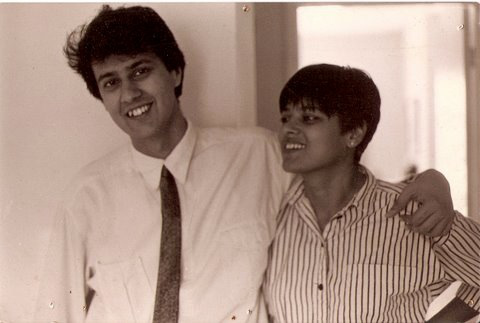 January 25 was the birthday of a good friend, Siddhartha Gautam. He died over 20 years ago.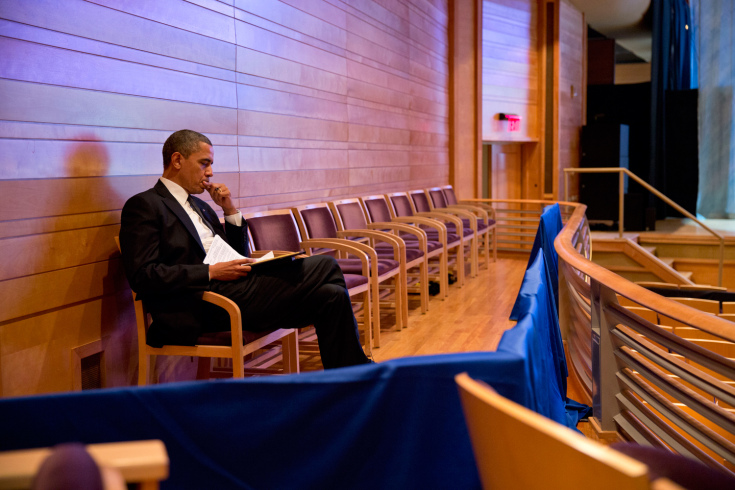
 Snowflakes Edge