The Boat

As far as this story goes, the boat’s journey began on the back porch of Arlo Guthrie’s farmhouse in Massachusetts. It had sat there for a lot of years. I don’t know how Arlo came to have it or what his plans were. Apparently he doesn’t really like the water.

His friend Jack, though, loved boats. He once took the thing out on Arlo’s pond that was hardly bigger than a small room. And I guess Arlo said Jack could have it.

So Jack drove the thing from Massachusetts to Colorado on a flatbed trailer and the boat pretty much sat upside down on someone’s property for a lot of years and then it was driven down to Palm Springs where it sat upside down for a lot more years. Jack may have floated it in a swimming pool just to see what it was like.

Eventually the boat came to Tomales Bay where it weathered untended to for more than a decade. The gunnels rotted out as well some of the sidings. It had once been a lovely Penguin Dinghy much like a boat that Jack had once owned that had been swept away in the great New York hurricane of 1953.

Just before Thanksgiving my boat building friend Brett was driving down the 1 toward Bolinas when he spied a prickly pear cactus adorned with fruit. He pulled over, got his tongs and gloves and set to gleaning a bag of fruit. He was interrupted, though, by a winsome woman, a complete stranger, who seemed to have materialized out of nowhere.

We need help, she said. We need to save Jack’s boat. She suggested that it was in some sort of imminent danger and that she needed assistance.

Well, I’ve worked on boats, Brett offered. He looked around at the neighboring docks on the bay. Where is it? he asked. I can come over and see what I can do.

The woman looked at him incredulously. The boat’s not here, she said. It’s in Sausalito.

Okay, Brett said. Give me Jack’s phone number and I can call him and I can see what I can do.

The woman became very unnerved. You can’t call Jack! she exclaimed. Everyone wants to talk with Jack. Jack calls you!

So she took Brett’s number and told him to wait ten minutes and the call would arrive.

Which it did. And by the next day Brett was in a Sausalito boat yard listening to a day full of boat yarns and traveling history and loading the boat onto a trailer hitch and towing it to Bolinas. And a few days later he was at our house standing outside the chicken house with a sack of apples in each hand, staring in reverie, wondering what our plans were for the chicken house.

Our friend Evan Nichols the writer had christened it the Room of Requirement. Everyone who stepped inside was possessed by a different overpowering vision. For Mazie, it was the ping pong hang out room. I saw a cider pressing and cheesemaking facility. Evan saw a writers retreat room. His wife Amy saw a yoga room. Anne Harley envisioned a singing studio. The vultures have found it quite useful as a dinner plate.

And Brett saw a boat restoration house.

The room is one and all of these things.

And that’s how last Monday Jack pulled up in his three quarter ton truck pulling the boat. And that’s how Arlo Guthrie’s penguin dinghy came to sit inside our chicken house. And why I will spend a better part of my winter sanding and planing and painting wood.

Because if you do things right, all of this, every bit, is required.
The First Feeding

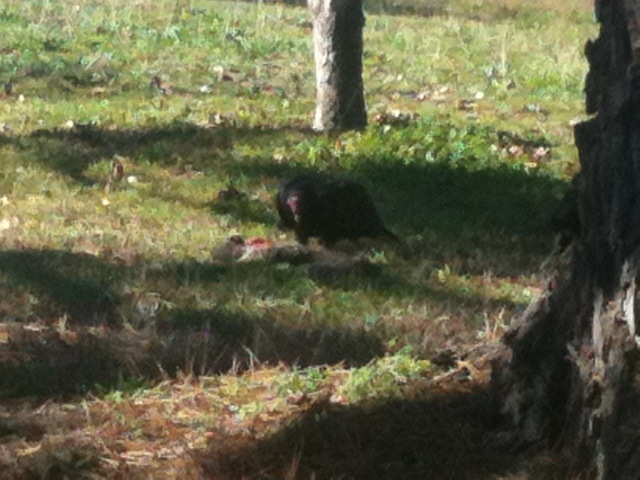
20111222-124051.jpgThe turkey vultures have come to feast.

It took three days. But they’re here now in full force. And it’s been quite the party. They circle low and Mango loves chasing them. Even the horse down in the corral down the way became excited. Our neighbor came over and was wondering what had gotten under his skin – he was prancing and snorting, his tail held high. The vultures, however, had been circling and feeding for much of the morning. In addition to the impression of their tremendous mass, what feelings do they incite in other species? The horse was clearly unnerved.

What other conjecture do the birds summon?

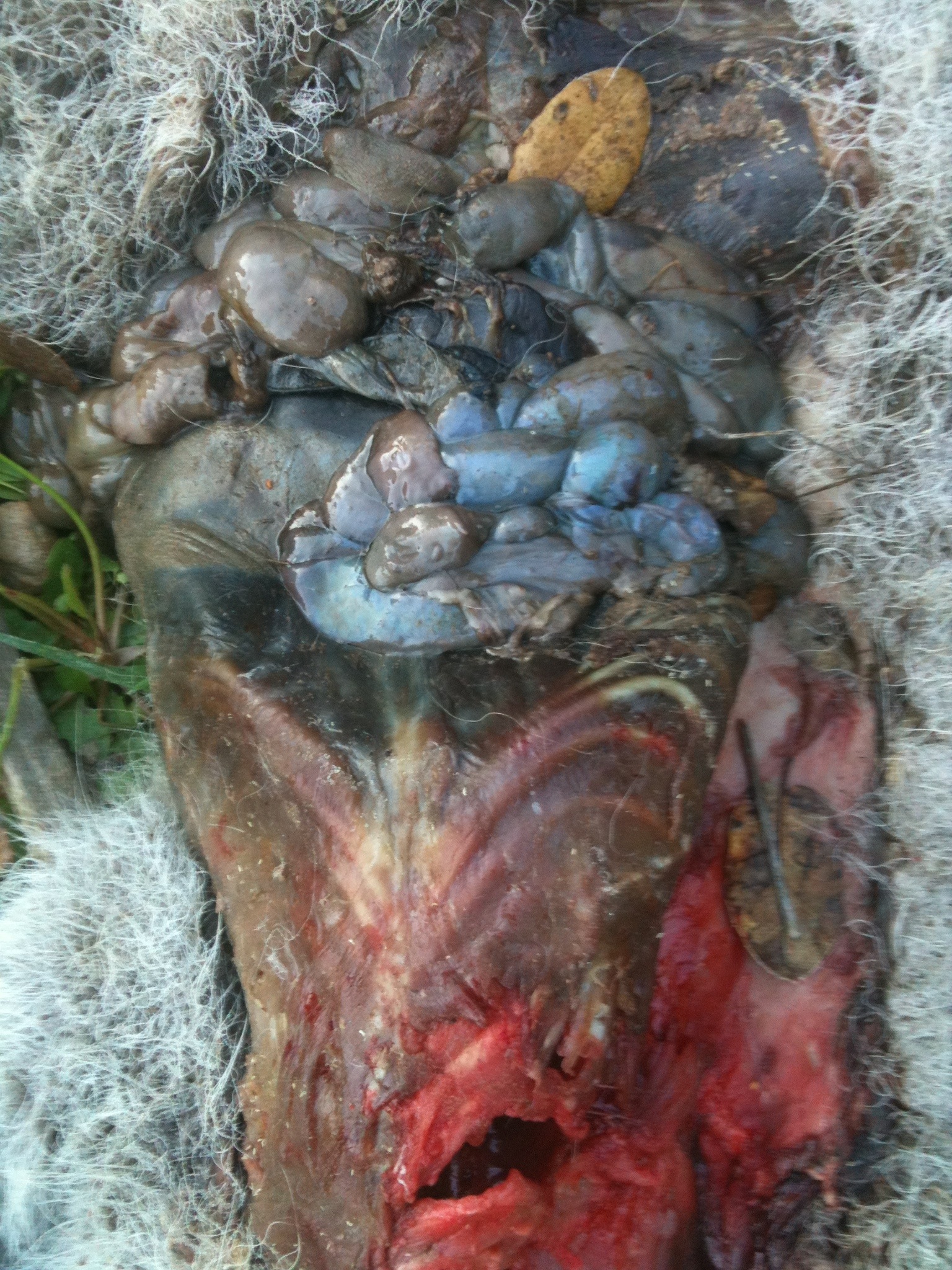
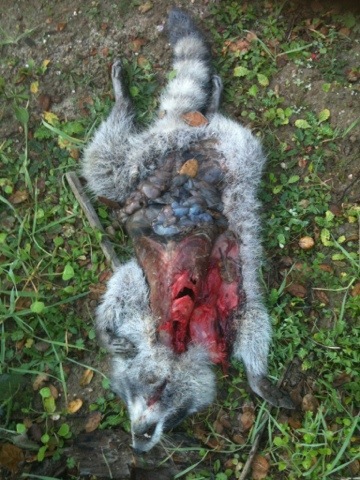
  1. They are patient, keen observers. The splayed open body of the raccoon rested on the roof of the chicken house for two days before I noticed the first flyover. It was near dusk and two vultures flew slowly over the chicken house, circled once and continued on their way. They waited another two days before they began to work the body. I wonder how much they observed before they decided it was safe to eat? And do they use the close flyovers to test the animal to see if it’s still alive? Living creatures tend to run and bolt at the flyovers.
  2. They have at least some semblance of cognition and work their food. They didn’t feed on the roof. Instead one of the birds lifted the raccoon corpse off the roof and moved it 7 feet to a spot on the ground where they could easily circle and rest while picking at the flesh. They ate the first side of the raccoon on the first evening. The next morning they rotated his body a full 180 degrees to more easily get at his other side. Later I moved the remains and hanging entrails to the tree outside our house. Within hours they had removed the body from the tree and once again were working it on the ground just outside our dining room window. Do they have a set routine in how they will dismember and eat an animal?
  3. They may be highly social animals that work collaboratively. So far I’ve seen a primary pair that are sometimes accompanied by a third. Only one bird eats at a time. The other two either perch in the tree, on the backs of the garden furniture, or sit on the ground. In all instances they face outward toward the open meadow, watching it seems for any advancing threats. This morning when the neighbors pit approached from the meadow, the feeding raven stopped and joined the other two gazing outward. As the pit advanced, the birds slowly took flight. Two of the birds seemed to have disappeared for the day, while one remained in the tree. When my friend Danny walked outside, the bird descended from the tree and circled the carrion raccoon as if protecting it. Was the bird guarding the food? Or was it taking flight in self-defense? How do they communicate? How are responsibilities divided among the group? Is their a pecking hierarchy?
  4. They may have an acute sense of hearing. I was watching the birds with binoculars from our dining room window. At some point my cellphone sitting on the far side of the room in the kitchen chirped when an email came in. The turkey vulture outside and 10 feet from the house started and looked up in my direction. I know for certain that I would not have been able to hear the phone from outside the house. How to test their audial and visual acuity?
  5. They can quickly discern friend from foe and react accordingly. The first few times I walked outside in their presence they were startled and flew away. They watched, however, when I retrieved the raccoon and relocated it. And they also watched a couple times as I walked in and out of the house without bothering them. It only took a couple passes before they became accustomed to my presence and ignored me. Mango with all his bark and scampering on the other hand, is another story.
  6. Their necks and beaks may have adapted to small prey. Watching the vulture pick flesh with it’s beak, I thought of the vultures on the Mara. The birds there have long extensible necks that they thrust deep into the chest cavities of the wildebeest, elephants, or whatever other megafauna they feed on. North America hasn’t had megafauna for at least 15,000 years and nothing on the scale of what was in Africa. Did different carrion birds evolve different beak and neck structures that would allow them to feed on different kinds of animals? Have carrion birds evolved different strategies for dismembering corpses? I would imagine that an adult vulture has a far keener understanding of raccoon anatomy than I do. They’ve undoubtedly feasted on dozens of roadkill.

There you have it. Twenty minutes of observation and six questions.

And I haven’t even planted the garden bulbs. Or assembled the apiary.


20111222-124114.jpg


20111222-124211.jpg