 I’ve been trying to feed Poe industrial hamburger meat (from Circle M). It’s the only time I’ve ever seen one of these ravens spit food out. And we call it fit for human consumption…
Call it the end result of what we call civilization: Advanced Meat Recovery. In a modern day slaughterhouse, they blast a carcass with a high pressure hose to recover any last bit of flesh and gristle and then churn it into hamburger. Or as Kerry said, it’s what you do after you’ve already taken the lips and asshole and served it up to some poor unsuspecting consumer.
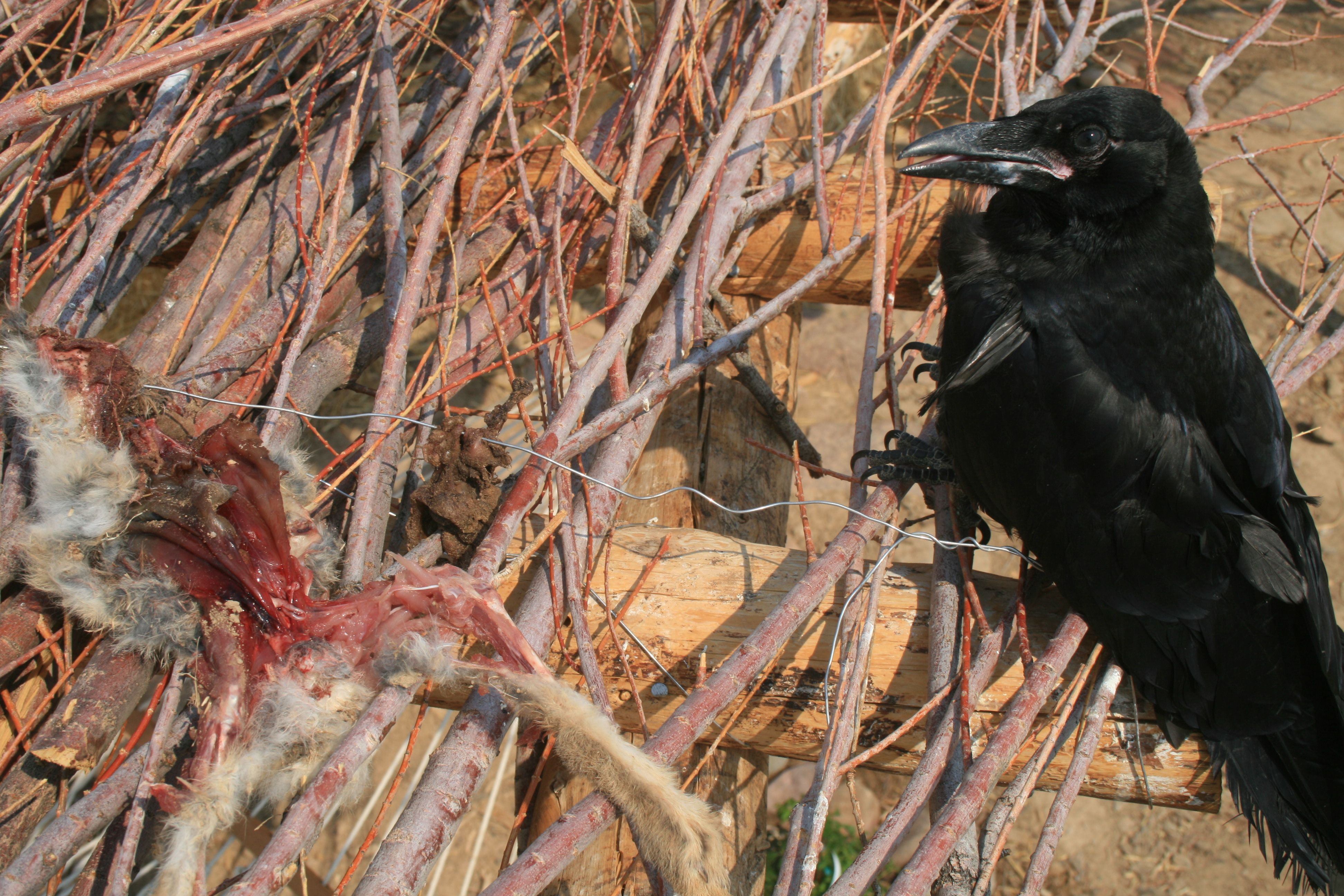
This morning Kerry brought over a dead rabbit that his dog had caught. He fastened it to the top of the ramada and placed Poe proximate to give him a chance to pick and feed in a more raven like way.
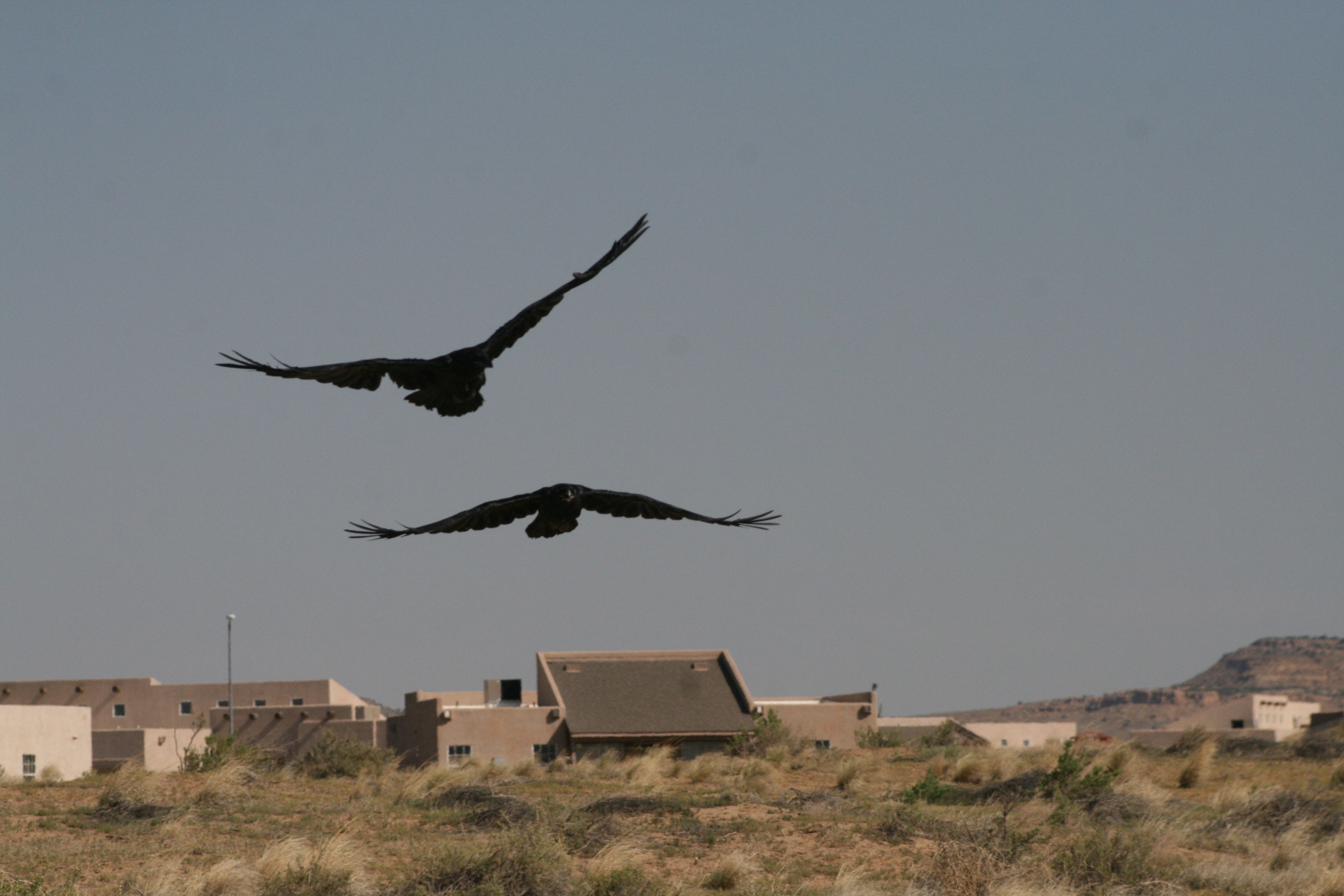
He also set out to retrieve the other two ravens from the wash. But as he stepped away from the yard (us conversing loudly all the while), we saw two lone figures making a swift approach in the distance.
Sure enough, it was Never and More. They soon circled the yard and alighted on the fence near Kerry. They kept bouncing and circling around him. Amazing window into their cognition.
- Ravens recognize Kerry as a source of meat. This idea has persistence in their brains over many days.
- They recognize his voice as distinct from other voices.
- They associate his voice with him.
Not receiving food from him, they took to the ramada where Poe was, but they boosted away from him and the carcass pretty quickly. Again:
- They showed a fear of a new foreign object. A dead one at that.
- Death is scary. That is, until we recognize it as food. Then all is fare game.
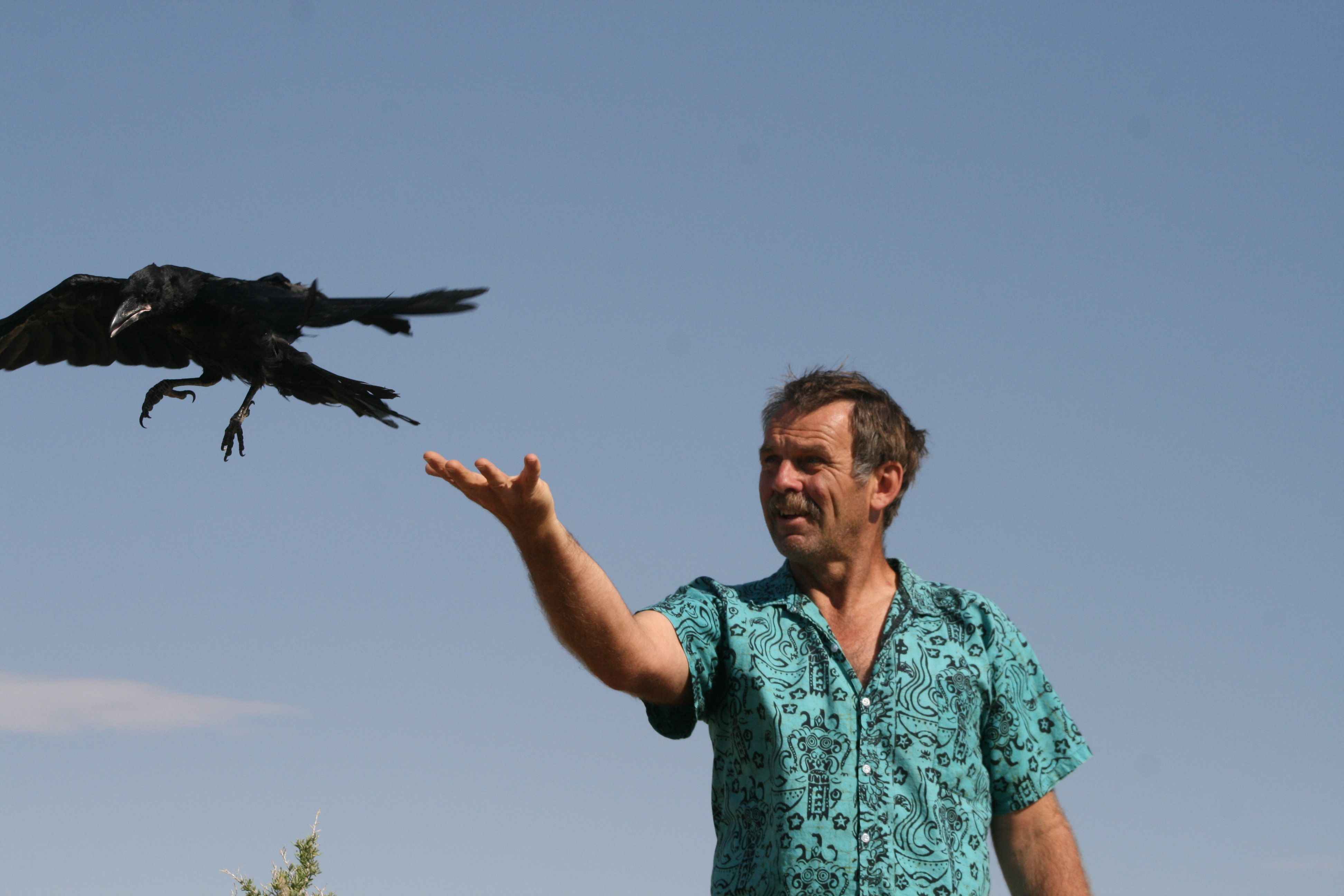
Kerry brought his hand beneath the carcass. The other ravens caught the gesture, squawked and flew back to the ramada. He fed some rabbit entrails to Poe, they observed. He tried baiting Never and More with intestine, but they wouldn’t take it.
- They need to learn that a carcass is food.
How long will it take them to learn? If the parents were present, would they teach or model behavior and would the ravens learn more quickly?
- Poe began pecking at the carcass. Never and More squawked.
- Never and More gave their danger squawk. We looked outside and saw Lola approaching.
- More grabbed rabbit entrails and took it to the ground.
- Poe continued feeding and Never ascended to observe. He later flew down to join More.
- More, however had cached his meat on the ground. Never found the meat and began to taste it. I’m sure that caching is a sign that an object is of interest. If More cached something, it must be good, it must have value.
- Never and More got into an intestine contest.
- Poe continued at his chowing up top.
- A lone adult perched on a lamppost facing us and called out in four short repetitive, gutteral trills.
Neighbors wonder if the ravens are hanging out at Kerry’s now, looking for food. Folks don’t get that we have complex relations with these birds, that they come and go and fly about based on a whole set of variables.
The house sitter thought at one time taking them to the wash was too close if our goal was to make them go away. Again, she missed it. Our goal is not to make wild things go away. Instead it’s to reintegrate these birds back into their environment and ecosystem. That ecosystem includes the Wepo Wash, the other flocks, the parents, and to a limited extent, Walpi Housing. For years the mating pairs have been doing flyovers, observing us, perching on the lamp posts, scavenging nest materials form our yards. It’s fine that the birds come here, as long as it’s within the context of the larger environment and they’re capable of surviving on their own.
I hear the other young calling out in their playful sing song from somewhere out in the wash. Never and More playfully follow the motions of the dancing hummingbirds.
The young flock approaches and circles and dives above our house, calling all the while, and eventually break apart and disappear to the south.
As I sign off, Poe has descended from the ramada. Never soaks in the water. More explores the yard. Two hummingbirds circle. the Plymouths rest in the shade. The two other chickens scratch by the honeysuckle. Two doves hang on the fence. Lots of flies (call them pollinators). Mango sits at my feet, watching it all.
 Snowflakes Edge